
Breaking News: Future Fabrics Expo 2026 Press Release
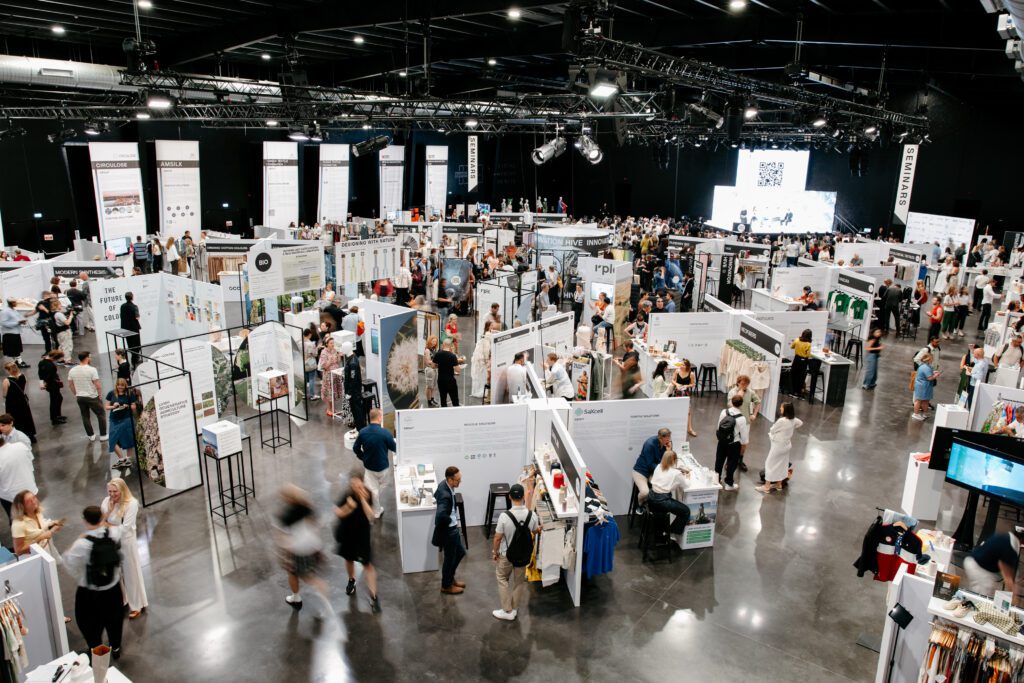


 The Future Fabrics Expo 2025 Seminar Series is now available to watch online!
In the FFE 2025 Seminar Series, industry leaders, experts, thought leaders, designers, changemakers, and leading innovators explored the latest advancements in the pursuit of sustainability in the textile industry.
From revolutionary recycling processes to groundbreaking textile designs, this playlist offers an in-depth look at how the future of fashion is being shaped. Don’t miss out on these inspiring discussions and insights from the forefront of the #MaterialsRevolution!
 Captivated by the background? Captured from the air along Iceland’s southern coastline, the aerial image framing the Seminar Series shows a glacier-fed river as it weaves through volcanic sand on its way to the North Atlantic. The interplay of deep browns and shifting blue tones reflects the sediment-rich water shaped by glacial melt and tidal influence.
 Constantly changing with the seasons and water levels, these natural forms evoke the look of watercolor paintings — fluid, organic, and full of motion. The sediment carried by the rivers plays a key role in nourishing coastal ecosystems, making these river systems both visually striking and ecologically vital.
Photo: Jan Erik Waider / www.northlandscapes.com
Instagram: @northlandscapes


The Sustainable Angle’s display “Nature-Positive: The Future for Fashion”, supported by Kering, will be showcased at this year’s IUCN World Conservation Congress in Marseille, France, from 4-9 September 2021. With over 160 countries participating, the IUCN Congress is a key milestone before pivotal UN conferences in Kunming and Glasgow, and aims to drive action on nature-based recovery, climate change and biodiversity.
According to the IPCC report, the threshold of 1.5 degrees Celsius warming is now perilously close. Global warming is affecting every region on earth and accelerating sharply, with many of the changes becoming irreversible. We are witnessing extreme weather conditions and climate disasters increasing in frequency and intensity. The fashion industry needs to take immediate action in its production systems, as there is a clear moral and economic imperative to protect the lives and livelihoods of those on the front lines of the climate crisis, such as those in our fashion industry’s production systems.
Fashion needs to urgently focus on sourcing its raw materials from regenerative and restorative production systems. This will help the sector embed sustainability into products while mitigating the climate crisis and contributing positively to livelihoods and biodiversity and ultimately achieve a truly circular economy. Agricultural practices and systems — if managed appropriately — could also integrate ecological connectivity, wildlife protection, restoration of micro-habitats, soil health, and ecosystems. In this way, agriculture for fashion can go beyond reducing negative impacts and move towards nature-positive.
The display will feature fabrics and materials grown and produced with regenerative agricultural practices: examples such as silk and wool from fibres that are Wildlife Friendly® Certified; organic cotton, regeneratively farmed leather and cashmere; forgotten plant fibres such as linen, bast and ramie; and wild animal fibres that diversify the fibre basket, ensure animals’ welfare and protection and integrated into the ecosystem while supporting farmer livelihoods.
Materials on display are contextualised by informational content around regenerative agriculture for fashion, soil health, and natural materials from production systems that incorporate wildlife friendly practices, as well as special projects focused on biodiversity that are undertaken by Kering such as the Regenerative Fund for Nature.
Kering and Conservation International announced the first 7 grantees under their “Regenerative Fund for Nature” following its launch in January 2021. The initial round of funding focuses on promising and innovative projects to help drive the transition of 1 million hectares of land to regenerative practices in luxury and fashion’s cotton, wool, cashmere and leather supply chains. The first recipients of the Regenerative Fund for Nature form a diverse and influential portfolio across critically important landscapes in need of improved stewardship. They will initially support over 840,000 hectares transitioning to regenerative approaches, directly benefiting 60,000 people engaged in small and larger scale farming systems.
Join The Sustainable Angle at Booth E21 at the Business & Nature Hub, learn more about how fashion can move towards nature-positive and discover materials made from regenerative and restorative production systems. Open to general public from 4-9 September 10AM – 5:30PM. Follow us on Instagram @thesustainableangle for updates and news at IUCN.
Thank you to Kering for their generous partnership and support for the “Nature-Positive: The Future for Fashion” display.
Supported by

Event Details
IUCN World Conservation Congress 2021
Dates: 3-11 September, 2021
Website and Event Information: https://www.iucncongress2020.org/
More about the Regenerative Fund for Nature: https://www.kering.com/en/sustainability/safeguarding-the-planet/regenerative-fund-for-nature/


The Future Fabrics Expo 9½ provided a platform for twelve panel discussions uniting forty voices from brands, suppliers, thought leaders, innovators and educators around how the fashion and textile industries are responding to the most pressing challenges of our times, spotlighting innovations, inspirational industry examples and highlighting how we can all play a critical role in creating and driving positive change.
Discussions during this Expo drew together experts around the core themes of CLIMATE, our relationship with NATURE and BIODIVERSITY, and the place of INNOVATIONS and REGENERATIVE systems that can drive the fashion industry to a POSITIVE future. Panel talks framed the role of the fashion industry as an agent for change and its powerful potential to mobilise the creativity and solutions thinking that is at the core of true circular and regenerative design thinking.
PARLEY founder and CEO Cyrill Gutsch outlined in his opening address that we urgently need to address our dependency on oil, and the plastic pollution created from this ‘design failure’, focusing on decoupling from it as a raw material and energy source if we are to tackle climate change. All toxic materials and practices need to go, and we need to rapidly repair natural systems and restore biodiversity in order to rebalance the carbon cycle and tackle this crisis. We are now poised on the brink of a new materials revolution that recognises and prioritises the health of the planet and all living things, whilst actioning the cleaning up of our toxic industrial legacy…
CLIMATE
The Role of Fashion in Action for Climate Transformation
journalist Bel Jacobs emphatically established the critical imperative for change, interrogating the fashion and textiles industries’ responsibility to tackle climate change. With just ten years left to address biodiversity loss, land use and impacts of the climate crisis, scaling up of concrete climate action demands deep systems shifts.
Sandrine Dixson-Decleve, co-president of the Club of Rome, called for urgent action- we have already gone beyond several of the planetary boundaries delineated by the work of scientists at The Stockholm Resilience Centre. She noted that fashion sets the cultural tone, and links to the citizen consumer as vehicles for change too. We need to shift to circular and regenerative models and decouple from our extractive impacts on resources. Claire Bergkamp, COO of NGO Textile Exchange also established the need to decouple from growth and observed that the textile value chain represents a huge part of the impacts because it is reliant on agricultural systems. She explained that there is also opportunity for carbon sequestration and repair, but we need to be careful to focus upon what works now: emphasizing that ‘on the ground farm innovation are the things we know that work such as on site composting and replacement of synthetic feritlisers’. Textile Exchange have announced Climate Plus initiative and will be the driving force for urgent climate action with a goal of 45% reduced CO2 emissions from textile fibre and material production by 2030. The 2030 Strategy for Climate Plus is the result of extensive stakeholder engagement through interviews and an online surveys conducted with a mix of Textile Exchange members and non-members from organizations representing brands, retailers, suppliers, manufacturers, nonprofits and professional services across the globe. The initiative will priortise climate action, the PLUS is to show that in addition to climate, focus is also on biodiversity, soil, water and the need for partnerships with on the ground farmers.
Claire Bergkamp emphasized that: ‘For stakeholders in the industry we are at a critical moment, but for practical advice companies can buy certified materials as a great place to start. She advised joining a textile Exchange roundtable- which are open to everyone and support industry to work with best practice materials. Lindita Xhaferi-Salihu from UNFCCC Fashion Industry Charter for Climate action, launched in 2018 spoke about COP26 Race to Zero in November, and how we need to think holistically, as the next ten years will determine the fate of humanity. ‘Despite some recent momentum there is still serious work to be done; in order to achieve net zero by 2050 steep actions need to be undertaken. She observed that the worrying thing here is pace- we know that solutions exist, but the pace and rate of scaling up is too slow and that ‘efficiency cannot outrun scale.’ Sandrine emphasized that we ‘need to get real around capital shifts- such as peverse subsidies’. Textile supply chains and positive raw materials systems must be accelerated and radically transformed at scale and all actors from farmers to brands need to come together to leverage change. Bel observed that the power of fashion as a communicator is significant, and the investment in fashion advertising that could be reframed to create positive messages; Lindita posed the question what can we do to communicate to consumers what a 1.5 degree lifestyle looks like? Sandrine expressed a call to action; we need to be stubborn but realistic optimists; ‘we are facing a planetary emergency, and if we don’t make radical systems shifts we will continue to experience constant shocks, so we need to put in place risk management and resilience building levers’.
Clare Carroll from WRAP and Martin Brambley, founder of non-woven textile company Dopplehaus joined Sophie Wilson from the Race to Zero initiative to achieve net zero emissions by 2050, who outlined the fashion industry alignment process toward COP26 to discuss How Reviving Regional Supply Chains can Enable Low Impact Fashion Systems of the Future. The Dopplehaus wool fibre story provided a captivating case study in understanding how fibre choice and local networks are key to addressing CO2 emissions from provenance, processing and post life impacts. Claire outlined WRAP’s Sustainable Clothing Action Plan Textiles 2030 is the UK’s most ambitious voluntary agreement, with 70 fashion brands on board committed to reducing the environmental impact of textiles, with two main goals; to reduce aggregate GHG’s footprint on new products by 50%, and to reduce the aggregate water footprint of new products by 30%.
The Fashion Designers as Change Makers conversation addressed the culture of fashion as a powerful tool for change and communication of new fashion values. Fashion Revolution co- founder Orsola de Castro referenced the parallels between food and fashion and our relationship with natural resources. Stylist Fran Burns noted that driving change can come from informed conversations with designers and sees ‘the role of the stylist is an opportunity to have fresh eyes in the room’ and that to ‘bring knowledge is power, and we all have a responsibility to encourage less production and by doing things that are less impactful’.
NATURE-POSITIVE MATERIALS AND REGENERATIVE AGRICULTURE

Nature-Positive Materials: Best practice with Wildlife at the Core drew upon the on the ground experience of Julie Stein from the Wildlife Friendly Enterprise Network, who observed that most brands cannot trace back materials to the individual farm, and without this we cannot solve the biodiversity crisis; ‘the conversion of land to pasture and crops is the biggest driver of wildlife habitat loss’. She emphasized that farms should not be monocultures, by creating a haven for a variety of species habitat patches are stepping stones for wildlife across a farm, with no physical barriers such as fences to prevent mobility of wildlife, and allowing the functional role of predators that supports ecosystem health. She cited examples of best practice wildlife management in Argentina and noted that regenerative agricultural systems mimic the natural movement of all wildlife. Head of nature initiatives at Kering Group Dr Helen Crowley stated that ‘you cannot get to nature-positive unless you take into consideration wildlife.’
Discussions for The Imperative for Regeneratively Grown Materials panel explored the designers’ perspective and responsibility to act. Sheila Cooke of the Savory Institute’s hub 3LM, which supports regenerative farming and cited Fibreshed author Rebecca Burgess: ‘your clothing choices are an agricultural act – by purchasing and wearing you are voting for the agriculture you want to see in the world – you are either feeding soil microbiology and furthering nature, or leaving a world of plastic pollution’. Sheila Cooke outlined that regenerative farming demands holistic thinking around the healthy interaction of diverse life forms – for example: don’t plough (no till system) in order to allow complex underground systems to do their work, and grow cover crops, allow a diverse range of crops and bring animals back to the land in managed grazing systems to regenerate the soil. Regenerative farming expert Sara Grady from the Grady + Robinson collaboration supplies finished bovine and sheep leather that can be traced to its UK farm origins with assured agricultural practices, followed by vegtable tanning in the UK. Farms that raise animals to the highest standards for food restores our ecosystems. British accessories designer Anya Hindmarch outlined her journey toward sustainable thinking following the responsibility she felt in 2007 to begin a project to encourage the decoupling from single use plastic. Her curiosity regarding materials opened her eyes and led to a struggle to find recycled leather that wasn’t held together with plastic binders. She highlighted the lack of transparent supply chains with respect to animals, land and people and observed how disconnected leather production is from farming, and how most hides are a by-product of industrial agriculture: ‘no one talks about the provenance of the skins, unlike in the food industry’. She highlighted the problem of most alternatives to leathers which are mainly based on unsustainable and polluting synthetics.
Exploring the collaboration for H&M between natural high-performance textiles Bananatex and British footwear brand Good News provided the case study for exploring how we can replace plastics in the industry in Can Plants Power the Future of Footwear? Christian Layolle from Mills Fabrica in conversation with Hannes Schoenegger CEO of Bananatex and Swiss Accessories brand Qwstion, drew on the footwear industry experiences of Alan Lugo from plastic free US company Natural Fibre Welding in how collaborations are leveraging change. NFW innovations include fully bio leather alternative MIRUM, and Bananatex’s raw material comes from the plant Abacá, grown in a natural ecosystem of sustainable mixed agriculture and agroforestry, and CLARUS altered cotton yarn (also applicable to other fibres) at the molecular level to strengthen it. The synergies between both companies became apparent regarding their 360 degree circular design thinking, and how deep knowledge of materiality is critical in enabling products to close their own loops and return safely to the biosphere.
The Regenerative Future of Dyes drew together five innovators and practitioners in a curated symposium led by Carole Collet from CSM Maison/0. Founder of the Dyers Circle Jackie Andrews-Udall set the scene with the historic context and story of natural dyes as part of a sustainable fashion strategy, linking colour with a sense of place. Most of our modern dyes are made from highly toxic synthetic petrochemicals and occupy a significant role in regard to pollution impacts and water use. The place of regenerative systems for the future of colour was exemplified by varied innovations such as Colorifix, a non- petrochemical process that takes a synthetic biology approach identifying DNA sequences via microrganisms to create specific colours. Carbon negative innovations derived from bacterial algae, in this case the waste product from growing spirulina Scott Fulbright from Living Ink explained how they are changing the way products are made by using algae for Algae Ink™ as colourant products which have a negative carbon footprint, are safe, bio based, resistant to UV light. Nikhil Kaushik from Graviky Labs explained how their technology captures carbon emissions and upcycle this air pollution into sustainable inks, paints, coatings etc, using mainly dry technologies to create AIR-INK®.
An innovative cellulose based refracted ‘colour’ for sequins using no colourants or metal coatings responds to fashion’s hunger for all that glitters, providing a captivating sustainable solution. Traditional sequins are made from non- renewable and non biodegradeable materials, and Oxfam research recently highlighted that in the UK around 30 million sequin garments are purchased during one festive season, most which usually end up in landfill. By observing the structural function of refracted light on beetles and butterfly wings Elissa Brunato, founder of design led material innovation start up Radiant Matter employs biomimicry to rethink the nature of our most vibrant and glittering materials.
The Plastic and Fashion panel linked our dependency upon non-renewable oil based materials, which are essentially created from plastic to the products we all wear. Sian Sutherland from A Plastic Planet established the environmental and health risks in her introduction. Around two thirds of global fibre demand is taken up by oil based synthetics, which are non biodegradeable and shed harmful microfibres. Maria Westerbros founder of A Plastic Soup Foundation which puts pressure on industry and governments, focused on emphasizing that microplastics that proliferate through all our products, citing scientific studies that conclude by breathing in and ingesting these materials is making humans sick. Dr Luke Haverals founder of US based Natural Fibre Welding create complex composite materials from ‘plants not plastic’ stating that ‘the carbon footprint of plastic is massive and doesn’t just go away by recycling’. Nicholas Rochat from the brand Mover Plastic Free Sportswear told an inspirational story of how he disrupted the outdoor product category material expectations by entirely removing synthetics from the brands product offer.
Ten years ago Greenpeace started the Detox fashion campaign and shone a spotlight on the chemical impacts upon the environment and human health, pushing fashion brands for commitments to detox their supply chains of hazardous chemicals. The panel discussion on Tackling toxicity in Materials explored the industry’s addiction to synthetic materials, dyestuffs and finishings. Around 8000 chemicals are used in the growth and processing of our textile fibres, and it is important to understand that even ‘safe’ chemicals can have toxic properties, but it does depend on what you do with them and how you are manging them. Frank Michel from ZDHC (Zero Discharge of Hazardous Chemicals) is co author of Detoxing the Fashion Industry for Dummies, written to help demystify the use of chemicals in the fashion industry, and increase understanding. He explained how the ZDHC Gateway provides an open datebase and information source, also provides wastewater guidelines and verification of suppliers efforts to eliminate hazardous chemicals. The ZDHC organisation also coordinate a digital Impact Day that has world wide reach. The RSL (restricted substances list) is dominated by substances that are regulated and the RSL is tested for only at the final product stage. The MRSL (material restricted substances list) is the backbone of the work at ZDHC on textiles and leather and focuses on chemical use throughout the material processes.
Ananas Anam are the creators of the vegan pinapple agricultural waste non-woven leather alternative material Pinatex. Dr Raquel Prado Garcia, head of research and sustainability at the company outlined the challenges of creating coatings for Pinatex that provide the longevity and performance that the market demands for commercial viability, and also meet the company’s goals toward best sustainable practice from provenance and processing of the material. She explained that transferring lab based bio-explorations do not transfer easily to production methods; ‘we need to be able to work with industrial systems to develop the surface coatings of the non- woven, and adapting the manufacturing processes is also an area for innovation that takes time.’ The company have a road map for consistent improvements in impacts; they currently use PU (polyurethane), but only use water based PU in order to avoid VOC’s (volatile organic compounds) emissions. Ananas Anam’s impacts are monitored and the company have reduced C02 impacts in 2 yrs by 40% and reduced the use of fossil fuels by 30%. The next frontier is the continued exploration of the entire material composition from renewable bio sources.
Mark Ix from Advance Denim has worked in the denim industry for over 30 years and observes that Indigo is a very difficult dye to get on to a fibre, which can incur significant water, energy and chemical use. Recently there has been a huge drive from all the denim producers to respond to the sustainability imperative, and the industry is active in innovations, particularly . Traditionally the market is extremely demanding regarding nuances of tactile appeal Advance Denim strives to be the most sustainable supplier, and Mark explained that ‘we look at the problems as opportunities; cleaner inputs and how do we do thei a cleaner and more efficient way.’ Advance Denim have introduced ‘Bio Blue’ a patented FDA approved process that was three and half years in development. Traditionally sodium hydrosulphite has been used in the dyeing process and is highly toxic and unstable, and we have removed this with no reduction in big box dyeing technology alone saves 41% energy, water 95% and 20% reduction in chemicals. The next step is exploring the opportunities for circularity in the post-consumer recycling of denim.
In Technologies Enabling Traceability and Transparency from Fibre to Fashion the pivotal role that pioneering new embedded fibre technologies play in assuring traceability was explained in detail. The 2020 CEO Agenda published by The Global Fashion Agenda outlined the first ‘core priority for immediate implementation’ is that of supply chain traceability. Many top fashion brands have announced targets for 100% sustainable fibres by 2025, but it is estimated that less than 5% of those brands are able to trace their textile inputs to verify the sustainability credentials of the fibre producers. Our textiles and fashion supply chains are criss-crossed around the world, and are long, fragmented and opaque, often concealing environmental and human rights abuses making traceability notoriously difficult. Embedding fibre tracers, married to blockchain technologies can track and verify fibres and also communicate information to consumers in the retail environment. Burcu Ozek Sales Manager at denim supplier Bossa International reports that ‘traceability has become a key issue driving innovation for us’, and recently collaborated with Shannon Mercer, CEO of Fibre Trace® to create the D-Chronicles project. The Fibretrace system uses patented particles embedded in the fibre that exist for the entire life of the product and are non toxic. They can be mixed into any natural or man-made fibre at the very start of the production process (often at the farm itself), with no impact on texture or performance. Simeon Nachev Head of Digital Value Chain Lenzing Group spoke about using the innovative technology of the TextileGenesis™ platform in a collaboration with ArmedAngels, verifying LENZING™ ECOVERO™ and Authentico® fibers. Both the Bossa and Lenzing collaborations allow the consumer to view the surprising revelations and authenticity of the product journey right from the provenance of the fibre.
INNOVATIONS
The Demystifying New Material Innovations discussion explored the new biomaterials landscape, which is currently on a rapid growth trajectory, and since 2015 has attracted around 1.29 billion USD worth of investment. New material categories, many of which have been in R&D for twenty years are now becoming commercially available, and are poised to change our raw material sources and processing impacts by addressing our very relationship with nature. In conversation with experts Suzanne Lee, founder of Biofabricate and Dr Amanda Parkes, Chief innovation officer of Pangaia, unpicked what we mean by ‘biofabricated’ materials and their potential for the creation of responsible products, with innovations in this field being driven by the need to find sustainable solutions to our most impactful material categories. Suzanne observed that there was one word; ‘biobased’- that both USDA and the EU and agree on this definition, (that may actually be less than 25% bio content) however there are many technologies that can produce a biomaterial. Some of these innovations are being described in the same category as complex biofabricated materials, and this is why it is important to understand the differences and help to unpick the impacts of inputs and outputs. Suzanne outlined potential to shift how we do things quite radically on challenges related to extractive practices and biodiversity. She outlined the bioassembled mycellium innovations as the ones poised to have the most immediate impact on the fashion industry and also highlighted the emerging PHA group of textile fibres, such as LanzaTech’s carbon recycling technology which works much like a brewery attached onto an emission source like a steel mill or a landfill site, but instead of using sugars and yeast to make beer, pollution is converted by bacteria to create chemicals.
Dr Amanda Parkes explained Pangaia’s role as a brand and materials science company offering new material possibilities working and designing with nature to form new material possibilities. Pangaia’s business model invests in or works on co-development, directing industry into a new space and empowering innovation at the early stage via collaborations to get things done more quickly to leverage change. She explained: ‘at Pangaia we don’t invent everything, we have many team members doing the due diligence on new innovations and we use materials as a tool for our business’. Amanda referred to their cutting edge insulative innovation FLWRDWN™, which was ten years in development as ‘high tech naturalism’ and uses no animal products, no synthetics, no petro-biopolymer and a cellulosic aerogel. Pangaia have permission to responsibly harvest wildflower down for FLWRDWN™ from a conservation loop that they are part of, helping to restore the habitat of key pollinators and the preservation of local biodiversity. She sees the next generation being focused on regenerative agriculture waste, explaining; ‘eventually we will own farms in order to sustain a whole new way of looking at the model of material innovation’.
Understanding ‘Bio’ Material Innovations A Primer for the Fashion Industry Biofabricate and Fashion for Good 2020

From the 22nd June – 2nd July 2021, we hosted the Future Fabrics Expo 9½ in London, showcasing thousands of sustainably produced textiles and materials, all contextualised with sustainability information and open-source tools. We were delighted with the engagement and how the opportunity to physically experience materials was appreciated. The integration of the physical materials in the expo with our digital platform via QR codes, together with visitors joining from all over the world via our online platform was a success. The audience represents the scope of the industry: ranging from luxury brands and high street retailers to start-ups, academics and students.
Thank you to all those who attended our Future Fabrics Expo 9½ both physically and virtually! This interim Expo was a one-stop destination of sustainable sourcing both in-person at our London showroom accompanied also with digital online panel discussions available through our online platform Future Fabrics VIRTUAL Expo.
Our London showroom Expo offered the opportunity to discover thousands of best-practice, sustainably-produced materials in a diverse range of fibre categories, all accompanied with sustainability information and tools, supplier insights, enabling exploration of the latest collections and sustainability initiatives from our featured mills and suppliers. Alongside this our edited innovations display presented a curated showcase of diverse, emerging and commercially available innovations exemplifying key material themes for the year.
The Sustainable Angle’s Future Fabrics Expo aims to inspire, inform and continuously support fashion professionals who are seeking to work not only with a minimal impact by sourcing a wide range of more responsibly-produced textiles and materials but strive to use fashion as tool for creating a more positive future.
ALL PANEL DISCUSSIONS ARE AVAILABLE ON THE FUTURE FABRICS VIRTUAL EXPO. SIGN UP TO THE PLATFORM!
🌍For those who couldn’t join us in person, the physical showcase was accompanied by online panel discussions held on our Future Fabrics VIRTUAL Expo platform, hosting over thirty discussions with over 50 speakers worldwide, from experts and thought-leaders every day. We extend a huge thank you also to our inspiring partners and seminar panellists.
📱Attendees were able to gain premium access to the Future Fabrics VIRTUAL Expo for the duration of the Expo, and discover an edit of over two thousand materials featured on our digital platform. This is a curated selection of those in our showroom, where you can find QR codes on the materials header cards in the Expo, seamlessly connected to our digital platform, enabling you to scan materials and save them to your profile.
FUTURE FABRICS EXPO 9½ POWERED BY THE FUTURE FABRICS VIRTUAL EXPO

- Save materials to your user profile
- Scan materials in our studio and save them immediately to your profile
- View all 2000+ materials featured online
- Send and keep a record of all messages sent out via our platform
- …and more still to come!
LOW-IMPACT AND REGENERATIVE MATERIALS
We contextualised the materials showcased on our platform with informative educational content and industry insights, spotlighting the latest innovations around nature-positive materials grown in regenerative organic agricultural systems, circular production systems and recycling technologies.

We were so pleased to announce the full programme of speakers and panel discussions for Future Fabrics Expo 9½!
WEEK 1

WEEK 2


We are so pleased to announce the full programme of speakers and panel discussions for Future Fabrics Expo 9½! We will be contextualising the materials showcased on our platform with informative educational content and industry insights, spotlighting the latest innovations around nature-positive materials grown in regenerative organic agricultural systems, circular production systems and recycling technologies. The Sustainable Angle’s Future Fabrics Expo aims to inspire, inform and continuously support fashion professionals who are seeking to work not only with a minimal impact by sourcing a wide range of more responsibly-produced textiles and materials but strive to use fashion as tool for creating a more positive future.
Tune-in to our insightful panel discussions every day between 22 June – 2 July from 1-2pm BST via our Future Fabrics VIRTUAL Expo and 10am-4pm BST through Instagram Live. Register here: https://www.futurefabricsvirtualexpo.com/events
Registration provides you access to our London showroom, open at 11 AM – 6 PM BST (advanced booking required, details on registration page) and Premium Access to our Future Fabrics VIRTUAL Expo platform for the duration of the expo. Expo visitors in London can also scan the QR codes labelled on the materials and be redirected seamlessly to our VIRTUAL Expo, where you will find further sustainability information on the fabrics and can save them immediately to your profile.
Follow us on Instagram here to watch more industry talks and discussions throughout the Expo
WEEK 1
WEEK 2
Watch opening remarks by Cyrill Gutsch, Founder and CEO of Parley for the Oceans:
“We are the material innovators. We are the creators. We are encouraged more than ever now to use that moment and open the door to a New Age, to a new era of materials, to call out the Material Revolution. To let all these harmful toxic ingredients go. And to start a new way of business, a new economy that is based on collaboration and eco-innovation.”

During Future Fabrics Expo 9½, 22 June – 2 July, we will be featuring our partners, select mills and suppliers from our showcase who represent a range of innovative textile and material solutions with a low environmental impact. Our partners, featured mills and suppliers from around the world apply best-practice solutions such as sourcing fibres from organic or sustainable agriculture practices, circular economy principles, recycling technologies, closed loop processing, low impact dyeing, and alternative material sources that diversify the fibre portfolio.
Mills and suppliers in the Future Fabrics Expo are curated based on our Environmental Criteria, in relation to provenance, processing, raw materials and systems management involved in the fabric production. As well as these key criteria, ethical and local production, recycled materials, and entirely certified supply chains are taken into consideration.
Future Fabrics Expo 9½ is a key sustainable sourcing destination for designers and brands, offering a physical in-person showcase of thousands of materials, sustainability knowledge, innovative supplier insights alongside digital talks powered by the Future Fabrics VIRTUAL Expo. Register for the Future Fabrics Expo 9½ today and get Premium access to the Future Fabrics VIRTUAL Expo for the duration of the expo! For those visiting our showroom in London, discover QR codes on materials in the expo leading seamlessly to our digital platform.
Discover more about our featured mills and suppliers below…
Parley for the Oceans

Parley for the Oceans brings together the creative industries to collaborate on projects that raise awareness and end the destruction of the ocean. Collaboratively they help shape new consumer mindsets by developing alternative business models and ecologically sensible products. Their biggest project, Parley AIR, recycles ocean plastics and make environmental protection fiscally lucrative for pacesetting major companies.
An estimated 8 million metrics tons of plastic trash ends up in our oceans every year. Parley AIR is their strategy to end the fast-growing threat of marine plastic pollution by stopping to produce more plastic and use up-cycled marine plastic waste instead. Awareness campaigns, cleanup operations and recycling initiatives allow Parley to help alleviate immediate threats to marine wildlife and reduce the use of virgin plastics in product design, manufacturing and distribution.
We’re happy to partner again with Parley for the Oceans. Parley has collaborated with one of our featured mills Clerici Tessuto, to produce luxury fabrics using their GRS (Global Recycle Standard) certified polyester yarn, crafted from upcycled marine plastic debris intercepted from beaches, islands and coastal communities.
Lenzing

TENCEL™ branded lyocell fibres are derived from sustainable wood sources, harvested from certified and controlled sources following stringent guidelines of the Lenzing Wood and Pulp Policy. TENCEL™ Lyocell fibres are produced in an environmentally responsible closed loop production process based on solvent-spinning.
Lenzing AG has also pioneered the REFIBRA™ technology which involves upcycling cotton scraps e.g. from garment production, in addition to wood pulp, where the raw material is transformed to produce new virgin TENCEL™ Lyocell fibres to make fabrics and garments. The fibres are produced by Lenzing Group in an advanced EU award winning closed loop spinning process, with minimal impact on the environment and significant reduction of water and energy. TENCEL™ and REFIBRA™ are trademarks of Lenzing AG.
Advance Denim

Founded in 1987 in China, Advance Denim is a key international player in the production of premium denim fabric. Over the last 30 years, the company has demonstrated their commitment to sustainability by investing in technology and developing innovations that enable them to produce denim with minimal impacts on the environment. Recognised as a Top 500 Industry Enterprise in Guangdong, and co-founder of Amsterdam Denim City, Advance Denim has an important impact on the industry with an annual output of up to 40 million yards.
Since 2013, Advance Denim has reduced their energy consumption per yard of fabric by 42%. They have reduced water consumption by 58% due to investments in new generation equipments and dyeing technologies, such as big box dyeing. Over the next five years, the company aims to increase their total use of green fibres to over 90% of their total production.
Advance Denim has recently developed a cottonized hemp fabric in their denim offering. Hemp is an ecologically beneficial plant cultivated around the world that renews the soil with nutrients and nitrogen during each growth cycle. It is a positive rotation crop that leaves the land free of weeds. It needs little, if any, pesticides because it naturally resists decay and infestation. Hemp grows well without the use of chemicals and withstands water better than any textile product.
Discover Advance Denim on the Future Fabrics VIRTUAL Expo >
Bananatex® AG

Bananatex® is the world’s first durable, water-proof fabric made purely from the banana plant Abacá. Cultivated in the Philippine highlands within a natural ecosystem of sustainable forestry, the plants require no pesticides, fertiliser or extra water. These qualities have allowed it to contribute to reforestation in areas of former Philippine jungle once eroded due to monocultural palm plantations, whilst enhancing biodiversity and the economic prosperity of its farmers. In one year, one banana tree can compensate for the CO2 emissions of production and transport of more than ten bags made from its fibre. Bananatex® can be composted to close the product cycle loop, from plant to bag and back into the soil.
Bananatex® was developed by Swiss bag brand and material innovators QWSTION in collaboration with a Taiwanese yarn specialist and a weaving partner based in Taipei, Taiwan. Engaged in the multi-year development and production process behind the new fabric, the three parties united with the ambition to make a positive impact on the planet’s future.
Discover Bananatex on the Future Fabrics VIRTUAL Expo >
Bossa International

Bossa is a fully integrated denim supplier based in Turkey. They use low impact fibres such as recycled cotton, organic cotton, Tencel® lyocell and linen — all materials which do not use pesticides and synthetic fertilisers. Finishing treatments do not use sandblasting. With innovative technologies, they reduce water consumption and contamination by using pre-reduced indigo. 85% of the water used in production is conserved through their “Saveblue” process. All water effluent is pH neutralised and bio-treated locally. Bossa also launched “Denim is Reborn in Bossa”, a post-consumer denim recycling (PCRD) concept where old jeans are collected, sent to their partner in Gaizantep, Turkey for shredding, and then fibres are remade into fabrics. About 1000 old jeans can be used to produce 2000 metres of 20% PCRD Blended Fabric. Major brands such as Nudie, Zara, Kuyichi and Marks & Spencer are a few of the brands that have used fabric from Bossa’s concept.
Discover Bossa on the Future Fabrics VIRTUAL Expo >
Chargeurs PCC

Based in France, Chargeurs has created a broad range of sustainable inner components (linings and interlinings) that incorporates recycled synthetic fibres (such as from recycled PET bottles), as well as sustainable natural fabrics and zero water alternatives. They are signed up to the UN Global Compact and certified by Global Recycled Standard (GRS) – Oekotex – Reach – ZDHC – Cotton Leads and Sustainable Apparel Coalition, and strive to innovate sustainable solutions, continually reviewing their carbon footprint. As part of their drive to reduce CO2 involves a reforestation program in partnership with WeForest, who have planted a carbon-sequestering micro forest in Zambia. Chargeurs donates a portion of profits from their sustainable range to the reforestation program.
Discover Chargeurs PCC on the Future Fabrics VIRTUAL Expo >
Clerici Tessuto

Clerici Tessuto combines traditional Comascan craftsmanship with the innovative excellence of the Como silk industry. As a key textile supplier to the world luxury market since 1922, Clerici produces ethical textiles for longevity and is constantly researching new ways to use yarns in woven and printing techniques, with a speciality in compact jacquard weaves.
Guided by the UN Sustainable Development Goals, Clerici improves its manufacturing footprint by sourcing both organic and circular, recycled yarns that can biodegrade or be recycled in turn. Clerici aims to put sustainable silk back on the map by promoting the regenerative aspects of mulberry tree farming.
Clerici Tessuto has sealed an agreement with Parley for the Oceans to produce luxury fabrics using their GRS (Global Recycle Standard) certified polyester yarn, crafted from upcycled marine plastic debris intercepted from beaches, islands and coastal communities.
Discover Clerici Tessuto on the Future Fabrics VIRTUAL Expo >
Esce-Tex™

Esce-Tex™ provides tools and services to increase accessibility and creativity for more sustainability in fashion, such as supplying sustainable fabrics and materials, design tools and fabric sourcing knowledge. They make sustainable fabrics available for designers with low MOQs while offering a range of other services, including custom digital print. All their fabrics are provided with sustainability and traceability documentation, including fabric and mill breakdowns about their social compliance and certifications. All of the mills from Esce-Tex™ are members of SEDEX, an ethical trade membership, following SMETA auditing methodology for Social Compliance.
Esce-Tex™ has recently released a Rescued Range™ initiative as a result of increase in deadstock fabric due to missed payments and cancellations during COVID and lockdown. The Rescued Range™, which includes fabrics made from branded TENCEL™ Lyocell fibres and GRS-recycled polyester, aims to increase the accessibility and range of sustainable fabrics and lower the accumulation of unused fabrics.
Discover Esce-Tex on the Future Fabrics VIRTUAL Expo >
Mantero

Mantero is a family-owned luxury textile company founded in 1902. All their processes from design, weaving, screen & digital printing, finishing, edging and quality control occur in Italy. Their sustainability strategy RESPECT is centred on respect for the environment and people. Since 2015 the company has implemented the ZDHC Programme to phase out hazardous chemicals. They have installed a steam reduction system, photovoltaic and LED lighting systems, and new equipment in the central heating plant, which recovers heat to use during the washing processes and is saving methane gas and reducing CO2 emissions. They have also obtained ISO 14001, BS OHSAS 18001 and SA 8000 certifications.
Following a four-year R&D process, they are proud innovators of RESILK, a mechanically recycled silk yarn that particularly resembles cashmere in its final form. They are Global Organic Textile Standard (GOTS) certified for weaving and printing of silk and cotton fabrics and have Recycled Claim Standard (RCS) certification for recycled polyester.
Discover Mantero on the Future Fabrics VIRTUAL Expo >
Natural Fiber Welding

Natural Fiber Welding’s mentality is “Plants not Plastic”™. The company aims to eliminate the use of petrochemicals in the textile industry and utilise renewable resources in the natural world. Natural Fiber Welding, Inc. (NFW™) is the creator behind Mirum™, a high performance leather alternative material that is plant-based and synthetic-free. NFW commits to creating materials that are biodegradable or can be “upcycled” to eliminate waste and ensure responsible end-of-life options. Furthermore, NFW works to ensure every virgin raw material used in the creation of Mirum™ is just as good for the environment. Materials are selected based on their nutrient inputs or contribution to the well-being of their local environment, i.e. encouraging bee propagation, regenerative agriculture, fair trade, and ethical production practices.
Natural Fiber Welding have also recently created Clarus™, a fabric where recycled cotton fibres are revitalised through a closed-loop chemistry process. Yarn structures are engineered (“welding fibres”) to produce high-performance textiles without plastic or petroleum.
Discover Natural Fiber Welding on the Future Fabrics VIRTUAL Expo >
Nova Kaeru

Based in Brazil, Nova Kaeru is an exotic bio leathers tannery, specialised in organic tanning on fish leathers and a plant based material called beLEAF™. The Pirarucu fish are wild and live in lakes in the Amazon. They are fished by the indigenous population for food, controlled and regulated by IBAMA, the Brazilian Institute of Environment and Renewable Natural Resource. The skin is therefore a by-product from hunting for food.
Nova Kaeru has also developed a vegan “leather” alternative called beLeaf™, derived from the large tropical plant leaves (called ‘Elephant Ear’) and tanned with an organic process. The tropical plant leaves are not monoculture, commercial crops – they are renewable resources that grow freely on the banks of forests and rivers. They are collected in sustainable areas near the Nova Kaeru facilities and planted together with reforestation farms. The close proximity of beLeaf™ production decreases the carbon footprint, and emissions are offset by the positive impact of reforestation, which provides oxygen to the atmosphere. In addition, organic waste from the tanning processes are composted and reused as soil nutrients to help protect biodiversity and waterways, and water from tanning is reused for irrigation of the plants.
Pioneering in organic tanning technology, Nova Kaeru developed chrome-free tanning methods which do not use heavy metals called “Bio leather”, and “seamless” Panels (Kaeru ® Process) which allow large panels to be produced from smaller leathers.
Discover Nova Kaeru on the Future Fabrics VIRTUAL Expo >
Pangaia

Pangaia is both a direct-to-consumer materials science company as well as a B2B platform bringing breakthrough textile innovations and patents into the world through essential products and partnerships called Pangaia Science. They have been partnering with mill partners, RDD based in Portugal and with Pyratex in Spain, to create proprietary blended fabrics focused on sustainable innovations. They offer a full-service menu of options for companies, innovators, brands and suppliers to support the transition to a more sustainable fashion industry through the adoption of innovative materials and processes. Brands can choose either from our library of sustainable and innovative fabrics developed with our R&D team and partners, or custom design services to create their own fabric. We have a portfolio of unique technologies – FLWRDWN™, PPRMNT™, Kintra, and more and accompaniment to help implement. Pangaia can offer the D2C collection as a “blank canvas” for corporate gifting, events, and other special occasions. For innovators, Pangaia B2B provides several support services to help sell and market their technologies.
Ananas Anam for Pinatex

Ananas Anam is the manufacturer and company behind Piñatex, a vegan leather alternative made from pineapple leaf fibre that is a by-product of existing agriculture which would otherwise be burned or discarded. – no extra land, water or pesticides are required to produce the leaves that are used to create Piñatex. The creation of Piñatex provides an additional income stream to pineapple farming communities. As a Certified B Corporation, they are committed to ethical, transparent and responsible business practices. Their company’s aim is to meet the challenges of our times by developing products in which commercial success is integrated with, and promotes, social, cultural and ecological development. To date, Piñatex has been used by over 3000 brands worldwide, some of which are among the biggest names in fashion, as well as the core material within the world’s first vegan hotel suite at the Hilton Hotel, London.
Discover Ananas Anam on the Future Fabrics Expo >
Recyctex

Recyctex is a textile mill specialising in recycled fabric. Their core products are recycled fabric made from abandoned fishing nets, plastic bottles, discarded clothes and textile waste. In 2014, Recyctex was the first company to use Italian recycled nylon yarn for woven materials, from waste streams such as abandoned fishing nets or carpets. Recyctex fabric is widely used in sports, fashion wear, and bags, working with more than 40 international brands. Made-to-order, low MOQ available. The company is bluesign®, OEKO-TEX Standard 100, a Textile Exchange Member, and certified Global Recycled Standard.
Discover Recyctex on the Future Fabrics VIRTUAL Expo >
Toyoshima

From raw materials through to garments, Japanese company Toyoshima work to create high quality and innovative fabrics, incorporating best practice sustainable fibres such as Tencel™ lyocell and organic cotton. Their innovative materials include a project called Food Textile, which uses leftover vegetables from the food manufacturing process as dyestuffs. Their gentle vegetable hues were developed to tackle the issue of food waste.
Discover Toyoshima on the Future Fabrics VIRTUAL Expo here >
Like what you see? Come join us in-person in London and explore even more materials from our showcase. Advanced booking required.
For those who can’t join the experience in-person, you can tune in online everyday from 1 PM – 2 PM via our Future Fabrics VIRTUAL Expo platform and watch live-streamed panel discussions with experts and thought-leaders. You will also be able to explore thousands of materials from our showcase using newly launched features on our Future Fabrics VIRTUAL Expo.
REGISTER FOR THE FUTURE FABRICS EXPO 9 1/2 TODAY!

As we all grapple with the continued uncertainty the New Year has greeted us with, and news updates on both vaccine programmes and the emergence of COVID variants continue to radically reshape our personal and professional business realities, we are reframing our plans for 2021. We remain focused on providing the largest dedicated showcase for responsible and sustainable materials solutions. Our mission is to provide the fashion industry with the tools for change to become a positive sector, reducing drastically its GHG emissions by 2030 and meet the Paris climate agreement targets! Given the ongoing challenges with scheduling trade fairs, and larger events this year in all areas of business, we are delighted to announce our roadmap of linked events for 2021:
FUTURE FABRICS EXPO 9½
JUNE 2021, LONDON
in our showroom and on our digital platform,
culminating in the 10th Anniversary Future Fabrics Expo later in the year.
FUTURE FABRICS EXPO – MILESTONES FOR 2021
- Future Fabrics VIRTUAL Expo relaunch in March 2021: visitors will be able to experience even more materials from our exhibitors of the Future Fabrics Expo online with more educational information and content with enhanced sourcing experience.
- FUTURE FABRICS EXPO 9½, June 2021, London: building upon our previous, most successful, and largest 9th Expo in January 2020. We will host Open Days in our new London showroom for 9½ days. This will be a physical showcase tailored to COVID19 restrictions. Aimed at supporting fashion professionals wanting to source in person more responsibly and sustainably produced textiles and materials, contextualized with educational and informational display content (potential remaining COVID19 restrictions will determine the number of visitors allowed at this time).
- This exceptional FUTURE FABRICS EXPO 9½, June 2021, London edition will also feature online conversations, workshops and masterclasses with our partners, experts and thought leaders, and where COVID19 restrictions allow some of these can also be accommodated in our showroom. Please see the link here for insight into our July 2020 virtual event.
- We are excited to have these linked events throughout 2021 culminate in an anniversary 10th FUTURE FABRICS EXPO, date TBC, and as soon as COVID-19 uncertainties are eased for international travel. The 10th FUTURE FABRICS EXPO will be modelled on our successful 9th Expo held in January 2020 but will be held in a new venue well suited for managed people flows. It will also feature a stronger digital dimension than ever before, seamlessly connecting sourcing materials physically to our online platform.
Further milestones and events during 2021 will be announced soon…
We look forward to seeing you in person at our FUTURE FABRICS EXPO 9½, June 2021 in London, to discover materials and their place in systems that go beyond reducing environmental and social impacts, but are regenerative, safe and aim to have a positive impact on people and planet.

Image courtesy of Clerici Tessuto
Clerici Tessuto combines traditional Comascan craftsmanship with the innovative excellence of the Como silk industry. As a key textile supplier to the world luxury market since 1922, Clerici produces ethical textiles for longevity and is constantly researching new ways to use yarns in woven and printing techniques, with a speciality in compact jacquard weaves. Clerici aims to put sustainable silk back on the map by promoting the regenerative aspects of mulberry tree farming. The company also works with recycled polyester to discourage dependency on virgin polyester and reduce further plastic pollution.
We sat down with Clerici to discuss their latest collaboration with Parley for the Oceans, who was also our partner for the Future Fabrics Expo Seminar Series Programme.
Future Fabrics Expo: Clerici is best known in the fashion industry as a luxury supplier of silk. There are many other fibres you work with, too. Can you tell us about your newest collaboration with Parley for the Oceans? What prompted you to start working with yarns made from recycled PET bottles washed up on beaches?
Clerici Tessuto: Clerici Tessuto has almost one century of history in luxury fabrics production based on silk. However in the last five years we have made a relevant transformation, applying creativity to a wider range of fibres. Less than half of our production is now silk and we work with cotton, viscose, nylon and polyester as examples. All these types of fibres are based also on sustainable raw materials, fully certified, from Global Organic Textile Standard, to recycled or bio-based fibres.
In this renewed context, Clerici Tessuto has sealed an agreement with Parley for the Oceans to produce luxury fabrics using a GRS (Global Recycle Standard) polyester yarn, crafted from upcycled marine plastic debris intercepted from beaches, islands and coastal communities. We are really delighted to collaborate with Parley — we share similar values in protecting our ecosystem; we contribute to saving our planet for future generations through our daily behaviours as well as our products. Clerici Tessuto is able to produce lasting, high quality luxury fabrics by mixing a deep knowledge of the industry, top-level creativity and a sustainable value chain. We were able to transform GRS yarns from Parley and apply them to our products, for both beachwear and high-end fabrics for ready-to-wear.
By creating sustainable raw materials for brands, we are contributing to a new textile vision that can change the industry: using recycled instead of virgin materials offers an opportunity to drastically reduce the negative impacts of the industry. We pour our experienced savoir-faire with the latest textile techniques to create a new mix of fabrics.

Clerici textiles made with recycled PET yarns in collaboration with Parley for the Oceans.
FFE: Did you encounter any challenges working with recycled PET yarns?
CT: Basic recycled PET yarns do not have all the features that are required for the luxury fabrics as we create. So we performed a lot of research and development on basic yarns in order to obtain a raw material that was useful for our production and style. We managed to create new yarns aligned with our high quality products: our skills and experience allowed us to process every production step and get the best performance from Parley yarns.
FFE: How were you able to fine tune the production and finishing processes to reach the quality you desired?
CT: The fine tuning of production (basic yarn preparation, warping, weaving, dyeing, printing and finishing) required an iterative and agile process on the whole value chain. We established a cross-disciplinary team among style departments, product development and our mills to overcome some challenges posed by recycled polyester. In the beginning, we focused on yarn features and afterwards we applied the experience on polyester fabrics we’ve already done in the past. It was not an easy task to find the right combination of production phases in order to achieve the goals we originally planned, but we managed it.

The Clerici Archive at their headquarters office. Image courtesy of Clerici Tessuto.
FFE: What sort of reactions have the Parley x Clerici yarns received from industry? Can you tell us about any interesting brand collaborations using your Parley x Clerici yarns?
CT: A significant number of clients showed an amazing interest towards the collaboration and the products we created from Parley yarns. We are working with a selection of clients to create new qualities aligned to their expectations. We are not in the position to disclose any brands now and will have to wait until after the final presentation to our clients. Generally speaking, there is an increasing demand for sustainable qualities from all our customers and the Parley collaboration enriches our offering.
FFE: What are your goals and plans moving forward?
CT: We would like to continually improve our sustainability strategy in order to contribute even more to changing our industry. We want to assure that production will sustain and protect the biodiversity of our ecosystem. So we would focus on stimulating the demand for recycled materials in the market which advocate environmental values. We would design and realise a vast majority of products for our clients in a way that aligns to sustainability principles while improving our CO2 footprint, addressing our value chain in the right direction. We think tech innovation will also play an important role in the industry journey towards a circular economy.

Clerici at the 9th Future Fabrics Expo 2020 in London, UK

Colour and bold prints are quintessential to the fashion experience for many. They can be linked closely to identity and personality, though to achieve these bold colours, harsh chemistry is still widely used. According to a report from The World Bank, an estimated 17-20% of industrial water pollution comes solely from textile dyeing and fabric finishing treatments. This highlights the imperative that phasing out harmful chemicals is crucial to reducing the overall impact of our industry.
House of U, a digital textile printing company based in the Netherlands, have been working to tackle their chemical, water, and energy impacts, next to offering a wide range of sustainable materials to print on. The print house helps clients achieve rich and deep colours by using certified inks on a wide range of beautiful sustainable fabrics. They have, for example, GRS-certified recycled polyester, organic cottons, and lyocell fibres in their selection. With an online platform and digital colour management, House of U offers designers creative freedom to complete their high-quality prints.
- Can you provide a brief outline of your services, and what key aspects make them more sustainable than a conventional print houses?
House of U is a digital Textile Printing House with a strong focus on product development and sustainable Fabrics which are offered via an online platform. The key sustainability aspects within House of U are the seen through the Printing Process, the Fabric Portfolio and our online platform at www.houseofu.com.
We work with 100% Digital Printing, have an optimised finishing process with minimum water consumption throughout, and we develop new sustainable fabrics every year. Our customers can upload their designs online, pick the fabric of their choice and order without any minimum order quantity – from just 1 meter per fabric.
- Can you tell us more about your certified, low impact printing process?
The company’s processes and methods consist of pre-treatment, printing, and the finishing of the materials. Our digital printing method reduces water consumption by 70%, in comparison to screen printing. All inks used in the printing process of natural fibres (such as for example organic cotton linen or TENCEL™ Lyocell) are GOTS certified, water-based inks. This applies to all chemistry we use in the pretreatment of the fabrics (coating) and in the post treatment (after printing) and meets following standards:
- Bluesign®
- STANDARD 100 by OEKO-TEX®
- Global Organic Textile Standard (GOTS)
We aim for our whole print system to be entirely GOTS certified by 2021.
Regarding our recycled synthetic materials, our GOTS certificate does not apply since we are not printing on organic fibres and we are using sublimation printing. We have therefore carefully chosen a reliable partner that carries the ECO Oeko-Tex Passport Certification.
Additionally, we are currently investing in efficient machinery to salvage water, and we are aiming to decrease carbon emissions by investing in new washing & finishing technologies.
- How can fashion have a positive impact on nature and communities?
We are committed to contributing a positive impact on nature and communities through the digital printing process of our inks and our fabrics by using organic cotton, certified recycled polyester fabrics, as well as fabrics with Lenzing™ ECOVERO™ branded viscose fibres and TENCEL™ Lyocell fibres. Additionally, we also provide a service where there is no minimum order quantity, which helps to lower the environmental impact of fabric waste.
- What are your goals and plans moving forward?
Our plans on moving forward are to expand our online platform through to the European market and stock more sustainable fabrics for our customers for every season. Additionally, we aim to optimize our print house to make all of our processes more sustainable. Taking all of this into account, we believe that we can contribute to a better world for fashion.
Discover House of U on the Future Fabrics Virtual Expo.

(Image reference: https://moralfibre-fabrics.com/)
Clothing and fabric have a deep personal connection to heritage and local community. The history of India’s cotton dates back thousands of years ago where the cultivation of the crop was incepted in The Valley of the Indus. Yet today, multiple varieties of cotton are no longer grown due to the replacement and dominance of genetically-modified seeds.
In 1920, Gandhi believed Khadi cotton would help gain economic independence from India over the British rule. He propelled the ‘swadeshi’ movement which encouraged Indians to make and buy local products and today, India is one of the very few countries in the world, where artisanal skills for crafting textiles still survive.
MORAL FIBRE, our latest supplier on our Future Fabrics Virtual Expo platform, has supported the revival of the traditional handcrafted Khadi fabric, which is unique to India’s textile heritage and an important part of history. The inherent quality of MORAL FIBRE fabrics is wearable for different seasons, from summer through to winter.
Moral Fibre’s khadi cotton fabric is farmed organically, which means there are no GMO seeds used, only untreated seeds. Organic cotton farming builds soil organic matter through crop rotation, intercropping and compost, and therefore retains water more efficiently due to the organic matter in the soil. This helps the environment from pollution and the depletion of the soil. Organic cotton also uses rainfed irrigation, no pesticides and no synthetic fertilizers.

(Image reference: http://aboutorganiccotton.org/organic-farming-system/)
Khadi handcrafted fabrics play a pioneering role by presenting new ways of working with alternatives, involving artisans to hand-spin and hand-weave the material. The traditional handweaving process applies cleaner energy from renewable resources, as opposed to current conventional industrial woven and knitted manufacturers.
MORAL FIBRE have helped support local communities and the economy by providing jobs to over a hundred small artisans living in the remote villages of Saurashtra Gujarat. From spinners, weavers, dyers, block makers, printers to tailors, many of these specialized skill sets are fading away and their communities are diminishing fast, due to competition from the fast fashion industry.

(Image reference: https://moralfibre-fabrics.com/)
We asked Moral Fibre how their company is supporting hand weaving artisans and how the slow production of Khadi cloth is contributing to a more sustainable fashion industry.
- How do hand-woven materials play a part in the future landscape of materials?
Hand-woven fabrics play a fundamental role in the future landscape of materials, it can collectively support a sustainable fashion industry locally and globally. By utilizing organic cotton fibre, powered by solar energy systems, the scalability of production can grow. We can meet several of the United Nations Sustainable Development Goals:
- Goal 5: Gender Equality- Providing livelihoods for women living in remote villages by decentralizing production so that the women can sustain themselves.
- Goal 7: Energy & Alternative Energy sector – By using alternative, solar-powered energy resources instead of fossil fuels for manufacturing.
- Goal 8: Decent Work and Economic Growth- Preserving agriculture and organic farming sector via organic cotton farming.
- Goal 13: Environment Protection and Pollution Control Agency –Reducing CO2 emissions and pollution by using natural fibres and chemical-free fabric production and processing.
Moral Fibre believes that the use of traditional hand-craft and renewable energy plays a significant role in the new growth of the textile industry.
- What dyes are you using to colour your materials?
We use azo-free dyes, natural dyes and natural indigo.
- How can fashion have a positive impact on nature and communities?
The revival of Khadi Cotton dates back to the 1920s where Mahatma Gandhi made people of India and the world aware of the ethical side of fabrics. He stated that “There is no beauty in the finest cloth if it makes hunger and unhappiness.”
Post-COVID let us not move back; let us move forward, and let us move away from ‘fast fashion’ to “sustainable fashion”. Let clothing be a force of good to the artisans struggling to get work and livelihood, and our biodiversity on our planet, to help create pollution-free air, water, and sky. Let us live consciously.
- What are your goals and plans moving forward?
We believe that Khadi cotton is a step forward in bringing back ethical and social values, not only to the supply chain but also to a life cycle that is more meaningful for all of us.

Acknowledging that natural resources are finite and recognising their own environmental impact as a company, Hong Kong based High Fashion Group has been taking steps to building a sustainable supply chain for textile production: from sourcing sustainable fibres, to following stringent chemical regulations, to building environmental facilities.
One of their divisions, Advance Textile, is a textile and garment manufacturer that has been specialising in silk for over 40 years, covering raw material procurement, spinning, weaving, dyeing, printing and manufacturing.
We are excited to welcome High Fashion Group’s Advance Textile as a new addition to the Future Fabrics Virtual Expo showcase, particularly during the launch of our Future Fabrics VIRTUAL Expo LIVE this past week from 1-8 July. In recognition of our new addition, we’ve listed four ways in which High Fashion Group is taking action to produce sustainably. (And as another added bonus: High Fashion Group’s gender employment is equal, with the ratio of female to male in management at about 6:4.)
- Material Choices with a Low Environmental Impact
High Fashion Group sources fibres with a low environmental impact for production, such as Lenzing TENCEL™ fibres (from sustainable sourced wood cellulose), ECOVERO™ fibres (certified by EU Ecolabel), REFIBRA™ technology (which involves upcycling cotton scraps and recycling lyocell fibres), linen, and sustainable silks.
“An increasing number of materials will be replaced by more sustainable yarns such as those from Lenzing Group, Naia, and other bio-based yarns,” says High Fashion. “For example, TENCEL™ has the flexibility to develop into different kinds of yarns for various garments. We think TENCEL™ might gradually replace polyester, nylon, and a portion of cotton. As a result, we’ve developed a fashion sportswear collection that combined both silk and TENCEL™ to give the sportswear market a new alternative to petroleum-based fabrics.”
- Effective Environmental Management
Since 2008, High Fashion has been regulating emissions and promoting developments in renewable energy. Every year, they invest in their facilities to transition to more environmental systems of production, such as solar energy, wastewater treatment, waste gas treatment, and energy-saving machines. The company is investing further into renovating their current solar power system, with the goal to power 26% of their factory with it by the end of this year (versus current 11%).
The solar power system is also used to heat up water for production use. Up to 50% of wastewater can be filtered and reused for production, and controlled VOC is used for the treatment of waste gas.
High Fashion Group is certified with management certification systems such as ISO 9001, ISO 14001, OHSAS 18001.

- Safe Chemicals in Production
High Fashion Group is the first and the only silk manufacturer since 2018 that has been certified OEKO-TEX Made in Green, which requires both OEKO-TEX Standard 100 and STeP certifications. The MADE IN GREEN label is a more complex certification to achieve, because it combines both OEKO-TEX® Standard 100 and STeP certifications. The label gives customers the certainty of knowing that the product is made with materials that have been tested for harmful substances (as covered by Standard 100); in environmentally friendly facilities and in safe and socially responsible workplaces (as covered by STeP).
Fabric finishings and dyes can contain harmful chemicals such as azo dyes, formaldehyde, nickel and more, and the origins of chemicals are further obscured when supply chains are not traceable or transparent. EU REACH regulations (which OEKO-TEX® Standard 100 also covers) require that companies who produce products in the EU must meet one of the strictest chemical regulations around the world. Therefore companies outside the EU, such as High Fashion Group, that certify against standards with EU REACH regulations as part of its program, meet comparatively higher levels of testing that are safer for the environment and people. The OEKO-TEX® laboratory tests include around 100 test parameters and take into account the intended use of the textiles. The more intensive the skin contact of a textile product, the stricter the limit values for each product class.
STeP, a program by OEKO-TEX®, differs from other certification systems because it assesses production conditions instead of only individual sustainability aspects. STeP analyses all important areas of a company using 6 modules: chemical management; environmental performance; environmental management; social responsibility; quality management; health protection and safety at work.
High Fashion Group also became a bluesign® partner in June 2020. While other standards certify end products based on sample tests without observing the chemicals used in manufacturing, the bluesign® system for textile suppliers aims to reduce the industry’s impacts on the environment and people through Input Stream Management, eliminating environmentally damaging substances from the beginning of the process. High Fashion Group is working towards being bluesign® approved by the end of the year.
Further to the company’s own strict standards for chemicals, High Fashion also applies a dyeing process to their fabrics that reduces water consumption by four times.
- On Mulberry Tree Farming for Sericulture
Sustainably cultivated silk can be a carbon mitigation fabric compared to others in the industry. The Bombyx Mori moth, which produces the silk fibre, feeds exclusively on mulberry tree leaves — the higher the quality and fresher the leaves, the higher the quality of the silk fibre.
Cultivating mulberry trees in a balanced ecological system increases yields per land used, provides environmental and economic benefits, and restores and regenerates the soil. Mulberry trees also grow well on ‘marginal land’, and their deep roots can prevent soil erosion. The mulberry tree is one of the fastest-growing trees while absorbing carbon dioxide in the process. According to a research of IOP Conference Series: Materials Science, a field of mulberry trees mitigates CO2 equivalents 735 times the weight of the produced silk fibre of that area.
Agroforestry projects involving organic cultivation of mulberry trees allow for companion planting of other crops (such as food) alongside the trees, also known as “intercropping”, providing more subsistence income to the farmers involved.
At High Fashion, original mulberry leaves are used as a colour dye in garment production, and the natural fibres of silk waste are biodegradable, which can be composted and serve as nutritious feed to Mulberry trees, closing the loop on silk production.
To ensure that the carbon footprint of silk production is sustainable across the supply chain beyond the mulberry trees, High Fashion has built their own production ecosystem on the same campus, which includes weaving, printing & dyeing, garment manufacturing factories, and production bases.
Enjoyed this article? Discover High Fashion on the Future Fabrics Virtual Expo

Future Fabrics VIRTUAL Expo LIVE, 1st – 8th July 2020, hosted a curated week of online events and material resources dedicated to sustainable materials sourcing solutions.
We contextualised the materials showcased on our Future Fabrics Virtual Expo website with informative educational content and insights from industry experts via live panel discussions, spotlighting the latest innovations around circular fashion, recycling technologies, and regenerative agriculture.
On 6th July, we also joined forces with NEONYT Berlin, who curated a group of industry experts, designers, and change makers for a special content partnership. The Sustainable Angle and NEONYT are aligned in the same mission to bring together change in the fashion industry, through collaboration, educational content and showcasing sustainable solutions.

FUTURE FABRICS VIRTUAL EXPO LIVE SCHEDULE, 1 – 8 JULY, 2020:
Guests were able to tune in to all sessions live on our social media platforms Instagram, Facebook, Twitter, and YouTube

HIGHLIGHTS
 .
.
- The Future Fabrics Virtual Expo website was FREE to access during the event, showcasing over 1,300+ globally-sourced, commercially-available fabrics and materials with a reduced environmental impact including materials from regenerative agriculture, agricultural waste, regenerated cellulosics and more.
- Sustainable materials from around the world in a diverse range of fibre categories such as: materials from regenerative agriculture, agricultural waste, regenerated cellulosics such as TENCEL™ Lyocell and REFIBRA™ Technology by Lenzing Group; innovative labelling solutions from Avery Dennison RBIS; recycled natural materials, organic cottons, low impact wools and animal fibres, sustainable silks, linens, bast fibres, responsibly-produced leather and innovative alternatives to animal skins
- In partnership with TECHSTYLE: the Future Fabrics Virtual Expo currently showcases a selected display of sustainable materials that can be purchased directly on the TECHSTYLE platform. TECHSTYLE is a digital sourcing platform that connects apparel brands and fabric suppliers in the most efficient, accessible and transparent marketplace
- Informative educational content and resources: Explore more materials and more content around sustainable fashion solutions on our website – deep dive into our educational content, resources, reports, masterclasses and more. Learn about how fibres are grown and their impacts on climate, biodiversity and the oceans if produced conventionally; and the importance of securing a sustainable supply chain. Follow us on Instagram Live for interviews with mills and suppliers featured in our Future Fabrics Expo
- A dozen panel discussions held by thought leaders, experts, and change makers such as ELLEN MACARTHUR FOUNDATION, NEONYT, Fashion for Good and more. We hosted a special discussion on “Exploring the connections between Environmental and Social Justice” featuring Orsola de Castro, Bel Jacobs and Eden Diodati.

The Future Fabrics Virtual Expo is an online discovery and sourcing platform for sustainable textiles and materials, recently re-launched with increased search capability and the opportunity for direct contact with international mills. Virtual Expo users can access thousands of featured materials that have a reduced environmental impact. Each fabric is listed with technical specifications and sustainability focused information, making it a valuable tool for both designers and buyers new to the area, as well as those with established sourcing strategies.
Given that most fashion brands’ impacts originate from their use of raw materials, the Future Fabrics VIRTUAL Expo LIVE aims to enable a holistic understanding of complex sustainability issues, promote informed decision-making and most importantly, provide the tools for it.
EVENT DETAILS:
Future Fabrics VIRTUAL Expo LIVE
Date: 1st– 8th July, 2020.
Twitter: @Sustainable_Ang | Instagram: @thesustainableangle | Facebook: @TheSustainableAngle

Cotton is the most important natural fibre, accounting for a quarter of global fibre demand — a tenfold increase from 1950 to 2017 (Textile Exchange, 2018). It is estimated that conventional cotton (which is grown in intensively farmed, unsustainable monocultures around the globe) replaced with its organic alternative can save 62% of the primary energy demand (aboutorganiccotton.org), and organically grown cotton has approximately half the environmental impact of its conventional counterpart.
Herbal Fab, our latest featured supplier on our Future Fabrics Expo platform, is a GOTS certified company that specialises in organic cotton fabrics, amongst other sustainable fibres in their range. We asked Herbal Fab, about what sustainable actions they’re taking to lower their environmental impact, and how organic cotton plays a positive role in the future.

1. Can you provide a brief outline about the products Herbal Fab creates, and what key aspects make them more sustainable?
We are a GOTS certified company offering an extensive range of organic cotton wovens and knits, which is our core fabric. We offer a range of weights (GSM s) and weaves catering to all applications – clothing, home furnishing, accessories etc and a great selection of other sustainable fabrics like linen, TENCEL™, Lenzing Modal, bemberg, peace silk, hemp and more.
We ensure that origins of all our fabrics are sustainable, we do not partner with anyone who is not comfortable sharing details of their fibre provenance. We are always looking to add new sustainable fabrics to our fabric library.
We also offer sustainable Garment Manufacturing solutions and have a GOTS certified set up specialising in organic cotton knit clothing, particularly for baby clothing. We also have launched our own sewing set up too where we aim to keep utmost transparency and work hard to make a change in lives of the people working under us.

2. How does organic cotton play a part in the future landscape of materials?
Organic cotton is cotton that is produced and certified according to the guidelines and standards of organic farming. The cultivation of organic cotton promotes/maintains ecosystem diversity by preserving the health of soils, nature and humans. For organic cotton, artificial fertilisers and pesticides are replaced by natural means and sustainable methods. The use of toxic chemicals and genetically modified seeds are prohibited.
Organic farming has lots of advantages:
- Reduces Ecological Footprint: Over the years, the use of GMO seeds, pesticides, chemical fertilizers have degraded the soil fertility. As soil health weakens, farmers become dependent on these expensive farm inputs, which further puts them into a spiral of debts…one of the major reasons for suicides amongst farmers.
- Better working conditions of farmers and their families: They are not exposed to harmful chemicals in the fields, food or water supply. In producer groups, they organize and support each other.
- Less Water Consumption: Organic cotton, irrespective of conventional cotton, is irrigated by up to 80% with rainwater. In addition, the groundwater remains clean through the consistent avoidance of harmful substances.
3. What dyes are you using to colour your materials?
We apply GOTS certified low impact dyes onto the majority of our fabrics (organic cotton woven and knit fabric range) but also offer natural dyeing for woven fabrics and preferably lighter GSM fabrics ranging (60-120 GSM).
4. How can fashion have a positive impact on nature and communities?
Fashion has a great role to play, especially when witnessing where the world is going in terms of climatic change. Fashion production contributes to greenhouse gas emissions, dries up water sources, and pollutes rivers and streams. What’s more, 85% of all textiles go to landfills each year. … Clothing production has roughly doubled since 2000. The fashion industry has a disastrous impact on the environment, and the environmental damage is increasing as the industry grows.
However, there are solutions and alternatives to mitigate these problems. The first step lies in building awareness and willingness to change amongst our industry and consumers.
We are greatly inspired by Fashion Revolution, and we believe a greater respect, recognition and transparency is needed for everyone involved in each level of the supply chain, to avoid another Rana Plaza event happening. Beyond suppliers, the mentality of end consumers and their purchasing habits also need to shift.
We understand that organic cotton may seem too expensive — but you are investing in water conservation, clean air, healthy soil and a fairer life for the farmers. When you measure against those benefits collectively, the price is not that high anymore. A greater demand in organic cotton can help regulate price in the coming years.
5. What are your goals and plans moving forward?
“There will be nothing left for the generations to come if we are not sustainable in what we do and a simple rule to be sustainable is to give back to nature what you take from it in the same form; if that is not possible then it needs to be in a form that is still useful or at least not harmful.” There are a few core issues within our focus which we aim to address in the coming years:
- The issue of high MOQs
We believe that designers, small scale brands and startups want to contribute towards the sustainability of natural resources, but high MOQs (Minimum Order Quantities) amongst other difficulties are limiting them. We aim to reach as many such individuals/companies as possible, by supporting every kind of order size and quantity so they can meet their design and production needs. Then, the day won’t be far when organic/sustainable textiles/clothing will no longer be a niche.
We have been working on this for almost 1.5 years now and try to stock basic fabrics at our risk to support this. However, we would rather do so than promote lower grade quality in name of organic cotton/other sustainable fabrics.
One of the challenges of doing smaller quantities is that we also have to work with bigger mills to maintain quality. But we hope to continue supporting small businesses through our new sewing set up in the near future.
- THE STATE OF COTTON FARMERS
Hearing a lot about the tragic state of farmers and their rates of suicides made us more curious as to what is actually going at the ground level. Our major point of concerns here are:
Firstly, BT cotton has damaged the Industry by converting the majority of the farmers who were originally doing organic cotton farming. Though it initially increased the yield, the constant use of pesticides and chemical fertilisers caused soil fertility to degrade year on year.
Secondly, with pests developing resistance year on year, farmers used stronger and a greater quantity of pesticides, thereby degrading the soil quality, degrading their personal health, increasing their farm input cost, and ultimately putting them under spiral of debt, leading to suicides.
Thirdly, indigenous varieties of seeds are almost disappearing. It is said that only 1-2 % of cotton farming is under indigenous varieties and those which are not supported will become lost. Indigenous varieties are also known as “Desi variety” — born in nature without any external human interventions, they are reusable and by default do not require chemical fertilisers and pesticides to grow. These varieties are mostly rainfed and do not require an irrigation system, which greatly reduces the consumption of water needed to grow cotton.
Cotton farming is not profitable or favourable to farmers in the current scenario. We really believe farmers should get more respect world over. With that in mind, we are working on the following:
- Deeper traceability up till the end farmer, particularly on our existing GOTS certified fabrics. We hope we can being a change by giving the farmers extra premium for organic cotton.
- Promoting indigenous variety of cotton as we think they have the lowest environmental impact. There are lots of technical challenges in converting them to a suitable yarn quality as needed for one’s end product/application.
Discover Herbal Fab on the Future Fabrics Virtual Expo, which will be free to access between 1st July-8th July during Future Fabrics Virtual Expo LIVE week.
Catch our conversation with Herbal Fab on 3rd July, 2020, 12:00 PM BST on Instagram LIVE. For more events, register here.


Our current global textile fibre demand is lacking in diversity and dominated by two unsustainable raw materials: conventionally grown cotton and non- renewable fossil fuel based synthetics. Cotton accounts for almost a quarter of that demand, (with only around 1% of world demand currently organically farmed). Non- renewable petrochemical based synthetics account for two-thirds of global fibre demand. The environmental impacts of these two raw materials alone are catastrophic, and well-documented.
To move away from our reliance upon these two main fibre sources, we need to urgently rethink our relationship with the resources that provide our material needs, and actively engage in positive sourcing and practices that diversify our fibre basket and limit and tackle waste streams intelligently.
Each raw material source and processing chain has its own set of considerations and issues when identifying preferred fibres and sourcing best practice suppliers in specific fibre categories. Limiting the fashion industry’s reliance upon virgin materials sources can help reduce many of the impacts associated with our industry. By using different species of plants and animals for our raw material needs, and with careful regional consideration, fashion can avoid the over-exploitation of our resources and contribute to restoring biodiversity. In fact, fashion can benefit creatively from the sustainable and responsible use of nature’s existing diversity and balance.

Choosing operations that use processing innovations and take a responsible position on how we balance and manage our precious resources can help sustain our planetary boundaries. Headquartered in Spain and with factories in Italy, Spain and Portugal, PYRATES is a R&D company and textile supplier who offers a diversified portfolio of fibres and has recently joined our Future Fabrics Expo. PYRATES specialises in the manufacture of PYRATEX®, a collection of luxury knitted fabrics made from organic, upcycled, or biodegradable fibres which consume less water, energy or CO2 during the production process. Depending on their fibre content, blends and/or treatments, PYRATEX® collections are categorised under various categories such as “PYRATEX® health”, “PYRATEX® freshness”, “PYRATEX® cosmetic”, “PYRATEX® bio”, and “PYRATEX® upcycled”. All PYRATEX® fabrics are manufactured in Europe, in order to manage a fully traceable supply chain.
PYRATEX® lowers their environmental impact by selecting sustainable fibres and creating innovative blends. For example, in the PYRATEX® bio and upcycled categories, TENCEL® fibers with REFIBRA® technology are also used in blends. REFIBRA® is a process created by Lenzing Group that mixes pulp containing cotton scraps left over from cutting operations and wood, into the lyocell production process. GOTS certified organic cotton is also often used, which reduces fertiliser emissions, energy use, and requires less irrigation, therefore sustaining soil health and human health, by avoiding toxic chemicals. Recycled PET bottles are also seen in the “upcycled” category.

PYRATES’ innovative research can also be seen in the unique treatments of their fabrics. Fabrics are finished with vapour rather than chemicals, which means active components are embedded into the fabric rather than injected or added, therefore preserving their properties. For example, the PYRATEX® cosmetic category features fabrics that are gentle for the skin and anti-irritating. Seacell fibres (a USDA certified bio based that contains seaweed with anti-irritation properties) are blended with GOTS certified organic cotton (which are free from chemical pesticides) or Standard 100 Oeko-Tex Certified TENCEL® fibres.
PYRATEX® fabrics comply with EU REACH regulations, which are adopted by companies to improve the protection of human health and the environment from risks posed by chemicals. The PYRATES factory based in Italy also has its own Tessile e Salute certification which deals with toxicology in Textile and Fashion sectors by monitoring and evaluating the various phases of the entire production chain. It is clear that Pyrates has a strong focus when it comes to lowering the chemical impact in the fashion industry.
By reducing water pollution, eliminating dumping and minimising the release of hazardous chemicals and materials, as well as increasing recycling and safe reuse within their fabric production process, PYRATES is committed to improving water quality and tackling Goal 6 of the United Nations Sustainable Development Goals: Clean Water and Sanitation, as well as Goal 12: Responsible Consumption and Production.
“The fashion industry needs a radical change. We believe the most pressing environmental and social challenge we are facing in the industry is climate change,” says PYRATES. “We want to contribute to advancing the functionality of textiles to suit our current needs while using natural, recycled or biodegradable fibers, and more sustainable techniques.”
PYRATES have developed a formula so that they can scale the fabrics into commercially viable materials which can be easily integrated into any brand’s collections.

When asked what their goals and plans are moving forward, PYRATES says, “We are continuously working towards advancing our fabrics through our R&D, and our main goal is to ensure that our fabric range is ethical, which is why we only launched the production of material that our client requires, and sell our in-stock fabrics from just 1m, to avoid creating any unnecessary waste. We also offer our clients the option of working with natural dyes, which are a more sustainable alternative to reactive dyes, and are constantly researching innovative, eco-friendlier alternatives, such as substituting the elastane in some of our more sportswear-focused fabrics with recycled elastane.”
Discover PYRATEX® on the Future Fabrics Virtual Expo, which will be free to access between 1st July-8th July during Future Fabrics Virtual Expo LIVE week.
Catch our conversation with PYRATES on 2nd July, 2020, 3:00 PM BST on Instagram LIVE. For more events, register here.


Since 1902, Mantero has been producing and distributing beautiful silk and fine fabrics to several recognised fashion brands. Based in Como, Italy, Mantero has an integrated production where they design, colour, weave, print (both digitally and with silk screen techniques) and finish all their products internally.
Mantero’s sustainability activities and projects are inspired by three fundamental elements: responsible economic growth, social inclusion and environmental protection. All projects are inextricably linked to the United Nations Sustainable Development Goals 2030 Agenda, the action program signed by the governments of the 193 United Nations member countries.
At the company level, Mantero has obtained ISO 14001 certifications for the Environment, BS OHSAS 18001 for Health & Safety in the workplace, and SA 8000 for Social Responsibility. Only ZDHC processes are used. At the product level, Mantero is certified with the Global Organic Textile Standard (GOTS) and the Global Recycled Standard (GRS) for a specific selection of fabrics.
For over four years, Mantero has been developing RESILK®, a regenerated silk fabric made from silk production waste, that peculiarly resembles cashmere in its final form. RESILK® was designed with the goal to maintain and respect the intrinsic value of silk fabrics, their environment and the work behind their creation: from the cultivation of the mulberry and silkworm to the creation of yarns and fabrics. Recovering the waste generated from the silk production processes or surplus production, takes place entirely in Italy in partnership with Marchi & Fildi. The variation in appearance and any irregularities of the fabric are characteristic, as pre-consumer deadstock was selected and purified by hand.
RESILK® is available in a wide range of weaves, including for the home sector, a yarn-dyed jacquard version, dyed stoles, screen-printed and digital printed fabrics created in partnership with Ecotec® by Marchi & Fildi.
Discover Mantero’s RESILK® collection on our Future Fabrics Virtual Expo
Tune in to our conversation with Lucia Mantero, Head of Product Development of Mantero, on 2nd July 2020, 12:00-12:20 PM BST on Instagram LIVE during Future Fabrics VIRTUAL Expo LIVE week. For more events, REGISTER HERE.
Mantero Q&A:
1. Can you tell us about your newest sustainable innovation RESILK® and how it plays a part in the circular economy?
Mantero: In the search for product perfection, the process also comes with careful selection, compliance with agreements and meeting luxury market needs. The downside is that this generates a lot of waste, becoming a source of pollution. While there is no complete comprehensive data around the amount of silk waste generated by the Como production district, we think it is reasonable to assume that every year more than 100 tons of dyed or printed silk becomes waste. For luxury segment productions, this waste is often destroyed or even burned in incinerators which have a clear environmental impact. At Mantero we take care in being sustainable, so we felt this waste in the industry was an appalling waste of a precious resource.
The RESILK® Project was specially created to support objective no.12 in the 2030 Agenda for Sustainable Development – RESPONSIBLE CONSUMPTION AND PRODUCTION. The idea was to recover the large amount of waste generated by the silk production processes, second-class fabrics and the surplus production, and transform it into a new material.
RESILK® is the result of four years of research, born out of a conscious approach to materials, and our drive to lead the way when it comes to transforming waste into a new fabric. Since 2015, Mantero has included the concept of circular economy in its SUSTAINABILITY programme, where the material used can only be SILK.

2. How do you collect the discarded silk materials and how are they turned into this unique new fibre?
M: First, Mantero silk fabrics are grouped by homogeneous classes based on yarn treatment and the processing during weaving and finishing. Then the fabrics are cut and shredded with appropriate machines to create silk flakes. Silk flakes are spun again to create a regenerated pure silk yarn, RESILK®, certified under the Global Recycled Standard.
This yarn is then woven, dyed and printed to create 100% silk fabrics with highly innovative content, which are distinguishable from the original material. The fabrics are: 1. technically compliant with the market demands; 2. aesthetically compliant with fashion needs; 3. cost-sustainable; 4. derived from recycling.
3. We understand you offer a unique custom creative process where designers work in consultation with Mantero to achieve a unique bespoke material. Can you tell us more about this process?
M: Customisation is part of our DNA in the creation process. We offer the same process for RESILK®, working closely with our clients to create a fabric that fits brand characteristics and collection requirements – starting from the same yarn. We have already developed some woven fabrics and prints samples as a point of departure in the development we do closely with brand creative team.

4. How can fashion have a positive impact on nature and communities?
M: Due to fashion’s social exposure, being conscious and sustainable in fashion production offers a strong positive message for many. Respecting our environment and human beings must be at the centre of what we do – and fashion can help to underline values and needs.
5. What are your goals and plans moving forward?
M: For us, RESILK® confirms that you can also create “cool” products with an upcycled material — that is an incredible change from what we traditionally define as “luxury” principles! There can be many evolutions and possibilities of the yarn for different products and uses, such as home accessories. We are actively studying new fabrics based on RESILK®.
Discover more about Mantero here
Register for Future Fabrics Virtual Expo LIVE here
In an increasingly volatile environment since the start of the year, the fashion industry is currently facing the greatest challenge of rebuilding a supply chain heavily impacted by the COVID-19 pandemic. For many forward-thinking companies, however, it also means new and urgent opportunities to integrate sustainability principles and actions that protect the people and environments impacted in the short-term, while working towards a more sustainable future in the long-term by accelerating innovative technologies and strategies.
Outside their own operations, companies are also facing a severe shift in consumer habits: “Two thirds of consumers state that sustainability has become a more important priority to combat climate change following COVID-19.” (McKinsey post COVID-19 consumer survey, from CEO Agenda 2020 Covid 19 Edition).
“Fashion players must harness these innovations and scale up those that work in order to make radical and enduring changes to their organizations — and to the wider industry — after the dust settles.” The State of Fashion, 2020 — Coronavirus update, and McKinsey report
Investing in innovative production technologies is one important way to support a sustainable business model. BOSSA, a core exhibitor mill at the Future Fabrics Expo for two years in a row, has been developing innovative manufacturing processes that focus on energy efficiency, water conservation, and textile recycling for the denim industry.

Bossa’s visionary approach also includes investment in a blockchain technology that benefits their own internal mapping along the value chain, and enables transparency for the consumer. The technology, called D- CHRONICLES, has been created in partnership with FIBRETRACE, featuring a smart label inside the garment that means the consumer can track and trace every step of the supply chain with their smart phone, from the raw material, right through to the finished garment. With this new blockchain technology, all actors within Bossa’s supply chain can be accountable for the information that is committed to the chain of custody, and the consumer experiences an enlightening connection to the entire product journey.
BOSSA has also made further advancements on their SAVEBLU+ concept, which is a new way of salvaging and reclaiming wastewater within their supply chain during the dyeing and finishing processes. The warp-dyeing process does not use caustic chemicals and saves 85% of water in comparison to conventional dyeing.
We spoke to BOSSA about their vision on what a post-pandemic world will entail and what their goals and plans will be moving forward.
BOSSA: We know that the situation caused by COVID 19 is affecting everyone around the world. We want to ensure that people within the industry: from consumers to factory workers know that we are trying to play a big role in this situation, more than ever before. This means continuing to develop our materials within our collection that will help enable the protection and preservation of the environment.
At the start of our establishment, BOSSA adopted the three major R’s in our policies: recycle, reduce, and re-use, which aims to prevent waste and conserve natural resources. These systems will continue to help maintain critical impacts on the environment and will sustain a system where natural resources are renewed and waste will never be accumulated. At BOSSA, we are continuing to push boundaries, and are currently developing a zero-waste, closed-loop life cycle within our manufacturing facility.
In our last interview together, Bossa had just released post-consumer recycled denim (PCRD) blends. Have brands picked up on this trend?
BOSSA: We have different projects with our PCRD production with multiple brands like Nudie, Kuyichi, Mango, etc. You can watch our videos from our YouTube channel about this project and production process:
https://www.youtube.com/watch?v=VkYEajTg2Ag
https://www.youtube.com/watch?v=IfuGwcEYl80&t=17s
How do you think fashion can have a positive impact on nature and communities?
BOSSA: Fashion is a complicated industry that involves long and varied supply chains: from raw material, textile manufacture, clothing construction, shipping, retail, use, to the disposal of the garment.
At BOSSA, we lead one of the largest textile mills in Turkey, and have been actively involved in the protection and preservation of the environment since our establishment. The rapid rise of conventional cotton has had a significant impact, causing ecological and environmental damage. The rising awareness of this irreversible damage has provoked mills and manufacturers to actively play their roles to try and revert this.
BOSSA R&D department has done a lot of work to produce first-class yarn. Since the beginning of this year, BOSSA has started to use all of our textile offcuts in our manufacturing. This will lead us towards a zero-waste policy, which will hopefully inspire other stakeholders in the denim industry to adopt these practices within their supply chain.

From 1st-8th July 2020, The Sustainable Angle will be hosting Future Fabrics VIRTUAL Expo LIVE, a specially curated week of online events and material resources dedicated to sustainable materials sourcing solutions.
During the LIVE week, we will be contextualising the materials showcased on our platform with informative educational content and insights from industry experts via live panel discussions, spotlighting the latest innovations around circular fashion, recycling technologies, and regenerative agriculture. Throughout the week we will discuss how fashion needs to reset itself to be a more sustainable, responsible, inclusive and diverse industry – fashion can be a vehicle for change, towards a future where those who create, manufacture, communicate and experience fashion are empowered to be change makers.
Building upon the events during LIVE week, our online discovery and sourcing platform for sustainable textiles and materials, Future Fabrics VIRTUAL Expo, will also be free to access during the week. The Virtual Expo recently re-launched with increased search capability and the opportunity for direct contact with international mills — users can access thousands of featured materials that have a reduced environmental impact.

In line with our recent relaunch of the Future Fabrics VIRTUAL Expo, we are proud to partner with TECHSTYLE for the transactional part of fabrics sourcing. Techstyle is an eCommerce platform dedicated to purchasing sustainable fabrics. Founded in 2018, the platform connects apparel brands and fabric suppliers in the most efficient, accessible and transparent marketplace online. The Future Fabrics VIRTUAL Expo currently showcases a select number of sustainable materials with a ‘buy’ button, indicating that these materials can be purchased directly on the Techstyle platform.

Techstyle and Future Fabrics Expo share a common vision of working towards a fashion industry that has a positive impact on nature and communities. By enabling the creation of responsible fashion product and by applying sustainable practices throughout the supply chain, the fashion industry can become a vehicle for change. “The goal of this partnership is to fuse the Future Fabrics Expo’s expertise in educating stakeholders through curated content [of sustainable materials], with Techstyle’s focus on enabling responsible decision making at the point of purchase,” says Tiffany Chen, CEO and Founder of Techstyle.
Tiffany grew up in a family that produced garments for global clothing brands for more than 30 years. Having been exposed to this industry since childhood, Tiffany saw the increasing number of problems emerge with the rise of Fast Fashion, and started to grasp the severity of environmental damages caused. Realising that the family’s business had been a beneficiary and a direct contributor to the problem was a shocking wake up call. Tiffany felt personally responsible to use the insights and relationships through her families’ network to come up with a solution, and therefore created Techstyle in late 2018.

“The fashion industry has thus far struggled to effectively address the environmental issues due to its opaque, fragmented and archaic supply-chain,” says Tiffany. “Digital services play a fundamental role in transforming this supply-chain, enabling more sustainable industry practices on three levels.”
The first level, says Tiffany, is digitalised sourcing that brings information transparency into the design and purchase processes. “By providing instant and accurate information on each fabric’s content, production process and environmental footprint through the digital channel, designers and buyers are empowered with the knowledge to make more informed and responsible decisions.”
At the second level, a digital transaction platform in the form of a marketplace effectively identifies and optimally matches demand and supply, ensuring more efficient resource allocation. “This eliminates the over-purchase of high MOQ items and improves the resell of leftover fabrics, providing the essential infrastructure for closed-loop recycling and waste minimization,” Tiffany continues.
Finally, Tiffany adds, a technology-enabled system architecture ensures more reliable tracking and management of interactions in each phase of the product life cycle. “To thoroughly assess the environmental impact and ensure sustainability standards of each fashion item requires end-to-end traceability, and this would not be possible without technologies and a digitized sourcing system.”
In a period where cost and lead-time pressure continue to hinder fashion brands from switching more quickly to sustainable practices, Techstyle believes that simplicity and ease of use are critical. “Our partnership with The Sustainable Angle’s Future Fabrics Virtual Expo creates a more complete yet streamlined sourcing experience, where initial fabric discovery and selection are seamlessly integrated with subsequent purchases that are simpler and easier via the digital medium,” says Tiffany.
Ultimately, tackling sustainability issues in this complex and inter-connected industry requires industry stakeholders to work together. The Sustainable Angle’s Future Fabrics Expo and Techstyle are working towards building a more inclusive ecosystem together that is conducive to greater collaboration and collection actions.
Tune in to our conversation with Tiffany Chen, “The Future of Fabric Sourcing Online”, on 1st July 2020, 3 PM BST, during Future Fabrics VIRTUAL Expo LIVE week. Follow us on Instagram and Twitter for the latest news and updates on how to register in the upcoming weeks, along with the full list of guest speakers.


Image credit: Copyright. FSC GD / Arturo Escobar
Look inside your wardrobe and you will most likely find at least one shirt or dress made from viscose (also known as rayon). This fibre category are referred to as regenerated cellulosics, or man- made cellulosic fibres (MMC’s), and they are the second most important group of cellulose based fibres after cotton, with an average demand of 5-6 million tons annually.
Viscose is derived from cellulose that is mainly sourced from hardwood forests and plantations (usually wood or bamboo). The hardwood cellulose is then transformed by dissolving wood pulp, which is then transformed into either viscose filament yarns or staple fibres. Since the chemical structure is based on cellulose just as in cotton, there are many similarities in the comfort properties of viscose, making it a popular choice of fibre amongst fashion labels.
The feedstock for viscose is wood, and healthy forests play a critical role in slowing down climate change because they soak up carbon dioxide. Unfortunately, only 68% of the Earth’s forests that existed before the industrial revolution remain. Tropical forests have a significant effect on biodiversity as they house more than half of the world’s terrestrial species (UN IPBES Report, 2019). Canopy Planet organisation estimates that currently 120 million trees are cut down every year for viscose production.
A best practice cellulosic fibre is one that is sourced from responsible producers and verified as low risk of being sourced from ancient and endangered forests, including certified feedstock or alternative feedstock, and one that is processed and manufactured more sustainably. This means limiting toxic chemicals, and that the manufacturing technologies aim for high recovery rates where water and chemicals are re-cycled and re-used in a closed loop process. This closed loop process is called LYOCELL fibre.

Image Credit: Sézane © FSC France
Lyocell processed fibres are produced by an increasing number of suppliers, including the Lenzing Group, which produces TENCEL™ Lyocell fibres.
Lenzing has been focusing on sourcing renewable wood feedstock for more than 20 years, and mainly relies on the Forest Stewardship Council® (FSC®) certification system whenever possible. In Europe with its strict forest regulations, Close to 100 percent of the wood and pulp used by the Lenzing Group is already certified by FSC® standards, or is controlled in line with these standards.
We were excited to interview the Forest Stewardship Council, the organisation behind the well-recognised FSC logo which guarantees that the wood used in a product is derived from responsibly managed forests. For the last 25 years, the FSC certification has been helping consumers and business owners identify products that have not been manufactured at the expense of the forest, or the animals, plants and people who rely on it.
We asked FSC to help us deep dive into the topics of deforestation and sustainable forest management solutions, and to demystify the labelling process around the well-recognised logo to ensure transparency.
Why is FSC certification relevant to the fashion industry and what materials can be certified by FSC?
Businesses and consumers alike are becoming increasingly conscious of environmental issues such as climate change and deforestation. In response to this, demand for sustainable, responsible products is growing, and many consumers expect information about sustainability to be certified by an independent organisation. The Forest Stewardship Council® (FSC®) is the world’s most trusted sustainable forest management solution, endorsed by environmental NGOs including WWF and The Woodland Trust.
Cellulose fibres are becoming more popular, and their use is expected to increase. Forest-based textiles such as rayon, viscose, modal or lyocell can be a more sustainable alternative to synthetic materials such as nylon or polyester. However, they can sometimes contribute to deforestation and habitat loss. FSC certification guarantees that materials came from forests managed with consideration for people, wildlife, and the environment.
For the fashion industry, certification is not limited to textiles. Forest-based materials used for packaging, clothing tags, catalogues, and bags can also be FSC certified, which is good for forests and business, as 88% of UK customers want on-pack information on packaging sustainability. Not only that, but non-timber forest products, such as cork and natural rubber can also be sourced with FSC certification.

Why is it so important to use wood from sustainably managed forests?
The UN estimates that around 1.6 billion people depend on forests for their livelihoods, including 70 million Indigenous Peoples. Using wood from FSC-certified forests helps to ensure that forest workers earn a fair wage and experience safe working conditions. FSC certification also ensures that Indigenous Peoples are consulted in forest management, and cultural rights and sacred sites are protected. Forest managers often support the community further by building schools and hospitals.
Forests play an essential role in the battle against climate change by removing and storing carbon dioxide from the atmosphere. FSC certification requires that all trees harvested are replaced or allowed to regenerate naturally. Sustainable forest management can help to maintain, or restore, the carbon sequestration function of a forest.
Does FSC certification take biodiversity into consideration?
Forests provide precious habitat for more than 80% of all terrestrial animals, plants, and insects. FSC’s mission is to ‘promote environmentally appropriate, socially beneficial, and economically viable management of the world’s forests.’ To be environmentally appropriate, forest management must ensure that the forest’s biodiversity is maintained. High conservation value areas including old growth forests must also be protected.
For example, Gabon’s rainforest is home to unique wildlife, including the small and shy forest elephant. After logging in this forest, Compagnie Equatoriale des Bois (FSC®C002359) closed off the harvested area for 25 years to allow it to regenerate so that wildlife can continue to thrive. In addition, they keep the elephants’ habitat a secret to protect them from poachers, and part of their forest management includes monitoring the wildlife and looking out for signs of poaching.
What parts of the supply chain does FSC cover?
Products are checked at every stage of the supply chain, from forest to consumer, so that customers can be confident that FSC-labelled products are genuinely certified. For a product to feature the FSC label or be sold with an FSC claim, any company involved in the processing or transformation of the product must be FSC-certified. Looking at the fashion supply chain this also includes brands selling the final product.

Image credit: allbirds
Can brands and retailers use the FSC trademarks to promote their certified products on a garment on a shop floor?
To use the FSC trademarks to promote FSC-certified products, brands and retailers must hold either Chain of Custody certification, or a Promotional Trademark Licence.
Brands and retailers who buy finished, FSC-labelled products from an FSC-certified company and sell these on, unchanged, may apply for a Promotional Trademark Licence. This enables them to use the FSC trademarks to promote these products.
If the brand or retailer is involved in the processing or transformation of FSC-certified products (e.g. manufacturing, repackaging, pack-splitting,
relabelling, cutting to size or adding other forest-based materials to the product) they must hold Chain of Custody certification in order to apply an FSC label to their products and/or sell them with an FSC claim.
How can a brand ensure FSC-certified feed stock was used for the textiles, is there a licence number which can be checked?
All FSC chain of custody certificate holders are issued with both an FSC licence number (beginning with FSC-C followed by 6 digits ) and a certificate number (beginning with their certification body code e.g. NC or INT etc, followed by 6 digits). All certificate holders are included in the public database at https://info.fsc.org/, where the scope of their certification can be found. Many certificate holders sell both certified and uncertified products, so it is important to specify FSC when placing your order. For finished products, such as garments, you can also request that the certificate holder apply the FSC label. Whether labelled or not, the evidence that FSC-certified materials have been supplied is provided by the invoice you receive for them. This invoice should clearly indicate which items are FSC certified, the FSC claim associated with them and include the supplier’s FSC certificate number.
A free webinar explaining how to use the FSC certificate database can be found here.
What are your upcoming plans/campaigns to raise awareness about FSC?
We are currently working on a new brochure FSC in Fashion to be released in September. This is the latest in a series of brochures for different sectors, following on from FSC in Print, FSC Packaging and FSC for Furniture. It will bring together advice and information for those working in the fashion industry or specifying FSC-certified textiles. To ensure you receive this brochure upon release, and to keep up with the latest developments from FSC UK, sign up to our monthly Forest Matters newsletter here.
To find out more about the Forest Stewardship Council, visit their website https://www.fsc-uk.org/en-uk

Following the brutal murder of George Floyd in the USA last week which catalysed continuous shockwaves of global solidarity, we empathise with the global movement forcing us all to examine our own place in the continuation of racial injustice. ⠀
⠀
At The Sustainable Angle we believe that racism confounds our efforts to advocate for the social and environmental justice that leads to truly sustainable development. As an organisation will take stock of our own limitations and form a deeper understanding of the connections between racial and economic inequities at the root of the world’s problems. We recognise that we need to play a more conscious and active part in tackling these issues. ⠀
⠀
Reducing our environmental impact and having a positive impact on people and planet is the only future we have as humankind, and we are committed more than ever towards our mission to be supporting and initiating projects that contribute to positive environmental and social impacts.⠀⠀
The Sustainable Angle is working right now to outline our commitment as an organisation, drawing upon the voices of our team, and that of key thought leaders to inform our active role against racism, to strive harder to action inclusivity, and to create opportunities to increase diversity.
WHAT TO READ:
- Why I’m No Longer Talking to White People About Race by Reni Eddo-Lodge
- How to Support Black People Right Now by Charlotte Williams for SevenSix
- Me and White Supremacy by Layla F Saad
DONATE:
- Black Lives Matter UK
- Black Lives Matter US
- Access UK
- The Stephen Lawrence Charitable Trust

Kipas Textiles is one of the largest sustainable yarn, fabric and denim manufacturers in Europe, and a featured core exhibitor at our 9th Future Fabrics Expo. The vertically-integrated textile mill recently co-created a circular textiles innovation with the brand Tommy Hilfiger, who launched a 100% recycled cotton denim last year, far exceeding the industry standard average content of 30% recycled cotton.
To create this 100% recycled cotton, Kipas’ innovative research and development team applied pre-consumer cotton waste in a mechanical separation process (ref: Sourcing Journal) to retrieve fibres and create yarns that could be woven into new denim fabric. Compared to conventional fabrics, this 100% recycled fabric is also produced using significantly less water, fewer chemicals, and less energy.
Although Kipas Textiles works behind-the-scenes, the company has an extensive reach, with an annual production capacity of 80 million meters of fabric, a daily production of 330 tonnes of yarn, over 5 million garments annually, and over 6500 employees. Based in Turkey, Kipas Textiles has several divisions across the textile production chain, and their Denim division in particular has over 1500 employees and produces 50 million meters of fabric. Kipas is also part of the Ellen MacArthur’s The Jeans Redesign project — an industry-wide collective project that aims to transition denim production towards a circular economy. Kipas also has long-term partnerships with Lenzing Group for their fibres, such as EcoVero™, Tencel™ and Refibra™, which support raw material sources and processing innovations that do not contribute to the loss or degradation of natural forests.

We were excited to have Kipas join our 9th Future Fabrics Expo in January 2020 for the first time, and sat down with a member of their team to find out more about their denim recycling processes, their upcoming innovations and their business ethos.
—-
What are the main sustainable products Kipas creates, and what key aspects make them more sustainable than conventionally-produced denim?
Kipas Textiles ensures sustainable production with minimum resource usage in water, energy, and hazardous discharges, while also applying maximum recycling technologies. Sustainability is at the core of our thinking when we develop a new fabric. We are tackling waste and pollution through via environmentally-friendly production methods and the latest recycling technologies.
Our main and latest sustainable products include:
Low-impact finishing techniques, such as using laser to digitise the design and development of denim finishing to create the desired look without harmful practices such as sandblasting. Our latest development of Innotech fabrics does not use water during the fabric finishing process, and consumes less water during the indigo dyeing process because of our ConservBlue eco-friendly dyeing method. This is a real game changer in water savings.
“Resolution” fabrics is a collection that was developed with a sustainable approach to fibre compositions at the forefront of the development process. In this concept, we emphasise durability, recyclability, minimal waste, and minimal use of natural resources. We have produced fibres with a low environmental impact on nature, such as linen, hemp, TENCEL™, and TENCEL™ Modal (including mixtures like 50% hemp / 50% TENCEL™ for a soft touch).
FIT-ID (Identity driven fit), is an interactive denim technology geared to deliver individual user-experience with high elasticity and cotton content for maximum comfort and softness. With this feature, we minimise the risk of buying wrong size jeans, which is especially convenient for online shopping.
ConservBlue is an eco-friendly dyeing method by Kipas Denim that uses 94% less water and 23% fewer energy sources. The dye lost during the washing process is also recycled for reuse. In 2019, the pre-treatment system in our facility was used to recycle 42% of wastewater.

Kipas Denim at the 9th Future Fabrics Expo 2020
How do recycled materials play a part in the future landscape of the denim industry?
Less than 1% of the material used to produce clothing is recycled into new clothing, representing a loss of natural resources and therefore compromising the planet for future generations. It is our mission to reduce, reuse, and recycle industrial waste, to keep materials in use once a product and its components can no longer be reused or repaired. In the process of recycling waste materials, less energy is consumed compared to the energy required to convert raw materials into products. Through our partnership with Unifi for the supply of Repreve® fibres – which is produced with less energy, water, and less carbon footprint – Kipas Textiles has contributed to the recycling of 180 million plastic bottles (up to 2019).
Then, together with our customers like IKEA and Tommy Hilfiger, we aim to increase consumer awareness and provide them with more in-depth knowledge about sustainability in fashion.
The denim industry is heavily dependent on water, which is a scarce resource. What is Kipas doing to reduce its reliance?
Our recent development of Innotech fabrics were produced with a zero-water finishing method. IN addition, we’ve developed ‘Conserv Blue’, which is an eco-friendly dyeing method that uses 94% less water and 23% fewer energy sources. The dye lost during the washing process is also recycled for reuse. In 2019, the pre-treatment system in our facility was used to recycle 42% of wastewater. Our target is to operate with 100% recycled water throughout entire production by 2025.

What are your goals and plans moving forward?
Sustainable production is in our DNA, and we are committed to make a positive impact in the fashion and textile industry. Kipas’ spinning mill is committed to improving cotton farming practices globally. We are producing 60% of our products with sustainable resources, recycling 100% of production waste, and embracing waste as a revenue. Our goal is to use 100% sustainable resources in 2025.
We are also climate positive. We consume 15% less energy per meter with Industry 4.0 investments and since 2019, 100% of our energy comes from our own renewable resources, meaning our electricity-induced carbon footprint has decreased by 97%. We use CO2 to neutralise our wastewater, which therefore emits less carbon into nature. Our target is to become carbon neutral by 2025.
Sustainability will be a major focus in the 2020s, and consumers will be redefining their relationship with products by embracing circularity. In the face of rapid change in the world, recycling and circular production processes will be championed. The materials of the past will become revenue for the future.
Our vision is to lead the change towards circular and renewable industries while being a fair and reliable company. Using our size and scale, we are working to catalyse systemic changes across our own operations, our entire value chain and the wider industry. In this way, we can continue to engage our customers and provide good products – today, and in the future.

Discover more about Kipas Textiles here:
Website | Instagram – Kipas Denim | Instagram – Kipas Textile | Facebook | LinkedIn
Join us on Instagram for more updates about the Future Fabrics Expo.
Get a copy of our complete Future Fabrics Expo Report & Sourcing Directory 2020 today!

CORONAVIRUS UPDATE: In line with new Government advice we have adopted COVID-19 measures in our expansive new studio in West London. Open for private bookings from 18th May 2020.
For private bookings: up to 10 people at a time, where one person will be allowed access to one rail at a time, maintaining safe distancing of 2m.
We will distribute masks should you not have any yourselves. All staff is equipped with masks. Hand sanitizer available to all visitors.
Advisory services: for those that prefer to work from home, we offer bespoke sourcing and consultancy sessions, online, via zoom, directly from our studio.
You can book interactive online access to materials of the Future Fabrics Expo. Our team will personally guide you during this digital sourcing session, providing detailed camera access for zooming in to see fabric qualities up close.
Please email us on info@thesustainableangle.org
We look forward to seeing you.
The Sustainable Angle


This current emergency has given us all an opportunity to reimagine our industry, and to define what successful business really means for people and planet and work towards a responsible and positive relationship with our planet’s resources. Throughout our Materials Solutions Digital Masterclass Series we look forward to recovery from the global pandemic, both for our collective human health, and that of the planet.
The Materials Solutions Digital Masterclass Series seeks to inform and educate on the place of specific fibre categories in a preferred materials mix, and their important place in reshaping and creating a responsible, sustainable and restorative fashion industry.
This unprecedented global pandemic has forced us all to cease the relentless activity that the fashion industry demands of us, and has created space for us to pause, and reflect upon how our choices can contribute to new, responsible practices that must emerge from the current crisis.
Materials play a critical role in building a fashion industry that places people and planet as priorities, and the creation of equitable economic systems that replace the current unsustainable, polluting and waste generating model. The series is supported by key examples of commercially available qualities from our Virtual Expo and provides insights into our suppliers best practice materials.
INTRODUCTION with Guest Speaker Carole Collet (Director of Maison/0 (The Central Saint Martins LVMH Sustainable Innovation Programme)) – Wednesday 29th April
This session frames our current materials landscape, and explores the crucial place of a diverse, responsibly created materials mix. The principles of regenerative design and other design thinking systems that can support and inform the creation of a responsible industry for the future will be discussed. Amanda Johnston gives an introduction to The Sustainable Angle’s environmental criteria and ‘9 to Define’ design and systems thinking approach to rationalising material and design. Carole Collet provides a breakdown of ‘Regenerative Design’ principles.
“A regenerative design attitude goes beyond reducing our impact and goes into repairing our ecosystem and our communities.” – Carole Collet
COTTON with Sarah Compson, International Development Manager at Soil Association– Wednesday 6th May
Conventional cotton is the most important natural fibre, accounting for a quarter of global fibre demand, and grown in intensively farmed unsustainable monocultures around the globe. With its roots in the slave trade, human rights abuses still pervade the supply chain of conventionally grown cotton. In this episode, learn how best practice cotton agricultural practices can transform the environmental and social impacts of this fibre, and its role in carbon sequestration. Attendees will gain an understanding of the critical impacts of this fibre, as well as which types of cotton to prioritise and why.
BAST FIBRES + AGRICULTURAL WASTE with Gill Gledhill (GGHQ Fashion Intelligence Ltd Managing Director) and Hannes Schoenegger (Bananatex Co-Founder and CEO) – Wednesday 13th May
This session focuses on the under-explored bast category of stem fibres, harvested from flax, hemp, ramie, nettle, etc. and the new agriculturally harvested waste category of grown cellulose. The Sustainable Angle team and guest speakers will provide comprehensive knowledge of the properties and inherent sustainability credentials of the bast category of fibres. Additionally, viewers can discover how the ingenious use of cellulose from agricultural waste is reframing new material innovation of the future.
PROTEIN FIBRES with Hanna Denes (Textile Exchange Senior Standards Manager) and Jackie Andrews (Senior Lecturer in Sustainability and Textiles Development Strategist) – Wednesday 20th May
The use of animal fibres has a long history, offering complex structures and properties that man made fibres cannot replicate. However, land use, unethical practices and processing impacts, as well as environmental impacts as a result of intensive farming have raised essential questions. This session will provide insights and guidance into best practice initiatives for sourcing protein fibres.
REGENERATED CELLULOSICS with Claire Bergkamp (Stella McCartney, WW Sustainability & Innovation Director) – Wednesday 27th May
As a man-made cellulose fibre, this category of cellulosics is an important fibre source. Its comfortable and absorbent properties are much sought after as an alternative to cotton. This episode provides understanding of the provenance and processing systems that enable best practice choices in this Regenerated Cellulosics. Viewers will discover the next generation of regenerated fibres poised to provide more diverse material sources.
SYNTHETICS & RECYCLED with Steven Cheung (Recyctex Founder and President) and Scott Echols (Programme Director ZHDC, Roadmap To Zero) – Wednesday 3rd June
From the middle of the twentieth century synthetic fibres have dominated our fibre landscape, and currently account for two thirds of global fibre demand. This episode provides understanding of the negative impacts of this non-renewable fibre source, as well as a breakdown of how our reliance upon this petroleum derived group of fibres needs to be re-focused. Guided by insights from our guest speaker, Steven Cheung, attendees can discover how recycling technologies can limit impacts and utilise waste streams to recapture value and contribute to the circular economy.
LEATHER & SKIN ALTERNATIVES with Yoann Regent (Kering, Sustainable Sourcing – Bio-Diversity & Animal Welfare Specialist) – Wednesday 10th June
For many centuries the skins of animals have been valued as a durable by-product of the meat industry. However, current intensive farming practices are contributing to the decimation of rainforests, clearing land for intensively raising ever increasing numbers of cattle, thus contributing to CO2 emissions. This session will provide key insights into the place of responsibly farmed and processed animal skins in a diverse materials mix. We will also dive into the growing interest in innovative alternatives that meet demands for non-animal products that limit petrochemical use.
SUMMARY: FUTURE PROOFING FASHION and HOW THE FASHION INDUSTRY CAN PLAY A POSITIVE ROLE with Cyrill Gutsch (Founder and CEO Parley for the Oceans) – Wednesday 17th June
To conclude our deep dive Materials Solutions Digital Masterclass Series, this session draws together the key learnings from the six material sessions to provide an overview of the diverse material directions that will contribute to future proofing our industry. This summary edition provides critical perspectives on where the new materials solutions, directions and opportunities lie in shaping a re-imagined and responsible future for fashion will be explored. The conversation will focus on how the fashion industry can play a positive role? How can its supply chains be climate positive, protect biodiversity and the oceans – what materials to be used to achieve that?
MISSED THE LAST THREE EPISODES OF OUR DIGITAL MASTERCLASS SERIES?
You can still sign up for the full series even if you haven’t been able to tune in so far – we will send you the recordings and all relevant resources!
FULL SERIES: Book all 8 episodes + 9th Future Fabrics Expo Report & Exhibitor Directory included! @ £320.
WHAT EACH EPISODE INCLUDES:
- Each episode will include a presentation of key information of each fibre type (fibre demand, environmental impacts, low impact alternatives, sustainability information), key supplier examples followed by a conversation with guest speaker, and close with Q&A with The Sustainable Angle team. In each episode you will see solutions: materials presented from our exhibitors at the Future Fabrics Expo.
- By signing up for an episode of our digital masterclass series, you will receive a cheat sheet from each episode with useful links, perfect for your next sourcing!
- If you are unable to join us live, all episodes will be recorded and made available by email for 2 weeks following the live date to those who register for that session.
Click here to register for our Materials Solutions Digital Masterclass Series!
Along with the rise in demand for vegan alternatives and for low-priced fast fashion goods in the market, synthetic materials were increasingly used for handbags and accessories. While these fast fashion items often ended up in our landfills to slowly degrade, only recently have we seen a more diverse material landscape, with various bio materials offering viable alternative to the synthetic fabrics that the majority of bags are made of today.
In response to the plastic pollution problem, founders of Swiss backpack brand QWSTION spent three years developing a circular, zero-waste material that they could use in their own collection — and thus, durable, waterproof fabric called Bananatex® was born.
Recently featured in our 9th Future Fabrics Expo, Bananatex® material is a made from banana plants called the Abaća. Finishing treatments with a low environmental impact are applied to the fabric for durability, such as Ruco®-Dry Eco Plus water-repellent treatment (for the surface) & waterproof natural wax coating (on the backside). In addition, the yarn dyeing method applied is certified to Oeko-Tex® Standard 100. Bananatex® can be composted to close the product cycle loop, from plant to bag and back into the soil.

Abaća are cultivated in the Philippines within a natural ecosystem of sustainable mixed agriculture and forestry. Abaćas do not require pesticides or extra water to grow. The sustainable farming of banana plants in this region has been a key contributor to the regeneration and reforestation of areas that were once eroded by soil damage due to monocultural palm plantations…all while ensuring jobs for local farmers.

Left: Abaca plant. Right: Each Abacá plant has several stalks that can be harvested once a year, and regenerate fully within one year. Leaves are left to decompose as fertiliser. Image credit: Bananatex®
Discover the Bananatex® Lifecycle:
The Bananatex Lifecycle from QWSTION on Vimeo.
And the protection of our soils is indeed an urgent matter. According to the UN’s Global Land Outlook, a third of the planet’s land is severely degraded and fertile soil is being lost at the rate of 24bn tonnes per year. The expansion of chemical-based industrial farming is one of the biggest drivers of soil loss and degradation. If we continue to degrade the soil at the current rate, the world will run out of topsoil in about 60 years. Without topsoil, the earth’s ability to filter water, absorb carbon, and feed people, disappears. Soils host a quarter of our earth’s biodiversity. (FAO)
However, a system of regenerative agriculture will have farming practices that function similarly to a natural ecosystem: incorporating beneficial insects, birds and soil microorganisms, unlike a monoculture farming system (Savory). In turn, this helps reverse climate change by rebuilding soil organic matter and restoring biodiversity (Regeneration International). Bananatex® has calculated that in one year, one banana tree can compensate for the CO2 emissions of production and transport of more than 10 bags.
Bananatex® forms one of QWSTION’s main backpack collections, and the fabric was also seen in the Mae chair, a collaboration with German design studio PALAIUS.

We interviewed Hannes Schoenegger, one of the co-founders of QWSTION and Bananatex®, to see what Bananatex® has in store next…
1. Can you provide a brief outline of Bananatex® and what key aspects make it sustainable? Particularly when compared to conventional outdoor materials?
Bananatex grows within a permaculture, without any pesticides, herbicides, fertiliser and without additional water. It is therefore 100% natural and biodegradable without industrial composting support – even the version we use ourselves, with waterproof natural wax coating.
2. How do you think Abacá will play a part in the future landscape of materials? Is it scalable?
The raw material has been cultivated for centuries – mostly to produce special papers from it. Therefore the supply is already very large – which will enable Bananatex to scale substantially.

3. In what ways have you seen that Bananatex had a positive impact on nature and communities?
Wherever we can replace oil-based materials, it will have a major impact. Bananatex, being a truly and fully circular innovation is our contribution to a smaller environmental footprint.
4. What are your goals and plans moving forward?
We started working with several companies and brands from all kinds of industries. Bananatex seems to be an alternative for many products, and we are committed to driving the innovation further with those partners. We will see “third party” products in the market already 2020.
QWSTION – A TEXTILE (R)EVOLUTION from QWSTION on Vimeo.

Our thoughts are with our community of designers and creatives, mills, suppliers and manufacturers working in the apparel industry, and as we continue to experience and confront the unprecedented and evolving global challenges posed by the COVID-19 pandemic and its impact on our lives, we want you to know how The Sustainable Angle and its Future Fabrics Expo will play its role. Please see links and info further below as to how our community can help during this difficult time.
We extend our best wishes to those who are currently unwell or who may have lost loved ones. We also express our gratitude to all those working on the frontlines. It is heartening to see so many in the sustainability and fashion community supporting this effort as much as they can and the community coming together. We are sharing below links to different initiatives you as a creator or supplier can get involved to play your part. Staying connected and supportive through these unprecedented times is more important than ever before.
As an organisation, The Sustainable Angle has been busy further developing our online platform: the Future Fabrics Virtual Expo which was updated during our recent 9th Future Fabrics Expo (28-30th Jan 2020). We will continue to develop this further to allow the sourcing and experiencing of fabrics and materials virtually. The next masterclass will take place online on the 25th March via Zoom, and hopefully in the near future live-streamed as soon as possible so that while social interaction is still restricted we can help you source materials and discover how our industry and your choices can contribute to:
- Protecting the oceans
- Halt biodiversity loss
- Improving soil fertility and being climate positive
With so many of our colleagues and the community now working from home, we will offer a series of learning and sourcing online, releasing reports, and providing our advisory services remotely to brands over the coming weeks and months, enabling remote access to engaging research and content, so that you can capitalize on learning opportunities for your teams. Ensure you follow us on all our channels. We will continue to support especially smaller companies and suppliers, helping them to gain visibility on our platforms during these challenging times. We are committed more than ever to help the fashion industry to transition to a more responsible sector by offering education and solutions.
In the last few weeks and months, it has become apparent just how polluting human’s industrial activities are, and when stopped, how nature can recover: from the canals in Venice now running with clearer water to the satellite maps showing the absence of Italy’s industrial impacts, and the clear skies in Wuhan province and beyond show just how much our human activities have been polluting in the starkest and indisputable way. Simon Kuper writes in the Financial Times, March 19th, about the green lining to this pandemic: Air pollution kills about 1.1 million people in China alone every year. The fall in pollution during the country’s lockdown in January and February has been calculated by Marshall Burke of Stanford University’s Department of Earth System Science to “likely saved 20 times more lives in China than have currently been lost due to infection with the virus in that country.”

Source: NASA and European Space Agency (ESA), pollution monitoring satellites have detected significant decreases in nitrogen dioxide (NO2) over China.
We must ensure that we will not go back to the pre-COVID 19 polluting industrial productions, and instead create and produce with materials that are safe and renewable, non-toxic and carbon-negative when the time comes and this challenging situation has been overcome. In the words of renowned trend forecaster Li Edelkoort:
“We will have to pick up the residue and reinvent everything from scratch once the virus is under control.”
As an organisation, The Sustainable Angle is committed to help facilitate this reinvention and we look forward to the 10th Future Fabrics Expo in 2021 when hopefully we will find each other face to face, safe and sound.
WHAT YOU CAN DO
We have been inspired by how the community has come together with many brands switching their supply chains to help with the situation coordinating the production of face masks by smaller companies like Phoebe English, coordinating social outreach to affected communities by Bethany Williams, to organisations such as LVMH producing disinfectant gels instead of perfumes, Italian brands and the Kering Group making large donations to hospitals in Italy.
- For anyone interested in participating in the movement for problem-solving real solutions to the economic and social aftermath of Covid-19 (online and global) there is a global online hackathon happening
- The Department for Business, Energy and Industrial Strategy is looking for organisations who can support the supply of ventilators and ventilator components across the United Kingdom as part of the Government’s response to COVID-19. Please use this link here to be directed to the survey. In other countries: find out from your government and fashion association if they have similar efforts
- The British Fashion Council is coordinating the effort in creating masks/medical garments – from suppliers and garment makers. EURATEX is pooling information from companies wishing to engage in production of protective masks
- Letter to your MP and UK government created by UK Fashion Roundtable to support the many freelancers and self-employed in the UK fashion and textiles economy
- On 26th March at 8 pm GMT for the UK please join in for an applause to show all nurses, doctors, GPs, and carers our appreciation for their ongoing hard work and fight against this virus. Please share this message, so we can make sure the word spreads and reaches all to join #clapforourcarers

The Innovation Hub is a curated space within the Future Fabrics Expo that focuses on spotlighting materials that are poised to transform our future materials landscape. Materials really matter – they represent the beginning of the design journey, exciting us, embodying tactile promise, and expressing the creativity and substance of new fashion products. However, research tells us that they also account for highly significant impacts across the supply chain. The material choice alone can account for up to 80% of a product’s environmental and social footprint, therefore materials innovation plays a pivotal role in potentially transforming the impacts of the fashion and textiles industries.
 9th Future Fabrics Expo, image credit Paul Cochrane
Visitors to the 9th Future Fabrics Expo discovered a variety of innovations that represent new opportunities and solutions towards a diverse materials future. These innovations exemplified a plethora of possibilities, engaging visitors in new stories, and demonstrating solutions for much-needed change. We showcased a range of ideas, from speculative and experimental, to commercially-available emerging materials that focused on solutions and systems thinking, such as closing the loop on plastic-based products or food and agricultural waste streams. These innovations spanned a broad scope of raw material sources, highlighting the imperative to diversify our material needs and to reframe our definitions of ‘waste’. In recent years, we have seen a surge in research and development in this area, and we welcome the nascent era of bio-fabricated materials; working and designing with nature to form new, sustainable possibilities. The Innovation Hub also showcased revisited traditional natural fibre sources, recycled and bio-material innovations, ingeniously repurposing and regenerating materials that seek to close the loop on our material streams.
NEW BIO-FABRICATED MATERIAL CATEGORIES

ALGAE
Currently, we recycle only 9% of our plastics globally. Charlotte McCurdy’s algae-based, carbon-negative bioplastic project explored the role of material sources in sequestering carbon and highlighted the need to stop putting fossil fuels back into our material feedstocks. Cassie Quinn created an algae yarn that can be spun and knitted, or used as a fine thread for embroidery. It requires no heat when making, and is fully biodegradable.
 Bioplastic Raincoat, by Charlotte McCurdy
MYCELLIUM
MycoTEX by Neffa has developed engineered clothes from compostable mycelium mushroom roots, eliminating the need for chemicals and pesticides, and reducing water use by 99.5% compared to agricultural fibre crops. Ecovative also produces a mycelium leather alternative, that can be grown in any shape or size. Aurelie Fontan has created a hybrid textile composed of 40% hemp as a substrate, and 60% mycelium. One hectare of industrial hemp can absorb 22 tonnes of CO2. It is a proficient renewable fibre source that grows with no pesticides and consumes less water.
 MycoTEX, by Neffa
BIOPOLYMERS
The Sustainable Sequin Company and accessories designer Michelle Lowe Holder collaborated together to produce a bioplastic polymer that replaces the conventional plastic sequins commonly in use.
Bio- iridescent sequins by Elissa Brunato employ bio-mimicry to harness the structural complexity that provides the iridescent colours seen on a butterfly wing. The sequins are created from cellulose instead of petrochemicals and do not use dyes.
MarinaTex, by Lucy Hughes, is a domestically compostable bioplastic created from fish waste that replaces non-renewable, petrochemical-based plastic for packaging applications.
 Bioplastic sequins, by The Sustainable Sequin Company
 Bio- iridescent sequins, by Elissa Brunato
AGRICULTURAL WASTE MATERIALS
Pineapple Wool emerged from a Central St Martins graduate project as a re-crafted fibre from pineapple leaves, a by-product of the juicing industry. Ananas Anam — the company who developed vegan leather alternative Pinatex™ from re-purposed post-agricultural waste pineapple leaves — also presented their latest biobased Pinatex™ surface. Mexican innovators Desserto have created a vegan cactus leather alternative that is grown on an organic plantation respects biodiversity and uses low energy and less water.

FIBRES FROM NATURE
Weganool™ by Faborg uses a hollow cellulose fibre grown in abundance in arid areas of South India, without the need for fertilisers or pesticides.
Returning to traditional fibres but using high-performance technology, Ventile™ produces an extra durable, waterproof and literally life-saving, military-tested textile from an extra-long staple, certified organic cotton.
 Weganool™, by Faborg and garment by sustainable fashion label, Infantium Victoria
DESIGNING WITH MICRO-ORGANISMS
Responding to the urgent need for change in the fashion industry, Dian-Jen Lin and Hannes Hulstaert founded Post Carbon Lab, and have created bacterial pigment dyeing and photosynthesis coating. The photosynthesis coating is a living layer of microorganisms that can be applied to textiles to enable active photosynthesis during the user phase — wearing a medium-sized T-shirt treated with the coating can generate 72.8% of the oxygen created by a tree in 24 hours!
Conventional dyestuffs are mostly made from petrochemicals. Piero D’Angelo’s project explores the creation of dyes using a unicellular organism that feeds on bacteria, yeasts, and fungi, producing different shades by altering the pH. The ‘slime mould’ genus of this organism is not harmful to humans and can be kept alive through a ‘mother culture’, continually growing pigments.
Alice Potts makes poetically beautiful experiments extracting molecular compounds and crystallising human sweat. Her work prompts fascination with the power and beauty of nature and causes us to question what constitutes a ‘waste’ product. Sweat crystals have also been used to produce fibre optic technology.
CSM Material Futures graduate Rosie Broadhead, in collaboration with microbiologist Dr. Callewart, explores the benefits of encapsulating healthy probiotic bacteria into textile fibres engineered to specific parts of the body.
Regenerated Functional Fibres replace synthetic dyes and antimicrobial treatments with natural substances, embedding them into regenerated cellulose fibres, reducing water and energy consumption.
Spintex artificially spins a complex protein called ‘spider’ silk, with low energy, chemical, and water use to create a strong, fine filament.

RECYCLING TECHNOLOGIES AND INNOVATIONS
Albert yarn by Avery Dennison utilises pre-consumer polyester textile waste to create a new yarn, saving 15% energy and 72% water savings over virgin yarn production. London College of Fashion Cordwainers Accessories graduate Lydia Ngo was awarded the Kering Award for Sustainable Innovation for responding to the plastic waste crisis with her systems thinking community approach to harvesting waste. Ngo created a precious recycled HPD plastic marbled material that can be recycled again and again. Another designer Alice Rowbotham works closely with UK mills to recover fibres and deadstock yarns to create handcrafted accessories.
 Recycled HPD plastic marbled Sunglasses, by Lydia Ngo
 Albert Yarn, by Avery Dennison
THE FUTURE IS NOW…
We all need to urgently rethink our relationship with the resources that provide our material needs, and actively engage in responsible choices that contribute to positive impacts, regenerate resources, and limit and re-use waste streams intelligently. We look forward to a new materials landscape and the birth of responsible systems and models for the future of fashion.
As we welcome a new materials landscape, our understanding of their provenance, processing, and relationship with our resources needs to broaden and these definitions bring a new materials language.


With special thanks to Carole Collet, LVMH Sustainable Innovation Director at Central Saint Martins for her curation of the CSM Maison/0 graduate work, Fashion for Good for connecting us to their stable of innovators, and the Kering Award for Sustainable Innovation, at London College of Fashion, University of the Arts, London.


The 9th Edition of the Future Fabrics Expo returned to the expansive space of Victoria House in Holborn, Central London, on the 29th and 30th of January 2020.
We welcomed nearly 3000 visitors during the two-day Expo, and Press and Industry Preview event. The sheer intent, energy and engagement exceeded our expectations, with a record number of visitors attending from all over the world, representing the scope of the industry: ranging from luxury brands and high street retailers to start-ups, academics and on the final afternoon, students.
Visitors were led on a purposeful journey anchored by an adaptation of artist Sarah Lazarovic’s BUYERARCHY graphic, inspired by Maslow’s Hierarchy of Needs: operating on a foundation of Enjoying What You Have, Reinventing and Mending, and Engaging in the Second Hand Economy – moving towards establishing fashion systems which are Responsibly Sourced and Produced, and that work to Clean Up Oceans, Restore Soil Health, Increase Biodiversity, and action Climate Positive effects. The Buyerarchy calls for a reframing of our relationship with fashion products, and the unsustainable TAKE >MAKE > WASTE linear business model that feeds our current fashion system. Descending into the Expo space, key headlines and quotes from thought leaders summarise our current critical climate emergency, led our visitors into calls for action and urgent change in our industry’s practices at the outset.

SOLUTIONS
As the largest dedicated showcase of globally sourced, commercially available, sustainably and responsibly produced fabrics and materials – the Expo aims to provide the knowledge and tools for a responsible fashion industry. We source and curate globally produced materials with a low environmental footprint, offering accessible and innovative sustainable solutions, that can be implemented NOW to have a positive impact. The materials and textiles at the Future Fabrics Expo are selected by adherence to at least one of our four key environmental criteria, originally established in consultation with the Centre for Sustainable Fashion at London College of Fashion in 2010, and newly updated in 2020. The curated showcase is contextualised with educational information to enable a holistic understanding of the provenance, processing and impacts of material sources and waste streams, communicating complex sustainability issues, in order to support brands with informed decision-making, and providing the tools for fashion that can be responsibly created.

The key themes of the 9th Expo stressed the critical message that we can all make a contribution to reducing climate impacts through our positive choices and practices:
- The importance of regenerative agricultural systems for fashion’s raw materials: restoring soil fertility and therefore sequestering atmospheric CO2 emissions. Nature-based solutions are integral to this.
- The need to reframe how we see waste, and the urgency to move to circular systems that recapture material integrity and the value locked into our waste streams, in all material categories.
- To move away from our reliance upon fossil fuels, both as a source of energy and as a raw material – currently two thirds of our global fibre demand is created from petrochemicals. Diversifying the fibre basket is a key message and objective of the Future Fabrics Expo.
- The IPCC’s Special Report lays out various pathways to stabilise global warming 1.5 degrees Celsius. These solutions all require unprecedented efforts to cut fossil-fuel use in half in the next ten years and eliminate their use almost entirely in 30 years. For fashion this means: move away from our reliance upon fossil fuels, both as a source of energy and as a raw material for synthetics in fabrics for fashion – currently two thirds of our global fibre demand is created from petrochemicals.
- Change can be supported and driven by technological, ecological, and social advances that we can all leverage, both personally and professionally.

We also provided a platform for over 40 selected exhibitors this year with their own dedicated stands, showcasing a myriad of material categories, visitors had the opportunity to discover:
- Organic cottons, agricultural waste fibres and low impact denims.
- Bast fibres- Ramie, nettle fibre, CELC European linen and hemp.
- Fibres from agricultural waste, such as banana and pineapple fibre.
- Regenerated materials such as: TENCEL™ x REFIBRA.
- Responsible produced animal fibres, and recycled qualities.
- Post consumer fish skins and vegan leather alternatives, such as cactus, including latex and leather.
- Recycled materials in all fibre categories, from agricultural, to animal fibres, and food, synthetic fibre and plastic waste streams

The Innovation Hub supported by Mirova Natural Capital presented a plethora of new approaches to reclaiming waste, capturing carbon, exploring the emerging fields of biosynthetics and biofabricated materials, all spotlighting the innovations that point to a new material landscape; one that prioritises working in harmony with nature and respecting precious planetary resources.

Our popular Seminar Series in partnership with Parley for the Oceans hosted a dozen discussions with 50 speakers to captive audiences of over 400 people. This year we also debuted a new format with a Mini Seminar “Sustainable Sourcing 101” in between the main seminar panels. The mini seminars introduced the basics of sustainable fabrics sourcing, hosted by The Sustainable Angle team, as well as a special Manufacturers edition by Faik Emir Ozturk from Orbit Consulting.

Design Journeys space featured the work of designers whose creative vision exemplifies a future thinking engagement with materials, sourcing and production practices to create positive design narratives and outcomes, with sustainability at the core of their business.
The United Nations Sustainable Development Goals (UNSDGs) were featured in a unique digital installation featuring exhibitors and participants at the Future Fabrics Expo, communicating how fashion and its supply chain can have a positive impact on people and planet. Many exhibitors and brands were spotlighted as exemplars here, communicating how they are contributing to the UNSDGs, and which goals specifically they strive to achieve. The UNSDG digital installation was created in collaboration with Holition creative agency, with special thanks to Orbit Consulting for supporting this unique project. Bottletop introduced the UNSDG’s theme with their collectible ocean plastic bracelets #Togetherband, available in each of the seventeen UNSDG colours.

The Sustainable Angle team were humbled by the positive feedback and response to our 9th Future Fabrics Expo, from exhibitors and visitors alike – We extend a huge thank you to our inspiring partners, exhibitors, panelists, volunteers, and of course to all our visitors for taking the time to learn, discover and source materials for fashion that is responsibly and sustainably created which can have a positive impact on people and planet. The tipping point for change has arrived!
Last word goes to our Seminar Series guest speaker, Sandrine Dixson-Declève, Co-President of the Club of Rome:
“I fluctuate between despair and hope – and today I’m in a state of hope!”
Do follow along here on our blog for the next one highlighting key Innovations as well as the Seminar Series highlights coming out over the next few weeks!

We are so pleased to announce the full programme of our Seminar Series in partnership with Parley accompanying the 9th Future Fabrics Expo coming up 29-30 January 2020!
“Our vision is to facilitate and support a re-imagined fashion industry where creativity and designing for sustainability contributes positively to people and the planet. As much as fashion is part of the problem it’s also part of the solution by following regenerative and restorative principles, a circular systems approach and sustainable design: it can turn into a powerful force for positive change to help tackle the climate crisis, biodiversity loss and depletion of finite resources. Fashion can be a vehicle for change, towards a future where those who create, manufacture, communicate and experience fashion are empowered to be change-makers.”
Nina Marenzi, founder and director of The Sustainable Angle’s Future Fabrics Expo
In addition to our thousands of globally sourced textiles and materials, the Future Fabrics Expo is home to our popular seminar programme which features a dozen panel discussions held by thought leaders, experts and change-makers. This year, our panelists will tackle topics such as Regenerative Agriculture, AI & 3D Design, Biodegradability & Compostability, Circularity, and so much more…


Mini seminars – Sustainable Sourcing 101 (20 minutes each), will be held in our Extra Seminar Space in between the main seminar panels, to introduce the basics of sustainable fabrics sourcing. The mini seminars will be hosted by members of The Sustainable Angle team, as well as a special Manufacturers edition by Faik Emir Ozturk from Orbit Consulting.
29th January 2020
12.10-12.30 by The Sustainable Angle team
15.10-15.30 by The Sustainable Angle team
30th January 2020
12.10-12.30 by Faik Emir Ozturk of Orbit Consulting
15.45-16.45 by Amanda Johnston in the Main Seminar Space
This will be an incredible opportunity to:
- Learn about the impacts of the fashion and textiles industries.
- Learn how to source preferred fibres.
- Discover emerging innovations that utilise waste in circular systems.
- Learn how to make more responsible material choices.
Don’t miss out on this incredible line-up, book your tickets HERE for the Future Fabrics Expo!
For more, check out an exclusive look at last year’s Seminars, as well as our highlights video from last year.
At last, change is coming – or at the very least its message is getting louder!
But is that message being heard, and more importantly, is its impact being felt in action? It appears that with each passing day the fashion industry is feeling the pressure and is realising that ‘business as usual’ is no longer an option.
As another packed September fashion month comes to a close, with shows across the globe in NYC, London, Milan, and Paris, the air is buzzing with disparity. In contrast to the usual trend-hungry anticipation, creative exuberance and “parade of excess” that Fashion Week is often celebrated for, the mood in London was instead tempered by activist group Extinction Rebellion– who were calling for an end to London Fashion Week as we know it entirely.

The growing activist group followed through with several peaceful and powerful protests throughout the week, which ranged from ‘die-ins’ to a beautifully theatrical funeral procession that laid fashion week to rest in a pair of coffins (the latter performance created an undeniable presence and much media attention in the process).
The Extinction Rebellion made an urgent and heartfelt plea prior to this fashion week:
“The UN Secretary-General has warned us that humanity faces a ‘direct existential threat’ if we do not change course by 2020. We are now LESS THAN ONE FASHION SEASON away from that date and the radical action needed to avoid runaway climate and ecological breakdown has not yet begun. We cannot rely on politicians. We need culture to lead the way….”
On the 26th of July 2019 at 5.15 pm, Extinction Rebellion sent a letter to the British Fashion Council.
“In recognition of the existential threat that faces us, we ask the British Fashion Council to be the leaders the world needs now and to cancel London Fashion Week. We ask that instead, the industry convene a People’s Assembly of industry professionals and designers as a platform to declare a Climate and Ecological Emergency, to face the truth and to take action.”
The British Fashion Council agreed, stating that “we are facing a climate change emergency, and all need to act.”
The BFC’s largest ‘Positive Fashion’ showcase shows that their sustainability vision is strengthening. For example, this includes supporting and highlighting the exemplary work of progressive responsible designers such as Phoebe English, or designer activists duo Vin + Omi. However, this positive message also needs to permeate the breadth of London Fashion Week much more. As Safia Minney, pioneer and founder of fair-trade clothing company People Tree, stated, ‘I’m calling on London Fashion Week to have the strength and courage to change everything it does.’
Earlier this year the British Fashion Council launched their Institute of Positive Fashion:
“Through the Institute of Positive Fashion, the BFC aims to create an industry blueprint by bringing together expertise from different areas to help brands in the industry navigate an often confusing to understand topic and kick-start a much-needed comprehensive step-change. Informed by research, expert opinion, industry insights and the significant industry experience of individual businesses and organisations, the power of collective effort will amplify independent activity.”
There are clearly several multidimensional, industry-wide initiatives taking place to challenge the fashion industry to change radically. Although fashion is one of the most polluting industries in the world, it also holds huge potential for solutions to the urgent climate crisis.
However, the bold, systemic changes necessary to impel significant shifts are slow in coming, as these challenge the very economic models that feed most of the fashion consumption model. Fashion should be a cultural signifier of our times, yet the industry still adheres to an archaic system where seasonal collections are relentlessly produced from new materials, creating pressure on our planet’s resources and the people who make our clothes.
Throughout London Fashion Week, we took stock of some of the solutions proposed and examined how some London designers are pushing the boundaries of fashion and design, placing sustainability at the core of their brand ethos and operations…many have come through our doors to source materials for their collections:

Phoebe English SS20 Fashion In Times Of Emergency was a presentation of stunning creations made of reclaimed, recycled, and certified materials. Her open source approach to sustainability is endlessly admirable – throughout the presentation she shared her process and supplier contacts, acknowledging that true change will only happen if we are able to collaborate. ⠀
Her brand is entirely made in London, England. Each piece is created with close attention to detail and quality, rejecting mass-production or ‘fast’ fashion. The journey from a sketch to a garment is limited to ca. 10-15 mile radius and the entire business operates from one studio in South London. ⠀
Keeping producer responsibility at the forefront of all design decisions and thinking about the product’s impact from the beginning, middle to end-use are all key…and Phoebe excels at it!

Patrick McDowell is a creative systems thinker and designer and a force to be reckoned with. We had the privilege of spotlighting Patrick’s work at our last Expo back in January 2019. Since then, Patrick has continued to gain attention by combining his colourful and humorous personal expression with sustainable principles. The label has taken part in incredible collaborations with Swarovski and Depop, and they’ve also reclaimed deadstock materials from brands such as Burberry…proving that sustainability is anything but beige.
Felder Felder’s twin sister design duo ensure that each piece for the label stands for a story. This season you’ll see GOTS organic cotton from Modespitze featured in their Nightshade dress, and striped recycled velvet made from organic cotton by mill Lebenskleidung in their Bohemian Dream collection. Dreamy indeed!
Hanna Fiedler works with a small-scale network of manufacturers across the UK. Fielder applies traditional tailoring methods and a minimalist aesthetic to create high-quality garments whilst supporting local British craftsmanship. In her SS20 Collection, Sommerfrische, Hanna sourced luxurious sustainable solutions from mills showcased at the Future Fabrics Expo, such as Haussaman and Moos, Shokay, and [coming soon] made-to-order small quantity silks from Seidentraum. If you take a peek inside her beautifully crafted jackets and coats, you’ll see a barcode from Dormeuil which utilises BlockchainOrganica tech (by Chargeurs) to communicate their fully transparent supply chain journey to the consumer.
With an aim to create slow fashion rooted in storytelling, Azura Lovisa focuses on the relationship between the female form and materiality. Bast fibres such as ramie, cotton-hemp, hemp-linen, and pure linen from Anthyia and Bysshe were all featured in her latest collection.
BRANDS WE ADMIRE

Thousands of nettles were gathered from HRH Pince Charles’ Highgrove estate and transformed into textiles for Vin + Omi’s latest collection. Although the use of nettle for textiles dates back two thousand years, it has been largely forgotten in modern times, as its production has not been commercially scaled yet. For SS20, Vin&Omi developed two new innovative ways to process the fibre. Their signature sense of urgency permeated throughout the collection, evoking an experience that feels appropriately timely during this moment.
Vin&Omi’s LFW collection puts nettle back into the spotlight and shows the fashion industry an alternative way forward. Currently over 60% of materials used in fashion are petroleum-based (polyester, acrylic, nylon). However, nettle is a cellulose fibre that is a sustainable alternative: it grows abundantly in our climate and does not need synthetic fertilisers, pesticides or irrigation. Vin&Omi’s innovative approach to materials further emphasises how brands can diversify their fibre basket in order to challenge fashion’s heavy environmental footprint on raw materials.
NEW DESIGNERS TO WATCH

Alisa Ruzavina is a fashion and textiles designer whose work focuses on creating ways in which clothing and textiles can serve as catalysts for co-design, positive social change and increased care for the environment. Her sustainability-driven approach is also reflected in the carefully-sourced materials used for her garments, such as discarded and organic sources. Additionally, she works with Oshadi, a fashion and textile brand designed in London and crafted in India, who will be showcased at our 9th Future Fabrics Expo!
Mariah Esa is a designer trying to tackle waste within the fast fashion industry. She utilises manufacturing waste labels from a small local factory to create bespoke textiles. Her collection uses over 20,000 waste garment labels that would have been thrown away by a fashion manufacturer. The results are stunning and inherently unique!
PARTNER

BRIA/Techstyler is a London-based materials innovation agency aiming to transform the way fashion is designed and manufactured. Their motivation is to drastically reduce textile waste in the supply chain, reduce manufacturing lead times and improve profitability while simultaneously achieving sustainability (for people, processes and planet). We are excited to announce a partnership with Brooke Roberts-Islam’s Techstyler for the 9th Future Fabrics Expo in January 2020!
SPECIAL SHOUT OUT

Together Band is an initiative by Bottletop which aims to unite us as a global community, sharing commitments to all of the 17 UN Global Goals. The bands are handmade in Nepal and crafted using innovative and sustainable materials from upcycled ocean plastic. One kilogram of plastic is removed from marine environments whenever you buy a band. The clasp is made from decommissioned illegal firearms in the silhouette of an upcycled ring pull, in reference to the BOTTLETOP signature material.
How can we all engage with fashion in a different way?
While elements of fashion week still continued like “business as usual” — water was still served in single-use plastic bottles and the frivolity of fashion week was in full swing — there was a tangible shift in focus and the presence of various initiatives aiming to tackle our environmental crisis. Now it’s on us to continue that drive through to real, actionable change. Reimagine, reinvent, reuse, recreate, rent…and only buy something if you will treasure it forever.
What do your rain jacket, kitchen linens, sports bra, or favourite football jersey all have in common? A textile coating or finishing that you can probably feel with your hands but is invisible to the naked eye. In fact, chemical finishes are commonly added to fabrics during the final stage in order to achieve the performance attributes you love most, such as wicking sweat, softness, or water repellency.
Finishing processes are often left under the radar, which is why most people think only in terms of the textile materials themselves when it comes to the word “sustainability”. However, the chemicals used in these processes might actually be leaving a significant carbon footprint on the environment per metre of fabric.
That’s where Beyond Surface Technologies comes in. After working for decades at big chemical companies, a group of textile industry veterans wanted to approach textile chemistry innovation with the environment at the core. In 2008, they founded Beyond Surface Technologies, or Beyond, a Swiss company with the mission to advance green chemistry solutions for textiles.

Beyond Surface Technologies’s latest innovation is a microalgae-based wicking finish for synthetic textiles, the first in the industry.
Conventional textile finishes — commonly used in high-performance sportswear — are often derived from non-renewable fossil fuels such as crude oil and animal fat, and can leach hazardous toxins that pollute our waterways. Instead, Beyond works with renewable materials such as industrial plant seed and/or microalgae oils to create biobased formulations, all under their product line miDori™ (or Japanese for “green”).
According to Beyond Founder Matthias Foessel, their current miDori™ technologies provide softness and/or wicking/fast dry performance to many different fibres/fabrics/garments – without the tradeoff in performance or price tag. Their formulation is also biodegradable, which means their products will have a low impact on any subsequent recycling/upcycling process.
This helps reduce the textile industry’s carbon footprint significantly – one of the key challenges that the textile industry faces.
miDori™ products also live up to their sustainability reputation — all products are GOTS, USDA biobased, and GreenScreen certified. In particular, miDori™ bioSoft, a finish that gives a smooth hand to textiles, was the first textile chemical to reach GreenScreen Silver status and has also achieved C2C Platinum level certification.

Patagonia Women’s Active Mesh Bra with Beyond Surface Technologies’ miDori™ bioSoft for added wicking and softness
With new material start-ups popping up every week, fashion and sportswear brands can sometimes feel overwhelmed or wary about adopting new methods to create sustainable change. But the urgent response from the industry is necessary: the IPCC 2018 report states that there are only a dozen years for global warming to be kept to a maximum of 1.5°C – anything beyond half a degree will worsen the risk of drought, floods, and heatwaves.
Realising the barriers to adoption, Beyond decided to design their products to be “plug-and-play” right from the beginning. “Our miDori™ technologies have been specifically developed for use in the textile industry. Machinery and processes conditions are just like the ones currently been used for the predominant crude oil-based chemicals. The term ‘plug-and-play’ fits very well for our products and we actually do use it ourselves when talking to the industry.”

Organic bedding pioneer Coyuchi is the first in North America to use miDori™ bioSoft green technology for processing its sheets.
And the industry is responding. Beyond includes household names such as Patagonia, Adidas, Levi’s, Aritzia, Coyuchi, and Puma in their brand portfolio, and is backed by Patagonia’s corporate venture capital fund Tin Shed Ventures.
“For us, performance comes first,” says Foessel. “We want our customers to buy our products because they perform and then surprise them with the fact that its performance is actually based on green chemistry. This is the only way, in our belief, that the adoption of green chemistry will further advance and eventually succeed over the current primarily crude oil-based chemicals. Price for green chemistry has been coming down steadily over the last years and will continue to do so. This allows us to offer products which as stated before perform alike and will only add marginally – if at all – to the cost of a single garment.”
The next challenge in green chemistry that the company wants to address? Sustainable water repellency for fabrics. Beyond is currently putting significant efforts into developing a Durable Water Repellent (DWR) technology alternative that is biocarbon based and PFC-free.
“It is a much sought after missing piece in the puzzle of offering more green chemistry to the textile finishing industry,” Foessel says.
By integrating sustainable innovation directly into the DNA of the business, Beyond Surface Technologies has developed a business model that can help ignite industry change.
Discover more sustainable and innovative mills like Beyond Surface Technologies at our upcoming 9th Future Fabrics Expo. Get your tickets here or sign up to our newsletter below for updates.
Throughout June, our schedules have been packed with presenting and moderating at many different conferences, educational workshops, events and talks in London – all these prestigious events were dedicated to sustainability – a clear sign that the fashion industry is finally putting sustainability centre stage where it belongs, and no longer considers it as a ‘trend’, or just a ‘box to be ticked’ in the corporate reports. However, a sense of urgency to act quickly and decisively is still too often lacking..

The Store x The Sustainable Angle

Graduate Fashion Week – Considered Design Hub hosted by stylist Francesca Burns, with 180 The Strand

Fran Burns, The Store, 180 Strand
4 June 2019
We were honoured to collaborate with Francesca Burns, Fashion Stylist, who invited us to hold a workshop at The Store X for her peers, fellow stylists and friends in the fashion industry. We valued the opportunity to engage with stylists directly as they are uniquely placed to direct fashion brands towards more sustainable practice. They often take on a role essentially consulting brands, holding the power to engage said brands, asking questions, recommending more sustainable and responsibly produced materials, helping highlight and communicate fashion that has been created responsibly and sustainably.
Fashion is a key cultural communicator and powerful agent for change that goes beyond simply what we wear. Stylists are working right at that important stage of connection and communication with brands, holding a unique potential to drive engagement with sustainability.

supported by Lenzing Group, Old Trewman Brewery
2 June – 5 June 2019
The Sustainable Angle’s Curator and Educational Consultant – Amanda Johnston – hosted a daily educational workshop at Graduate Fashion Week’s newly launched “Considered Design Hub”, powered by Farfetch. She presented our “8 to Create” systems thinking framework, explored material innovations such as
Tencel ™ Lyocell using Refibra™ technology by Lenzing Group, and showcased how to exercise creative thinking when working with sustainable materials as per the dozens of Tencel™ fabrics on display.
The “Considered Design Hub” was introduced as a response to the increase in graduates focusing on sustainability and the need for more ethical and sustainable practices within the fashion industry. Graduate Fashion Week is the world’s largest event for BA Fashion talent, featuring 25 catwalk shows and stands, alongside a schedule of talks and workshops from leading industry names.

Fashion Meets Tech: How Innovation Is Creating Sustainability in Fashion

Decoded Future Stylus Event

A Stylus Event, County Hall
6 June 2019
Decoded Future 2019 had the underlying theme of… you guessed it! Sustainability. With the aim of shaping a collective vision of what a more sustainable vision could look like, the conference examined everything from the circular economy to the impacts of technological innovations. Our Founder and Director Nina Marenzi moderated the panel “Sharing Is Caring: Is The Second-Hand Economy A Shift In The Shoppers Mindset Or Just A Desire For Discounted Designer Products?” Through questioning and discussion with Katy Lubin, VP communications for Lyst, Sara Arnold, Founder of Higher Studio, and Clara Chappaz, Chief Growth Officer of Vestiaire Collective, the panel discussed the ins and outs of the sharing economy. With consumers continuing to strive for a more sustainable and collaborative way of living (it’s estimated that by 2023 the second-hand market will be worth $51billionUSD), the panel unpacked whether the key solution lies in innovative rental models. Seeing as, on average, over 80% of garments are worn less than three times, there is promise in alternative systems which create a variance in our relationship with our clothes, allowing space to experience luxury at a lower cost and higher speed.
 organised by CoGo x Google for Startups Campus
11 June 2019
During London Tech Week, Google Startups UK and Ethical Living App CoGo hosted an event examining how innovation has the potential to create a sustainable fashion that ‘doesn’t cost the earth.’ Our Founder and Director Nina Marenzi was invited to moderate the panel on how innovation is creating a more sustainable footprint in the clothes and ornaments we wear – from diamonds to sweaters and handbags. Kirsty Emery, Co-Founder of UNMADE, Ben Gleisner, Founder and CEO of CoGo, Laura Chavez, Founder of Lark & Berry, and Leanne Kemp, Founder of Everledger joined together to discuss how each of the panellists’ companies is placing sustainability at the centre of its business. From using decommissioned fire hoses in creating accessories (Elvis and Kresse), to using blockchain for tracing natural diamonds (Everledger), to on-demand, customisable design (UNMADE), to discussing lab-grown diamonds avoiding potential problems with mining (Lark & Berry), and finally an app connecting conscious consumers to sustainable businesses in their area (CoGo) – sustainability was the key driver for these innovative and tech solutions!

Illustrations from the London Luxury Think Tank

TSA Team with MP Mary Creagh at The Telegraph’s Responsible Fashion Forum

French Chamber of Commerce, Spring Studios
13 June 2019
London Luxury Think Tank, a spin-off of French Chamber Great Britain, assembles leaders, pioneers and experts from across the fields of Luxury, Fashion, Technology, Research & Innovation, CSR, Ethics and Sustainability to share ideas, expertise and insights. It was wonderful to be a part of it again, now for their second edition, at Spring Studios, where the key focus was sustainability. Our Founder & Director Nina Marenzi was on the panel discussing “What makes a product sustainable & ethical?” Together with Nicolas Gerlier, CEO of La Bouche Rouge, Sylvie Bénard, Head of Environmental Sustainability at LVMH, and Pierre-Alexandre Bapst, Sustainability Director of Hermès, on a panel moderated by Brook Roberts-Islam Co-Director of BRIA. La Bouche Rouge aims to combat harmful plastic pollution of the cosmetics industry by implementing innovative chemical formulation of their purely vegan lipstick which is free of microplastics commonly used in industry, all packaged in a luxurious refillable case. While Hermès’ approach is to put emphasis on heritage, artisanal skills, promoting high quality and longevity of product life cycle. This conversation between key industry players highlighted the fact that within sustainability there is often not a singular, simple solution. There is always a necessity for nuanced, multifaceted, multidisciplinary approaches depending on the ethos of the brand.

Jumeirah Carlton Tower
18 June 2019
Kicking off with a Keynote by our advisory board member, Arizona Muse, The Telegraph’s Responsible Fashion Forum was a day jam-packed with discussions around transparency, traceability and sustainability across the supply chain.
Across the board there was a consensus that Environmental and Social Sustainability go hand in hand, the conversations should not be siloed. This was essential in TSA’s Amanda Johnston’s panel discussion (together with Patsy Perry, Senior Lecturer, University of Manchester, and moderated by Lily Gray, Head of Partnerships, First Mile) where the starting point of discussion was the effects of chemical usage on the environment. Crucially, it was a question from the audience that highlighted that the true effect of chemical usage is on the people who were not present in that room.
Water scarcity affects more than 40 per cent of the global population, and more than 80 per cent of wastewater resulting from human activities is discharged into rivers or the sea without any pollution removal (United Nations, 2018). Most textile processing is heavily concentrated in regions where water quality is already low, putting vulnerable populations at risk.
The perfect finale was hearing from Chair of the Environmental Audit Committee, Mary Creagh MP: Coincidentally the conference took place on the very day of the disappointing decision by the UK Parliament to reject every recommendation from the Fixing Fashion report proposed last February by said committee. This is directly in contradiction with the announcement the week before when the same government enshrined in law that the UK will have “net zero” greenhouse gas emissions by 2050. We commend Mary Creagh for her work and tenacity: When asked “What’s next?” by a member of the audience, she urged everyone in the room to keep pushing for sustainable practice because the voice of the consumer is next, together making it impossible for the government not to listen.

As ever, at The Sustainable Angle, we are presenting thousands of innovative sustainable textiles solutions to the fashion industry that are commercially available. We have been researching and gathering these materials since 2010: we are busier than ever filtering through materials that are produced more sustainably and responsibly in order to ensure they really do have a lower environmental impact. They are in our London studio: see them at one of our masterclasses or book a visit to one of our workshops and will, of course, be showcased at the 9th Future Fabrics Expo 29-30th January 2020 – save the date! Early Bird Registration will open soon…
Read more about the Future Fabrics Expo

When Carol Chyau discovered yak down during her travels to Yunan, China in 2006, she knew that the best way to help catalyze the growth of social enterprise in China was to start one of her own. Chyau founded Shokay, a textile company which crosses disciplines and geographies to bring premium yak down products to market and social change to the communities behind them.
Yak fibres are sustainable alternatives to cashmere and wool — they are 30% warmer than wool, 1.6 times more breathable than cashmere and have a fine, smooth texture. As a comparison, an individual yak fibre is 18-20 microns with a length of 30-40mm, and cashmere is between 14-30 microns and 20.5-90mm long.

Taking inspiration from the qualities of the yak fibre, Shokay has developed an extensive range of fabrics, yarns and hand-knitting yarns in 100% pure yak down for luxury outerwear, as well as in unique yak blends composing of wool, organic cotton, in-transition cotton, hemp, Tencel™, and recycled PET.
Animal fibres often get a bad reputation for having high environmental impacts due to land use, water consumption, animals feed and chemicals required for production (EAC “Fixing Fashion”, 2019). More importantly, animal farming for textiles brings up several issues surrounding their welfare, ethical treatment and effects on biodiversity.
However, with sustainable practices, government policies, and international support on-the-ground training for local herders in place, animal fibres can be a sustainable choice as they have high-performance technical properties and very low end-of-life impacts on the planet (compared to other natural fibres such as conventional cotton, or synthetic fibres such as virgin polyester).

Shokay’s social enterprise model leaves a positive social impact which empowers young Tibetans and the livelihoods of Tibetan herders. The yak fibres used in Shokay’s products are sourced directly from Tibetan herders, enabling them to earn a living while preserving their traditional herding and community lifestyle.
The boom of the animal fibre industries has led to overgrazing and grassland desertification in many areas across China and Mongolia. As yak fibre enters the fashion industry, sustainable herding practices must come hand-in-hand with economic growth.
Currently, yaks are farmed on a small scale, and as the demand and awareness for yak fibres grow, Shokay’s efforts in building sustainable practices for yaks and the herding communities now will allow the yak market to scale in a healthy manner.
Yaks are low-carbon emission animals. They are currently raised by Tibetan herders with a semi-nomadic lifestyle, which prevents overgrazing of land; their tongues are short, therefore they do not pull grass from the root when feeding which is beneficial for grassland conservation; the hand-combed method used during harvesting is not harmful or invasive for the animals; the relationship between yak and herder is personal and animals are treated as an extension of family and livelihood.
One per cent of Shokay’s sales revenue goes towards their Community Development Fund, empowering the communities in their supply chain. Over 800 herders in Western China have benefitted from Shokay’s healthcare programs. A projected 500 tonnes of yak will be sourced in the next 3 years, with the opportunity to positively impact one million Tibetans. In addition, Shokay plans to facilitate and invest in workshops for animal husbandry and land conservation in order to develop the knowledge and skills of the community and future generations.

Carol Chyau’s social enterprise has drawn attention for its vision — in 2006 her business idea won first place at the Harvard Business Plan Competition. She was selected as an Echoing Green Fellow in 2008 and a finalist for Cartier’s Women Initiative. Chyau was also named one of Forbes’ Top 30 Entrepreneurs under 30 and one of Top 5 Social Entrepreneurs at the Chivas Venture Competition.
Shokay believes that yak can really play a part in the future landscape of materials. Since yak is not yet commercialised, the company has spent several years developing a traceable supply chain for their yarns and fabrics, even creating the first yak grading system. By working closely with their supply chain and industry association partners, Shokay aims to set the standards for yak collection, segmentation and processing to facilitate sustainable scaling and prevent negative practices that might disrupt a sustainable yak fibre supply chain in China.
The company believes that the fashion industry needs to address our pressing environmental and social challenges by integrating change at every level of the supply chain: from sourcing sustainable raw materials, to working with certified mills, and audited garment factories, to marketing campaigns with other leading sustainable fashion brands that educate end consumers regarding the urgency and importance of knowing where your products come.

As for what’s next, Shokay has been busy collaborating and adopting holistic approaches to the way they source fibres and develop products.
Last year, Shokay signed a Memorandum of Understanding (MOU) with ICIMOD. Based in Nepal, ICIMOD is an intergovernmental organization that works to develop a sustainably-sound mountain ecosystem in the Hindu Kush Himalayan (HKH) region that can help improve the living standards of mountain populations and sustain vital ecosystem services for the 1.3 billion people living downstream. Shokay is exploring opportunities to build best practices for the livelihoods of yaks and the herding communities, coupled with land preservation in the mountainous areas. Shokay became a member of Textile Exchange and exhibited at the Future Fabrics Expo by The Sustainable Angle.
The company also launched Shokay Lab, a community of brands, designers, and manufacturers that share resources and jointly develop products that are thoughtfully made. The creative social enterprise also has plans to launch an accelerator program to empower material innovation.
Seems like a strong contender for the future of fabrics.
Shokay will be presenting a joint masterclass with The Sustainable Angle on 9 May 2019, from 9:30-12: 30 pm in our London Showroom, W10. Registration details TBC.
Watch Shokay’s interview from our Future Fabrics Expo:

We’re keen to get the industry to look beyond lowering their environmental impact and aim to contribute positively to nature and communities. Our popular seminar series programme returned this year to our 8th Future Fabrics Expo, gathering some of the most influential organisations in sustainable textiles and fashion to discuss the ways in which our industry can help address the issues our planet faces today.
Speakers ranged from business leaders, academics, entrepreneurs, fashion brands big and small, to fashion activists and non-profit organisations from our community network.
This year’s series — which ran alongside the event throughout both days — was our first partnership with G-Star RAW. The programme drew in a captive audience with sold-out seat registrations for all 12 discussions. The seminar engagement is a testament to the collective force of our industry: the room was filled with changemakers who know that only with leadership and action can we shift outmoded behaviours within the fashion system.

Clare Press, Australian VOGUE’s Sustainability Editor-at-Large and presenter of The Wardrobe Crisis Podcast, moderated a panel discussion on how suppliers and mills were solving issues around waste and recycling. The roundtable featured representatives from the expo’s core exhibitors, including Besim Özek from Bossa Denim (a company based in Turkey that is applying post-consumer recycled denim concepts to help fight landfill waste); Tada Satoshi from Toyoshima (a Japanese company that is creating dyestuff using by-products from food manufacturing); Fabrizio Tesi from Comistra (an Italian company that recycles and regenerates textile waste with a focus on wool), and Tommaso Rulli for Profits Fund Global. One of the most interesting points which our international panelists agreed on is that increased government involvement could help drive the future of the textile recycling industry. For example, tax incentives, duty-free imports, or legislation around the incineration of overstock fabric can help empower the circular economy.

From left to right: Clare Press, Besim Özek – Director of Bossa Denim, Tada Satoshi of Toyoshima, Fabrizio Tesi of Comistra, Tommaso Rulli for Profits Fund Global.
Reward systems and an increased role by the government were also suggestions by panelists Edwina Ehrman, Senior Curator at the V&A and Curator of Victoria & Albert Museum’s Fashioned From Nature, and Ben Gleisner, Co-founder of Connecting Good (CoGo) and Conscious Consumer Guide. The discussion, moderated by ethical fashion journalist Bel Jacobs, examined whether a labelling system united by consumers, government and industry can help shoppers buy clothes that don’t cost the planet.
Ambassador for The Sustainable Angle Arizona Muse moderated an exciting panel discussion with designer Tiziano Guardini and Adriana Galijasevic, Denim and Sustainability Expert at G-Star RAW. The discussion looked at the challenges and opportunities that both large companies and independent fashion labels face when integrating sustainability into their brand and supply chain. “Sustainability is not a challenge for us, but a springboard for innovation,” says Galijasevic. G-Star RAW has recently pioneered their own denim fabric that is Cradle-to-Cradle Certified™ Gold, one of the most rigorous certifications.

Adriana Galijasevic, Denim and Sustainability Expert, G-Star RAW (left); Arizona Muse, model and sustainability campaigner (centre); Tiziano Guardini, Designer (right).
Integrating sustainable innovation that is based on the circular model is also an economic advantage for businesses, as discussed in the panel with Lukas Fuchs from Ellen MacArthur Foundation and Sergi Masip from Hallotex, a Barcelona-based textile mill. Fuchs suggested that when brands adopt rental models (i.e. Rent the Runway), users can feed back into the design process. Hallotex relies on material feedback and has created a process called The Loop that involves recycling post-consumer waste textiles. “If we tried to enter more waste and fabrics back into the loop that we’re introducing, we can have a huge impact on the society of which our industry is based,” says Masip. “The industry is waiting for the super change, but in order to get to circularity we need to make gradual steps forward.” Fuchs adds, “This is a systems challenge so we need to collaborate along the value chain…only together can we meet the scale of the challenge.”

Bel Jacobs (left); Lukas Fuchs, Research Analyst – Make Fashion Circular, Ellen MacArthur Foundation (center); Sergi Masip, Sustainable Development, Hallotex (right).
After each panel discussion, we asked our speakers how they thought fashion could positively impact people and the planet.
“We need a big cultural change in the fashion industry…We are looking for a fashion industry that is more inclusive and a force for good and for that we need to change its nature, ” says Orsola de Castro, Founder and Creative Director of Fashion Revolution. De Castro wants us to question what can we do with our own behaviours to usher in the technology movement as sustainable material alternatives are being developed.

Claire Bergkamp, Global Director of Sustainability and Innovation, Stella McCartney (left) in conversation with Orsola de Castro, Co-founder of Fashion Revolution (right).
For some of our speakers, creativity in the design phase can help make fashion a force of positivity. “The role of the designer is completely changing,” says Professor Dilys Williams, Director of Centre for Sustainable Fashion at London College of Fashion, UAL. “We were defined as being problem solvers…but now designers are starting to think about being possibility creators. They’re really considering what is important to them, what they value, in terms of their own identity, in terms of justice — climate justice, social justice, gender justice — and that is meaning a different starting point of design.”
Emma Scarf, Ventures Analyst at Fashion for Good, agrees. “When we see these new materials and dye processes coming up, designers are like ‘How can we use this?’ rather than being ‘That’s not the status quo’. They’re really interested to see how this can then be used and implemented in the supply chain. I think that creative force is what’s going to make the fashion industry more sustainable.”

Left image: Bel Jacobs (left); Matthew Drinkwater, Head of Fashion Innovation Agency, London College of Fashion (centre); Emma Scarf, Ventures Analyst, Fashion for Good- Plug and Play Accelerator (right). Right image: an engaged audience at our 8th Future Fabrics Expo Seminar Series.
This means that the designer’s creative process involves a better understanding of how the fabrics they choose can help lower environmental impact. “For most fashion brands, more than half of their environmental impact stems from the materials they use and our goal is to empower brands with the solutions to change this,” says Nina Marenzi, Director of The Sustainable Angle.
Claire Bergkamp, Global Director of Sustainability and Innovation at Stella McCartney, notes that the future of fabrics for fashion must be approached from two different lenses. “The first half is questioning what new fibres and technologies we need to replace those that are out-of-date, harmful, or unnecessary? We have to replace them with innovative, sustainable alternatives. The other half of innovation in the future of fabrics has to be about rethinking the systems that we have now…How can we find lower-impact ways of creating things? If we’re going to be relying on agriculture, how do we use farming as a force for good? How do we use climate positive farming or sustainable forestry as something that can disrupt the damage that we’ve done today?”
While sustainable change may seem like a daunting and overwhelming task that tampers the creative process, asking the right questions, thinking outside-the-box and taking small actionable steps can help pave the way. “With the Future Fabrics Expo, we wanted to make sustainability within the creative process as accessible as possible so that the designers themselves feel able to drive the revolution,” Marenzi adds.
For more, watch the interviews with our seminar panelists
In case you missed out on any of the discussions or would like to re-watch them, visit our exclusive access link to stream the seminar videos.
Photographs are copyright Suzanne Plunkett 2019 ©. For photographic enquiries please call Suzanne Plunkett or email suzanne@suzannelunkett.com
Video Production: The Kushner Productionz

You’d be hard-pressed to find a closet without a single piece of clothing made from denim. According to FashionUnited Business Intelligence, 1.25 billion jeans are sold annually worldwide, with women owning 7 pairs of jeans on average and men owning 6 pairs. As one of the most purchased fabrics on the planet, denim has a huge impact on our resources. It takes 20,000 litres of water to produce one kilogram of cotton for a single pair of jeans. Factor in the hazardous health effects caused by indigo dyeing and denim finishing, and you have a basic wardrobe staple that affects both people and planet at a very large scale.
One of the mills investing in innovative technology to help lower the environmental impact of denim manufacture is Advance Denim, a core exhibitor at our recent Future Fabrics Expo in January 2019. Founded in 1987 in China, Advance Denim is a key player in the industry with an annual output of up to 40 million yards of fabric. With sustainable initiatives such as aniline-free dyeing with Archroma’s Denisol® Pure Indigo 30 liq, Zero Cotton fabric made with TENCEL™ fibres, and Greenlet™ ecore yarn, the company’s commitment to constantly improve their production processes and techniques dispels several myths around sustainable manufacture in China.
For our latest Masterclass, we asked Enrico Forin from Advance Denim to be our guest speaker and discuss the realities of producing more sustainable denim in China, as well as the changes the industry has seen within the past few years. We caught up with Forin after the workshop to learn a little more about the company and their ethos.

The Sustainable Angle: What are the main products Advance Denim creates, and what key aspects make them more sustainable than conventionally-produced denim?
Enrico Forin: Since 1987, Advance Denim has been producing a wide range of indigo products, from traditional denim, intricate jacquards, smooth flexible coatings to real indigo knits. Currently, Advance Denim is focusing considerable efforts to produce a wide array of fabrics in the most sustainable way possible, by applying creative and technical expertise to solve manufacturing challenges affecting our natural resources, such as water, energy and waste. We are planning on reaching our sustainability goals by using eco contents to build the fabrics as well as cleaning up the entire manufacturing process.

TSA: How can fashion have a positive impact on nature and communities?
EF: More and more fashion brands now are sensitive to the ecological impacts of the fabric, accessories and trims that make up their collections. These brands are now making a conscious effort to source recycled materials wherever possible. This is already a considerable step forward and will have a positive impact since less natural resources will be consumed. This reduced consumption of raw materials will consequently benefit communities, especially in locations on the planet where raw materials are scarce.
TSA: What do you think is the biggest obstacle to becoming a more sustainable and less harmful industry?
EF: I don’t see any major obstacles that could block the improvement of sustainability in our industry. Since there are sustainable chemicals, equipment and technologies that are currently available in the market, it is up to each company to invest in a sustainable future. We believe that it is just a matter of ethics and social responsibility.

TSA: What are the goals and plans moving forward for Advance Denim?
EF: Advance Denim has a detailed and aggressive sustainability initiative. We are planning to have green fibres account for 90% of our products in the next 5 years. We will also be investing in new technologies throughout the entire production line that will further reduce water and energy consumption. Though Advance Denim will be making a considerable investment in new sustainable technologies, we are attempting to limit the effect that these investments have on the cost of the final product, and in some cases, the effect may be cost-neutral.
For more information about Advance Denim, visit http://www.advancedenim.com/
For updates on our events, initiatives, and suppliers, follow us on Instagram and Twitter .
on 14 March 2019, London, UK

It was wonderful to be part of this sold-out event, and to join the conversation examining the challenges and transitions to a more sustainable future for fashion. Over 200 professionals from leading brands and retailers, supply chain specialists, and materials and technology innovators gathered together to explore how to bring sustainability initiatives to the top of the agenda, and unlock the business potential of these initiatives within fashion.
The event opened with MP Mary Creagh’s dynamic address on why fashion needs fixing. She presented the case for an urgent call to action by the fashion industry, outlining its huge environmental impact, its effects on overconsumption, waste creation and workers’ rights. Creagh shared the findings of the Environmental Audit Committee’s recent report ‘Fixing Fashion’ — which she chairs — and urged the fashion industry to step up its game in order to meet global targets on climate change, foster sustainable development, and address workers’ welfare. The report proposed sustainable solutions that can involve legislation, such as a 1p charge per item of clothing in the UK to help fund better waste collection and recycling systems.
“Fashion businesses need to sign up to UK’s sustainable action plan,” says Creagh. “Every fashion business should operate under a license that includes targets on carbon, waste and water. Thirsty crops will be taxed eventually.”

The day offered a packed schedule of talks, panels and Dragons Den-style innovation pitches. Discussions involved some of the most progressive and visionary fashion brands and retailers, leading not-for-profit bodies and sustainability champions from around the world big and small, such as Fashion Revolution, Kering, Burberry, and many more.
Forum for the Future‘s Sally Uren urged creatives to design for nothing less than systemic change, while Adidas x Parley for the Oceans presented their AIR strategy (“Avoid, Intercept and Redesign”), an inspiring example to others in the industry.
Katharine Hamnett, one of the original fashion activists, said, “Brands have to be forced to produce more sustainably. Natural fibres are carbon sinks, they cut pollution, and build employment opportunities. Above all, citizens have to be more politically engaged! Ask shop assistants questions, and demand that more organic cotton is used.”

The Sustainable Angle showcased a selection of commercially available material solutions and upcoming innovations from the Future Fabrics Expo, alongside our partner Lenzing Group.
At the conference, Curator Amanda Johnston presented The Sustainable Angle’s ‘8 to Create: Principles for People, Planet and Responsible Prosperity’ to support informed sourcing and design systems thinking. This was followed by a conversation with Tamsin Lejeune from Common Objective. Tamsin and Amanda discussed their perspectives on current and future materials impacts and how their respective projects contribute to minimising the environmental and social impacts of our industry.

A huge congratulations to the Drapers team for coordinating this exciting event that supports the transition to a cleaner, greener future. It is great to see how all members of the industry can make positive contributions throughout the fashion supply chain.
Our 8th Future Fabrics Expo returned last week on 24-25th January 2019 for its most ambitious showcase yet!

8th Future Fabrics Expo at Victoria House in London January 25, 2019.
This image is copyright Suzanne Plunkett 2019©.
Our biggest-ever edition of the Expo took place in the sleek, 22,000 sq ft venue of Victoria House Basement in central London, and welcomed more than 2500 visitors over the two days. The turnout and engagement truly exceeded our expectations, with a record number of visitors ranging from luxury brands to high street retailers to startups, academics and students.
As the largest dedicated showcase of sustainable materials for the fashion and textile industry, the 8th Future Fabrics Expo featured over 5000 commercially-available fabrics and materials from suppliers who are offering innovative solutions with a low environmental footprint. For the first time, we showcased a dozen best practice suppliers in their own stand.

The two-day event is unique: a curated showcase which displays educational background information alongside thousands of materials. This enables fashion industry professionals to engage with positive and informed decision-making. We provide tools and advise on responsible practices, promoting a diverse material future. Each material in our showcase is individually labelled with sustainability information, as well as its key environmental criteria, which we developed with the Centre for Sustainable Fashion back in 2011.

As the consumer demand for sustainable products continues to heighten, the fashion supply chain is responding by finding solutions and collaborative opportunities that address the environmental damages caused by our industry.
To support this growing conversation, The Sustainable Angle expanded its 8th expo to showcase the whole sustainability journey, from fibre to garment. This year, we featured 12 best-practice core exhibitors and manufacturers in their own booth, a bigger Innovation Hub that included a collaboration with Fashion for Good-Plug and Play Accelerator Programme, an information zone, and a fashion brands space. Our popular seminar series hosted a dozen discussions with 26 speakers to a captive audience of 250!

The awareness around this year’s 8th Future Fabrics Expo is evident that sustainability is no longer a “trend” or option, but a critical imperative for one of the most polluting industries on the planet. “This culture has to change. We need to be more curious: read the label, ask questions and research the brand’s sustainability credentials,” says Nina Marenzi, Founder and Director of The Sustainable Angle.
Through the resources and activities showcased at the Expo, The Sustainable Angle aims to promote and connect materials suppliers with visionary designers and brands, who realise that fashion can have a positive impact upon nature and communities by working with safe, renewable materials and responsible practices throughout the supply chain.

See the core exhibitors and sponsors that were shown alongside the curated showcase of 5000 materials:
Lenzing Group with TENCEL™ // Hallotex// Toyoshima // Nova Kaeru // Shokay // Advance Denim // Coccccon Crafts Loom // Beyond Surface Technologies // Mozartex // Comistra // Santoni // Procalcado // Bossa Denim // Organic Textile Company // Lebenskleidung //
Manufacturers: Gaia Sourcing // Supply Compass // Profits Fund // Papillon Bleu //
Thank you to all who helped us organise and support this 8th edition, and a SPECIAL thank you to the kind support of all our wonderful interns and volunteers helping during the last few days leading up to the expo.

Event Highlights:
- Our opening event was kicked off with a mesmerising installation by Holition augmented retail in the entrance hall, welcome remarks by Nina Marenzi and a performance by comedian Deborah Frances-White from the popular podcast The Guilty Feminist.
- Our 8 TO CREATE principles for people and planet and fibre timeline set the scene and created the context for discovery.
- A new biodegradability area featured packaging leader Tipa Corp.
- Our new fashion brands spaces were curated by Arizona Muse x RCM Studio and a second one was supported by Lenzing Group.
- Lenzing Group showcased a complete display from raw material to fibre, including a new TENCELTM collaboration with US footwear brand Allbirds.
- Hallotex visualised their textile recycling process with an impressive 200kg fabric bale made from 6000 cotton t-shirts.
- A bookshop by Chrome Yellow and a delicious plant-based café by Plates catered to attendees during breaks.
- An information zone at the expo featured GOTS, Fashion Revolution, Retailer standards by Dr. Pamela Ravasio, and a Design Toolkit for the industry.
- Our seminar panels were moderated by Clare Press, presenter of the Wardrobe Crisis podcast and Australian VOGUE’s Sustainability Editor-at-Large, Arizona Muse, model and sustainability campaigner, and Bel Jacobs, ethical fashion journalist and former fashion editor for the Metro.
- We hosted a private evening panel with our partners at the Fabric of Life series, titled ‘Fabrics for a Flourishing Future’, which explored the environmental issues in the complex fashion supply chain, its impact on biodiversity and opportunities opening up through innovation. Guests included Neva Murtha of Canopy Planet, Phil Townsend from M&S, Stacy Flynn of Evrnu, Clare Press, and The Sustainable Angle’s Curator Amanda Johnston.
- To top it off, we held an Impact Investors Breakfast as part of the expo for a select group of invited angel investors, funds and family offices representatives to discover the start-up companies and sustainable materials in our Innovation Hub.

Our favourite seminar quotes:
- “Sustainability is not a challenge for us, but a springboard for innovation.” – Adriana Galijasevic, G-Star RAW
- “Not enough different fibres are being used in fashion. Environmental and social issues go together.” – Orsola de Castro, Fashion Revolution, and Claire Bergkamp, Stella McCartney
- “Everything in fashion comes from nature. If fashion can change, all other industries that are tied up in fashion can too…Creativity is the power to act.” – Prof. Dilys Williams, Centre for Sustainable Fashion
- “Inspire others with what you wear by showcasing the future through what you wear.” Edwina Ehrman, V&A, and Ben Gleisner, CoGo
- “This is a systems challenge, we need to change business models and increase innovation.” – Lukas Fuchs, The Ellen MacArthur Foundation
- “The world has finite resources but the economy is built on the idea of infinite growth, so we have to find a new way to work.” – Matthew Drinkwater, Fashion Innovation Agency
Full video seminar series available for streaming soon…sign up for our mailing list to stay updated!

STAY CONNECTED >>> to find out more about our upcoming masterclasses on sustainable materials for fashion, resuming March 2019 in London.
A big thank you to:
Avery Dennison// Holition // Fashion for Good // Jeffies // Journey // ModusBPCM // Plates London // Perception Live // Domaine La Ferriere // Elf Ideas // Design Surgery // Showhow // Femi Fem // Papertown // Greenhouse Graphics // Get a Grip Studio
All images copyright2019© photographed by Suzanne Plunkett.
 Only two days away!
The Sustainable Angle’s 8th Future Fabrics Expo
24th – 25th January 2019
9 am – 6 pm
It’s finally here! This week, our Future Fabrics Expo will be unveiling the largest dedicated showcase of commercially-available fabrics and materials with a lower environmental footprint. Join our expo to discover innovative and sustainable solutions for fashion, as we highlight the whole journey from fibre to garment.
The 8th Future Fabrics Expo will be displaying thousands of fabrics and materials at a new venue of 22,000 sq ft:
Victoria House Basement
Bloomsbury Square, entrance Southampton Row
London, WC1B 4DA
Nearest tube station: Holborn station, Central line.
Register for your ticket today, and keep scrolling below to get a preview of all our Future Fabrics Expo highlights!

For the first time, the 8th Future Fabrics Expo will be featuring two curated areas dedicated to fashion brands who are integrating sustainability at the core of their businesses:
Supported by Lenzing Group:
Mara Hoffman / Chen Wen / Armedangels / Giray Sepin / Rajesh Pratap Singh / Soster Studio
Curated by Arizona Muse x RCM Studio:
Bethany Williams / Tiziano Guardini / Patrick McDowell / Swedish Stockings / Mother of Pearl / Maggie Marilyn / Kitx / Aiayu

8th Future Fabrics Expo seminar series in partnership with G-Star RAW:

Our popular seminar programme will run alongside the expo throughout both days, featuring speakers from some of the most influential organisations in sustainable textiles and fashion. Speakers and panel discussions will be introduced by Clare Press, presenter of the Wardrobe Crisis podcast and Australian VOGUE’s Sustainability Editor-at-Large, Arizona Muse, model and sustainability campaigner, and Bel Jacobs, ethical fashion journalist and former fashion editor for Metro.

VIEW THE FULL SEMINAR PROGRAMME HERE
Follow us on Twitter and Instagram for live updates of our seminar series.

The thousands of materials on show at the #FutureFabricsExpo represent true alternatives to conventional fabrics. Discover materials such as:
• Biodegradable Tencel™
• Recycled wool
• Low-impact leather
• Eco responsible viscose
• Organic cotton
• Sustainable denims
• Vegan leather
• Recycled pre/post-consumer textiles
• Low impact linen, hemp and silks
….and more!

• Materials made from agricultural food waste
• Mycelium mushroom textiles
• FSC-certified flexible wood veneers for accessories
• Engineered spider silk
• Fibres from banana trees
• Brazilian plant leaf for vegan fashion
• Biodegradable dye pigments produced from bacteria
• Recycled leather from gloves…and more


We’re very excited about our collaboration with Holition for the 8th Future Fabrics Expo to showcase the materials of tomorrow. We will be unveiling an exciting projection mapping that sheds light on the innovation in textiles. From mushrooms to algae, the materials of tomorrow will reinvent the clothing of today.#MaterialiseTheFuture
Holition is an award-winning creative innovation studio, creating bespoke experiences for pioneering brands. Discover more about them here.

During the festive season we are bombarded with even more pressure to buy, update our party looks and overload our wardrobes, encouraging rapidly increasing clothing waste. According to the report A New Textiles Economy: Redesigning Fashion’s Future published by the Ellen Macarthur Foundation in 2017, 53 million tonnes of fibres are produced annually for the clothing industry, and 73% of garments end up either landfilled or incinerated after consumer use.
At this time of year retailers slash their prices in the sales; bargains are alluring, and we are made to believe that we really need that cheap piece of clothing, but we want to explore how to love and enjoy fashion by building a Sustainable Wardrobe:
• If you buy, choose only items that can create new looks by complementing what is already in your wardrobe. Before purchasing, think about how many times you will likely wear the new item. The #30wears rule suggests that when shopping, ask yourself if you would wear an item at least 30 times – but aim higher, we would say at least #300!
• Buy smart. Products at low prices are of low value and made cheaply. Invest in quality items that last and which can be resold. Check out The RealReal, Vestiare Collective and similar new secondary market companies #invest
• Get creative: Create your own look and wardrobe that includes vintage and secondhand items, don’t buy a whole look, get #creative
• Buy from brands who integrate sustainability at the core of their business – this means brands who not only produce responsibly with sustainable materials but who also ensure fair labour practices. Check their websites #investigate
• Repair– use your needle and thread to mend your loved clothes. Find a local tailor to help if needed. You can even get creative here by customizing and adding elements of your personality or by updating the silhouettes of your garments. #mend #fix #reinvent
• Choose only items that are of good quality and can be loved for a long time or eventually passed down to family and friends- those pieces have emotional resonance and amazing stories attached to them! #handmedown #secondhand
• Look at care labels, check out a brand’s website and search for information about sustainability – ask store staff for more information about the products that you’re buying
• Prolong the life of your clothes by following the washing instructions inside. The Carbon Trust reports that 1.5% of global production of CO2 emissions occur in the consumer washing/laundering process. Check garment labels to care for your clothes properly, skip the dryer and opt for line drying, use cold water settings and wash less often so we can protect our world’s drinking water.
• Invest in filtration gadgets such as this gadget to help fight the microfibres problem that comes from washing our clothes. Synthetic fabrics shed tiny plastic microfibres when washed – 250,000 plastic microfibres can be released after just one washing of a synthetic fleece jacket (EMPOWER @filterfibers) and up to 700,000 microfibres can shed from a typical 6kg (13lb) household load (BBC News). It is not perfect but improves the situation.
• Clothes swapping and rental systems: Hold clothes swaps with your friends, or join designer rental companies such as Rent the Runway, DrexCode, or Armarium. London-based Higher Studio offers more avant-garde choices for the artistically inclined.
• Consider local brands and materials as it also helps reduce your garment’s carbon footprint in the shipping and delivery process. #local
For a quick 5-minute snapshot to building a sustainable wardrobe, see Anuschka Rees‘s beautiful visualisation below:

Discover sustainable materials, fibres and the innovations that will influence the future of a more sustainable fashion system at our upcoming 8th Future Fabrics Expo on 24-25 Jan, 2018.
Textile Exchange’s 2018 Textile Sustainability Conference in Milan, Italy October 22-24 2018
The Sustainable Angle showcased a selection of materials from our extensive collection at the Future Fabrics Expo. The theme of the Global Conference was “United by Action: Accelerating Sustainability in Textiles & Fashion”.

The Sustainable Angle display at the Textile Exchange 2018
Our partnership with the conference aimed to generate greater industry awareness about the ever-increasing range of innovations in sustainable materials currently available. Examples included Toyoshima’s food waste textiles, Shokay Lab’s yak down fabrics, and from Bossa Denim; low impact denim. The Indian subcontinent presents Cocccon’s GOTS certified silk, and South American ingenuity brings Nova Kaeru’s fish skins, as bovine leather alternatives. These were just a few of the diverse examples showcased from our collection.

Left: Tesler + Mendelovitch; Right: Sustainable Sequins Company
The Textile Exchange conference was attended by high-profile leaders and professionals working in corporate social responsibility and sustainability, sourcing and supply chains, product, business development, design, education and advocacy.
Critical climate change issues around water saving, recycling and the circular economy imperative took centre stage during the seminars, while roundtable discussions covered topics around understanding sustainable practices for the production of organic cotton, the place of recycled polyester, what responsible wool production means, and the advent of the bio-synthetics era.
Pertaining to this year’s most important topic —water scarcity — Jason Morrison (Head of CEO Water Mandate and President of the Pacific Institute) discussed the apparel sector’s water stewardship opportunity to help fight climate change. “Sometimes you have to expand the problem in order to solve it,” Morrison says. He references how “by 2050, global water withdrawals are projected to increase by some 55% due to the growing demand from manufacturing (400%)” (OECD, 2012). Morrison suggests that businesses can: (1) develop water strategies around Sustainable Development Goal 6; (2) talk in the same language as their civil partners, and (3) report annually to the CEO Water Mandate.

Renewable natural fibres were also central topics, particularly around how the entire supply chains of responsible wool and sustainable cotton need to be addressed. Sometimes with sustainability, we often become too dependent on statistics or rating systems, when in reality it is important to look at the impacts of a natural fibre across all stages of its life cycle, from fibre source and processing through to garment.
One example was provided, in the roundtable discussion “Wool: The Facts Behind the Figures”, where we were taken on a tour of the wool supply chain to learn more about the impacts at each stage of wool production: from animal welfare and the impacts of grazing, on land health at the farm, chemical use during processing through to end of life (and recycling). In the roundtable “The Sustainable Cotton Change Agents”, discussions around how cultivating healthy and resilient cotton communities can help lift farmers and families out of poverty.
In “A Conversation on Sustainability in Luxury”, Dr. Helen Crowley (Head of Sustainable Sourcing Innovation from Kering) emphasised the luxury industry’s responsibility to keep quality alive. She urged that social communities can be preserved by finding partners with historical expertise and craftsmanship such as in Italy. She also discussed that in order to reverse the looming environmental crisis, biodiversity will be their main priority over the next 2 years and climate change over the next 10-12 years.
With the new Fashion Industry Charter for Climate Action formally launching soon at the United Nations COP24 meeting in December, the conversation around sustainable sourcing and production practices in the fashion industry is truly more expansive and inclusive than ever before. We were delighted to have been able to join these relevant conversations about how creating material change can address climate change. We look forward to next year’s Textile Exchange in Vancouver!
For more material discoveries, register and join us at the Future Fabrics Expo.

We love colour! But at what cost? The fashion industry invests extensive research into colour trends each season, which means textile dyeing and processing plays a vital role in the supply chain. Yet how much water is used (and often polluted) in order to achieve the colours we love so much?
Traditional textile and fibre processing — which includes dyeing, printing and finishing — is intensive in water and energy consumption. According to WRAP (Waste and Resources Action Programme), the water footprint in the UK alone is 2,534m3 of water for every tonne of clothing used in one year, with 318m3 /tonne at the processing and manufacturing stage (WRAP, 2012) — that means the water used in processing and manufacturing is almost the size of an average swimming pool!
Water is one of The Sustainable Angle’s main environmental concerns, and a key criterion when it comes to selecting suppliers for our Future Fabrics Expo. In support of the UN Sustainable Development Goal 6 – Clean Water and Sanitation, our ‘Water’ criterion encompasses the reduction of water use and wastage across the textile supply chain, the treatment and filtering of effluent and wastewater, and the use of exemplary wet processing methods.

From URS for WRAP’s Report, “Review of Data on Embodied Water in Clothing Summary Report”
Addressing water scarcity and pollution are important global issues, along with the effect upon biodiversity and associated human health risks. Water scarcity affects more than 40 per cent of the global population, and more than 80 per cent of wastewater resulting from human activities is discharged into rivers or the sea without any pollution removal (United Nations, 2018). Most textile processing is heavily concentrated in regions where water quality is low, putting vulnerable populations at risk.
Earlier this month, the UN Intergovernmental Panel on Climate Change (IPCC) released a landmark report warning that there are only a dozen years for global warming to be kept to a maximum of 1.5C. At 1.5C the proportion of the global population exposed to water stress could be 50% lower than at 2C. (The Guardian, 2018)
However, new solutions and innovations have made dramatic improvements in the reduction of water consumption and chemical pollution. These innovations consider water use, chemicals, the ingredients dye pigments are made from, where dye is added, and in which stage of the process.
Reinventing the way denim is dyed is one way to address these challenges. Archroma’s Advanced Denim processes use a new eco-conscious generation of concentrated sulfur dyes, instead of the high-risk chemical aniline traditionally used in indigo. These sulfur-mixed dyes are fixed to the fibre, applied with protective starch, then oxidized with bi-catonic agents, eliminating all other steps in the dyeing process including wastewater.
By avoiding the batch-dyeing process entirely, and applying colour directly into the filament is how We aRe Spindye is addressing textile dye challenges.
Imitating nature’s colours using microorganisms is an ingenious reinvention of the colouration process, developed by Colorifix.
To learn more about these and other low-impact and water saving dye innovations, register to visit our 8th Future Fabrics Expo in January 2019.
For more information about The Sustainable Angle’s Environmental Criteria, click here.
References:
United Nations Sustainable Development Goals. Goal 6: Ensure access to water and sanitation for all. Retrieved from https://www.un.org/sustainabledevelopment/water-and-sanitation/
URS for WRAP. (10 July 2012). Review of Data on Embodied Water in Clothing Summary Report. Retrieved from http://waste-prevention.gr/waste/wp-content/uploads/2015/10/2012_Review%20Data%20Embodied%20Water%20Clothing%20-%20Summary%20Report_EN.pdf
Watts, J. (8 October 2018). We have 12 years to limit climate change catastrophe, warns UN. The Guardian. Retrieved from https://www.theguardian.com/environment/2018/oct/08/global-warming-must-not-exceed-15c-warns-landmark-un-report

Image courtesy of the Victoria & Albert Museum
Every year the world’s famous and historic Victoria & Albert Museum in London curates a major fashion exhibition that brings relevant cultural issues to the forefront. This year’s theme is Fashioned from Nature, the first UK exhibition to explore the complex relationship between fashion and nature from 1600 to present day.
The exhibition presents fashionable dress alongside natural history specimens, innovative new fabrics and dyeing processes, inviting visitors to think about the materials of fashion and the sources of their clothes. (V&A Museum, 2018).
Fashion’s latest complex relationship with nature — sustainability — was the core topic of the recent conference hosted by the V&A on 5 October, “Fashioned From Nature: Designing a Sustainable Future”.
The Sustainable Angle’s Founder and Director, Nina Marenzi, and Curator & Consultant of the Future Fabrics Expo, Amanda Johnston, both had the pleasure of being guest speakers at the conference, covering “The Material Future of Fashion”. The material discussion was finished off with a Q&A alongside Orr Yarkoni from Colorifix, and Oya Barlas Bingül from Lenzing.
Key speakers at the conference ranged from academia to global brands to journalists to textile leaders, including our friends at Centre for Sustainable Fashion, CELC, Nike, and Stella McCartney to name a few. Industry experts were brought together to explore creative and practical ways to reduce the environmental impact of fashion, from small-scale innovations to new methods being introduced by global brands.

Edwina Ehrman, Senior Curator of ‘Fashioned from Nature’
Against the beautiful backdrop of the Lydia & Manfred Gorvy Lecture Theatre, environment takes centre stage as attendees come together to discover the future of a more sustainable fashion industry, through emerging alternatives in fashion and textile production and design. (V&A, 2018)
As Edwina Ehrman, Senior Curator of Fashioned from Nature, states, “In this fashion exhibit, the environment and nature is at its core”. Sustainability is now a design principle.
Guest speakers Amy Powney and Carrie Somers from fashion label Mother of Pearl, can attest to this. They started their design process via a pilot sustainability project, researching materials with conscious environmental and social impacts with the aim to create a transparent supply chain. This led to the ‘No Frills’ collection, one of their most commercially successful collections. Beyond being aesthetically beautiful in design, many of their materials turned out to be cheaper than using conventional materials. Mother of Pearl’s project proved that the benefits of applying sustainable material sourcing are not only environmental but economical.

Image credit (left to right): Mother of Pearl’s No Frills Collection; Stella McCartney’s Spring Summer 2019 Collection
CELC Linen, The European Confederation of Flax and Hemp suppliers is the main sponsor of Fashioned from Nature. Their socially responsible European Flax® fibre certification ensures no irrigation, GMOs or waste. The Masters of Linen certification label from CELC means the entire supply chain of flax is grown, processed and manufactured in Europe.
Claire Bergkamp, Worldwide Director of Sustainability and Innovation for Stella McCartney, says that their Spring/Summer 2019 collection was the most sustainable yet. The collection used recycled materials, sustainable viscose, and innovative leather alternatives to name a few. “Leather is 10-20x more impactful on the planet than vegan materials”, she adds, but recognizes that synthetics do have problems such as their end-of-life stage.
Our own The Sustainable Angle presentation was about “Transforming the industry requires a bold re-imagining of how we manage our resources. It is presenting opportunities for material innovation,” says Nina Marenzi.
Together with Amanda Johnston, a range of materials from the Future Fabrics Expo were introduced to the audience. This included emerging innovations such as Nova Kaeru’s fish leather processed with low impact tanning, and organic silk denim and biodegradable sequins. Commercially available fabrics were also shown, such as sports fabrics made with Seaqual’s recycled and recovered marine plastics. There were also biodegradable cellulosic fibres from sustainable wood sources produced in a closed loop cycle, such as Tencel™. An updated, sustainable denim from Bysshe was introduced, which is composed of fibres made from hemp (grown on marginal lands without pesticides, fertilizers or irrigation) and blended with organic cotton (rainfed, grown in crop rotation).

Left to right: Nova Kaeru, Seaqual, and Bysshe.
Amanda Johnston adds, “When deciding what materials to use for fashion, the key considerations are: raw materials that take into account agriculture, limited natural resources availability, material processing and end-of-life use.”
With major industry players placing sustainability at the top of their agenda, Fashioned from Nature is a culturally-relevant exhibition that dissects how the fashion industry can use the past and present, to become empowered to think for the future of the planet. We were proud to have contributed to the exhibit by introducing the curators to sustainable materials from the Future Fabrics expo. Thank you to the V&A for inviting us to speak at the conference.
REGISTER TODAY for our upcoming 8th Future Fabrics Expo.
Fashioned from Nature is on display at the V&A until 27 January, 2019. Visit the exhibition.

Amanda Johnston, Curator and Consultant at The Sustainable Angle, with our Future Fabrics Expo exhibition at Chatham House’s Reinventing Fashion. Image courtesy of Chatham House.
“Can innovative ideas, designs, business models and materials help reinvent the future of fashion?”
This was the central topic of discussion on the 4 October, when The Sustainable Angle’s Future Fabrics Expo joined “Reinventing Fashion”, an event hosted by the Hoffman Centre for Sustainable Resource Economy hosted at the Chatham House, in collaboration with the Circular Economy Club.
The event brought together consumers, designers, retailers, innovators, material scientists, business and media leaders, policy makers and campaigners to discuss cutting edge technologies that could shape the future of fashion.
Panel speakers at the event included Sarah Ditty from Fashion Revolution, Pamela Mar from The Fung Group, Fee Gilfeather from Oxfam, Zoe Partridge from Wear the Walk, Giorgina Waltier from H&M Sustainability, and Orr Yarkoni of Colorifix.

Panel speakers at “Reinventing Fashion”. Image courtesy of Chatham House.
“As a society we purchase 400% more clothing than we did just twenty years ago,” says Sarah Ditty, Head of Policy at Fashion Revolution, during the discussion.
With its heavy environmental impact, the current state of consumer fashion paints a notoriously bleak picture: tonnes of unused clothing ends up in landfill waste or incineration, plastic microfibers make their way to the aquatic food chain, and 98 million tonnes of non-renewable resources such as oil, fertilizers and chemicals are consumed for production purposes (Ellen MacArthur Foundation, A new textiles economy: Redesigning fashion’s future, 2017, http://www.ellenmacarthurfoundation.org/publications).
Pamela Mar, Executive Vice President, Supply Chain Futures, and Director of Sustainability for The Fung Group, sheds a positive light to this context during the discussion. “Manufacturing is decoupled from design, and we need to bring them back together – if you adapt your design it can take pressure off the garment workers.”
“Bring design into manufacturing. So that the designer is aware how any changes can directly affect production. This can be enabled by #tech to create direct connection,” says Mar.
Mar could not have described better the work that we do here at The Sustainable Angle’s Future Fabrics Expo. After the panel discussion, guests were invited to preview our curated selection of materials in the halls of Chatham House. We enabled attendees to have a tactile experience and discover the collective and material efforts of innovative leaders and suppliers who are driving the fashion industry forward.
“Reinventing Fashion” was a perfect setting for us, as we continue to provide designers and brands with innovative, integrated solutions to responsible sourcing that challenges the fashion industry.
REGISTER TODAY for our upcoming 8th Future Fabrics Expo.

Guests received an exclusive preview of our upcoming 8th Future Fabrics Expo. Image courtesy of Chatham House.
Watch the Panel Discussion here. Images and video courtesy of Chatham House.
 We were delighted to be invited by fashion journalist Olivia Pinnock to join the Fashion Debates panel last week, along with Emma Priestland from Friends of The Earth, plastics waste expert, who observed that ‘clothing is a significant contributor to plastic pollution and one that is overlooked’ and Charney Magri, co-founder of Fashion 4 Change, who showed her catwalk to creation film, highlighting the sustainability agenda, making it aspirational and promoting the Sustainable Development goals agenda.
In the atmospheric surroundings of the creative and socially conscious House of St Barnabus’ chapel in Soho, the full house numbered a passionate and well informed audience, who were interrogative in their questions around the specifics of materials and keen to learn and debunk myths about what constitutes ‘eco friendly’. The pull and push of the fast fashion system, and our contemporary over reliance on materials made from oil underscored the problem. The call to reduce our plastic usage has been loud and urgent.
While fashion has been called out for its excessive use of synthetic fabrics which are shedding microplastics in all of our water supplies, is recycled plastic, touted as one of the coolest new materials around, the solution? The debate tackled the question ‘What role does fashion play in the war on plastic?’ discussing the part that the fashion industry plays in contributing to plastic pollution, and how can we as consumers play a part in reducing it.
Take a look at the latest BBC documentary -Drowning in Plastic available now on iPlayer:
https://www.bbc.co.uk/
13th September 2018
Mercedes- Benz Fashion Week in Istanbul

On the 13th of September The Sustainable Angle’s curator Amanda Johnston was invited to join the Lenzing Sustainability panel discussion during Mercedes-Benz Fashion Week in Istanbul. This year the event was held at the Zorlu Performing Arts Centre, nestled within the luxurious Zorlu shopping centre.
The history of Istanbul Fashion Week only dates back to 2008, then named Fashion Lab, expanding to become a fully-fledged fashion week in 2010.
The panel were greeted by a packed theatre with a diverse audience comprised of fashion fans, industry insiders, buyers, journalists, bloggers, influencers and photographers.
The discussion was chaired by renowned journalist Ferhan Istanbullu, and the panel was coordinated by Hale Saracoglu from Lenzing, who also contributed her expertise in the fashion industry supply chain and in the field of man made cellulosics. She conveyed the importance of clear communication around sustainability to the discussion. Hale explained and highlighted the FSC certified wood feedstock, closed loop production process and key benefits of different Lenzing fibres such as Tencel™, Eco Vero™ and Refibra™.
Ferhan was interested to hear the panel’s thoughts on defining sustainability, and to frame the importance of our fast fashion habits as contributors to the culture of fashion consumption. The panel observed that with fast fashion we have been led to consume very easily in excess quantities. We can throw away the products we don’t like or we don’t want anymore so easily, as their price suggests that their value is disposable, and we have lost the desire, patience and knowledge to care for and repair our clothing.
The challenges designers and brands face today is in implementing holistic sustainable practices- and understanding that sustainability goes beyond choosing the right fibres or production processes, but is also about the quality and longevity of garments, in order to stem the huge environmental impact that comes from today’s throw away culture of clothing.
Amanda introduced the work of the The Sustainable Angle, what we do, and how we developed our criteria, highlighting examples of more sustainable and responsible materials for fashion in both man-made and natural fibres which have a low environmental impact, highlighting the variety of choices available and the necessity to move away from unsustainable non-renewable virgin polyester and conventionally grown cotton currently dominating the market. We discussed the need for diversification of the global fibre basket, and the crucial need to develop circular models throughout the textiles supply chain, and through to product in order to provide solutions to our growing, and unmanageable material waste streams. We shared the interest from industry partners in projects that propose how we may think differently about material sources in the future, and how we manage those waste streams.
At retail lack of information on labels means that consumers don’t know where the fabric come from, what is it made of? The answers to these questions and transparency of process are important. For example TENCEL™ branded fibers come from trees. But, understanding the processes that makes the fibre, yarn and fabric are as important as the raw material of fabrics, only this way we may understand its impact to the environment and make informed choices when we shop. The need for full transparency of information, certifications and supply chain traceability being key.

Simone Seisl, Materials expert, Ambassador and Consultant for Textile Exchange said; ‘we are talking about a very serious subject with global climate change, and we need to act as a community to create a change. We have duties individually both in our professional work environment and personally in our private life. We don’t expect anyone to make a dramatic change from day one to day two however starting from today we need to start this movement step by step. Water waste, global climate change and the micro-plastic issue in the oceans are some of the environmental problems. There is no one solution to all, all the problems are linked together.’
Simone flagged up an opportunity and observed that Turkey is a key player in Denim production in the world, and that Textile Exchange believe that Turkey is poised to play an important role in the successful recycling of Denim in the future, lowering the impact on natural resources and initiating an important step towards the circular economy for textiles.
All agreed there is now an urgency to investigate how we can produce raw materials more sustainably, and innovate, by first thinking in a solutions based way. Also, discussions about some of the new innovations and solutions, developed to address our most pressing sustainability issues, including leather alternatives and the interest in recycling technologies and pre and post consumer industry and food waste materials suggested a new, responsibly produced materials landscape for the future.
The discussion concluded with a Q&A, of not only consumer habits and how to make the right fibre choices, but most importantly of how to think creatively, how sustainability should be recognised as a game changer and an opportunity, for businesses to future proof their operations. The discussion also drew attention to the significance of the impact that we as consumers and industry practitioners can have through our everyday choices.
Many thanks to Hale and the team at Lenzing Istanbul for their organisation and hospitality.
The Future Fabrics Expo at The London Textile Fair

The Sustainable Angle showcased the Future Fabrics Expo for the first time at The London Textile Fair on the 18 & 19th July 2018 at the Business Design Centre in Islington, North London.
The London Textile Fair invited the Future Fabrics Expo as part of its vision and commitment to help guide designers and brands on their journey towards more sustainable fabric sourcing and practices.
The Sustainable Angle presented a special edition of the Future Fabrics Expo, which showcased an information platform, enabling visitors at The London Textile Fair to access and discover a diverse range of commercially available sustainable textiles and material innovations for the future of fashion. This debut of a dedicated focus on sustainable fabrics at The London Textile Fair reflects a timely recognition of the critical imperative for the fashion and textile industries to practice sustainability throughout the fashion supply chain, starting with materials sourcing, at the very fibre and fabric stage.

Within our Expo we featured two seminars each day, the first by The Sustainable Angle curator Amanda Johnston, highlighting current fashion and textile impacts. The critical need to think more intelligently about outdated models that pollute, waste precious resources and perpetrate the abuse of human rights and animal ethics were discussed. The seminar summarised the key sustainability issues of fibre and processing types, and introduced the Sustainable Angle’s perspective on materials sourcing.
Oya Barlas Bingual from Lenzing Group introduced the company’s global firsts regarding fibre technology in low impact regenerated cellulosic’s, and the newly launched innovations that are providing viable alternatives to cotton and silk, whilst importantly paving the way towards closing the loop on our material streams. For example, LENZING™ ECOVERO™ viscose fibres are created from certified raw materials and controlled sources, and TENCEL™ Lyocell with REFIBRA™ technology involves up-cycling a proportion of pre- consumer cotton scraps.
We were delighted to present for the first time, a curated selection of qualities that meet our criteria from the London Textile Fair exhibitors, and to highlight examples of best practice responsibly produced fabrics on the Future Fabrics Expo Forum in the main foyer. Here we also introduced our organisation and research, highlighting current data which emphasizes the need to practice more responsibly in order to future proof supply chains and business. These qualities showcased the broad range of sustainable solutions, from closed loop c, eco- down, ‘waterless’ printing, recycled materials through to GOTS certified cottons produced in France, exemplified by Les Trouvailles d’Amandine
This special edition of the Future Fabrics Expo aimed to educate and inform visitors about the latest research and initiatives of global textile organisations, who are making positive contributions to the design, manufacture, and functionality of more sustainable practices, creating and extending sustainable networks in the fashion and textile industries. We supported this by presenting a broad range of fabrics, materials and key information that contributes to increasing knowledge and providing solutions from a sourcing perspective.
The Future Fabrics Expo provide their experience, research and robust criteria to create a specially curated selection of materials and textiles with a lower environmental impact all in one place at the London Textile Fair. To enquire about our projects, research and consultancy for the fashion industry services please email info@thesustainableangle.org
Thank you to The London Textiles Fair team for hosting us, and for the overwhelmingly positive feedback from all our visitors!

The Sustainable Angle has reached the British Academy of Film and Television Arts. On 6th of July, The Sustainable Angle showcased a selection of low impact textiles at BAFTA as part of the event Albert Quarterlies: Designing the way to Sustainable Costume. The aim was to raise awareness about the importance of sustainability in the costume industry while giving participants the opportunity to make more sustainable material choices by sourcing from a curated showcased by The Sustainable Angle.
Hundreds of materials were displayed and were selected specifically for costume designers with an attention to small order minimum quantities and short lead times. As part of the selection were organic cotton, naturally dyed fabrics, but also bast fibres, colour grown cotton or materials made from food waste and recycled fibres.

Next to the opportunity to source fabrics, a range of speakers offered insights into their work and discussed the challenges and opportunities ahead:
Costume designers have usually only a short time frame to work which is a particular challenge, as well as the frequently changing projects were identified as making sustainability harder to tackle consistently by Sinead O’Sullivan (Co-Founder of The Costume Directory). She highlighted that collaboration and the sharing of resources are key to address these issues.
BAFTA and Oscar-winning costume designer Jacqueline Durran discussed how she incorporated sustainability on the set of Beauty and the Beast and Mary Magdalena, from the vintage textiles sourced specifically for the project to the natural dyeing techniques used to create the final effect.
Orsola de Castro, co-founder of Fashion Revolution spoke about the importance of transparency to ensure social and environmental sustainability. She emphasized how persistence and the act of asking questions can change the industry step-by-step, question after question. Her presentation was centred around: Be curious, find out, do something.
Charlie Ross, founder and Director of Offset Warehouse was talking about her journey towards sustainability and addressed questions surrounding ethics.

The event brought together experts in the field of sustainability of both the fashion and costume sector and we were thrilled to be part of this conversation and able to offer material solutions. It is great to see that our message to make sustainability key to every design process is also increasingly being embraced by the costume industry.
Many of the fabrics displayed at the event can also be found on our Future Fabrics Virtual Expo, online HERE, particularly in the ‘Mills with small order quantities’ section.


The Sustainable Angle presented a selection of innovative sustainable textiles at the Ellen MacArthur Foundation 2018 Summit in London on Thursday 21st June. As part of the Make Fashion Circular initiative, the foundation partnered up with brands such as Stella McCartney, Burberry, H&M and Nike to make the fashion and textiles industry circular – moving away from the current wasteful, linear system to a circular economy.
The Sustainable Angle was asked to display a selection of materials from its Future Fabrics Expo that are in line with the Ellen MacArthur foundation’s mission. As part of the selection were biodegradable materials such as Tencel™, recycled materials certified by GRS, post-consumer recycled denims and sustainable sequins that are water-soluble.

The 2018 Summit brought together senior executives from the world of business, media and academia to discuss the strategies necessary to transitioning towards a circular economy. Specialist speakers from a wide range of fields debated how to adapt existing systems to the needs of tomorrow. A promising disruptive technology that stood out was introduced on stage, called Entocycle, a company using larvae fed on food waste from cities to fuel a more sustainable food chain. The numerous talks during the day were illustrated in the exhibition space, which showcased circular economy thinking across the three main areas of the foundation: food, fashion (where our materials where shown) and architecture. A number of the talks mentioned the role of government being essential to shift from a linear to a circular model.

Created in 2010 to accelerate the transition to a circular economy, the Ellen MacArthur Foundation has become a pioneer in researching potential new systems and bringing together the most prominent organisations to discuss these challenges on a global scale. Currently the focus of the foundation is on how to spark fast-paced large scale system change towards the circular economy where by design nothing ever becomes waste but instead safe and renewable materials become nutrients again at the end of their use, for the next product cycle. Read the report HERE and follow on social media.
Twitter: @circulareconomy
Instagram: @ellenmacarthurfoundation
Facebook: @EllenMacArthurFoundation
The Sustainable Angle presented an edited showcase of the Future Fabrics Expo at the innovation forum at the eighth annual Copenhagen Fashion Summit 2018, as a solutions provider for a Sustainable Material Mix, one of the fundamental priorities of the CEO agenda, below. This special edition was supported by the Lenzing Group.
The summit is the leading business event on sustainability in fashion, which aims to mobilize the global fashion system to change its negative practices. The summit welcomed over 1300 visitors and participants to discuss sustainability challenges and progress within the industry. The Global Fashion Agenda counts many of the world’s top fashion brands as strategic partners, including Kering, H&M, Li and Fung, Target and the Sustainable Apparel Coalition. The knowledge partner for their publication, The Pulse Report is The Boston consulting Group. The theme this year was; Take it From Words to Action.
Ahead of the summit, the Global Fashion agenda published the CEO Agenda: Seven Priorities of The CEO Agenda 2018:
1-3. For immediate implementation:
1. Supply Chain Traceability
2. Efficient Use Of Water, Energy and Chemicals
3. Respectful and Secure Work Environments
4-7. For fundamental change
4. Sustainable Material Mix
5. Closed-Loop Fashion System
6. Promotion Of Better Wage Systems
7. Fourth Industrial Revolution
European Commissioner Margrete Vestager gave an inspiring opening speech, emphasising that this summit is about actioning solutions.

HRH Mary of Denmark spoke on the second day, and stressed that bold leadership is what is most needed in fashion to really accelerate the commitment of fashion to change. She said that this must include implementing broader actions; seeking out new solutions, disruptive business models and more innovations utilizing waste ingeniously, like Frumat and Pinatex for example, both shown in our Future Fabrics Expo. All stakeholders need to collaborate and work towards best practice, and for this to happen systemic change is needed. Calling for the elimination of virgin synthetic fibers, promoting circularity, transparency and traceability, reduction of CO2 and eliminating plastics in the oceans are urgent imperatives.
Summit hosts Amber Valetta, actress, model and entrepreneur, and Tim Blanks from The Business of Fashion, introduced speakers from global brands, such as; Stella McCartney (CEO and designer Stella McCartney), Carry Somers and Orosla de Castro (Founders of Fashion Revolution), Clare Press (Sustainability editor-at-large Vogue Australia), Anna Gedda (Head of sustainability at H&M), David Fischer (Founder of Highsnobiety), Dio Kurazawa (Founder of The Bear Scouts), Mostafiz Uddin (Managing director, Denim Expert Ltd. and founder & CEO, Bangladesh Apparel Exchange), Nicolaj Reffstrup (CEO of Ganni), Pamela Batty (Vice President and Corporate Responsibility at Burberry), Paul van Zyl (CEO Maiyet), Panel discussion highlights were: The new textiles economy with Ellen Macarthur of the Ellen MacArthur foundation, Paul Dillinger of Levi Strauss co, Julie Wainwright of The Real Real and Cecilia Strömblad Brännsten, H&M group Environmental Sustainability manager, questioning: How can we bring the vision of a circular economy for fashion to life? Paul Dillinger was one of the only ones to mention the elephant in the room: if 6 out of 10 garments go into landfill, we have to ask ourselves: was it necessary to produce those 6 garments in excess in the first place? Great applause erupted from the audience!

The “Pulse Of The Fashion Industry 2018” annual report, published by the Global Fashion Agenda and The Boston Consulting Group follows the strong belief that the environmental, social and ethical challenges the industry faces today are not only a threat, but also an immense, untapped opportunity for creative value. It states that there is a positive business case for sustainability in fashion. The mid-price segment of the industry has caught up the most in 2017. However, sustainability is still treated separately within Fashion Brands, and approached as an ‘add on’- this needs to be more integrated strategically at the core of practice. Embedding sustainable practices into the DNA of an existing brand represent true challenges. The smaller and newer brands may be at an advantage here, being more nimble and able to absorb switches in supply chain practices more quickly.
The report is based on the brand module tool of the Sustainable Apparel Coalition´s Higg Index. Research from Nike’s MSI shows that materials matter the most: around 60% of the environmental impact of a product can be attributed to the materials from which it is made. Nike have a 100% renewable energy target, and doubling their business while halving the impact is the goal. Waste goes into Nike circular innovation processes. Where to integrate it is the challenge; currently 5bn PET bottles are reused by Nike, 24bn litres of H2O saved. They believe that ‘waste is gold’.
However, the inherent contradiction of the summit’s message is that the relentless making and buying of fashion are in themselves part of the problem, and the Pulse report does not really address this. We produce 60 percent more clothing than we did 15 years ago, and 87 percent of it is rejected quickly, much of the value in these products going straight to landfil. William McDonough, author of ‘Cradle to Cradle’ points out that “being less bad is not the same as being good.” The importance of Block Chain Technology came up and several panellists agreed that this will lead to increased tracability and transparency which is what ultimately the customer wants to know: “people want to know where the stuff is from”.
William McDonough emphasized the importance of the Precautionary Principle to be applied when it comes to new materials. This means that before these new materials are being released into the world, preventive action in the face of uncertainty has to be taken as well as shifting the burden of proof to the proponents of an activity. Exploring a wide range of alternatives to possibly harmful actions is very much at the forefront of this principle, and something that The Sustainable Angle supports wholeheartedly.

Inspiration….
The Youth Fashion Summit selected 112 young people from Universities around the world, representing 36 different nationalities. The Centre for Sustainable Fashion at London College of Fashion and KEA, Denmark create the program to immerse the students in imagining and envisioning what a future might look like if fashion were a force for good. This years event focused on two of the seventeen United Nations Sustainable Development goals No3; Health and Wellbeing, and No5; Gender equality.
They delivered an impassioned address to the industry asking for the fashion community to change…..
Youth Summit Demands
Over three days we brainstormed a different type of future and questioned how those goals might be broken down to reach it. We drafted narratives around these futures, and summed them up with demands to the industry which we then trialled on industry representatives to truly assess their potential. At the end of the summit, we presented to the industry, summing up our findings and including eight demands that we believe the industry must fulfil to have a great long-term future.
They are:
1. We demand gender equality through partnerships for the implementation of culture-specific education with the aid of effective measurement systems starting at the corporate level.
2. We demand “truthenticity”: a society and an industry that respects differences, appreciates natural resources, ensures honest communication, and allows all individuals to unleash their creative selves.
3. We demand an end to exploitation and symbolic annihilation through the equal representation of all genders, extending beyond the corporate community and to the sphere of media and advertising.
4. We demand that CEOs prioritise gender equality in all business operations by putting people before profit and combining technology and education to empower women.
5. We – the youth – demand that the fashion industry take full responsibility to ensure the health and well-being of all supply chain participants
6. We demand new methodologies are built upon empathy and implemented by decision makers who prioritize the health and well-being of all members within the value-chain
7. We demand the industry to take responsibility and collaborate with government and NGOs, through legislation and enforcement, to ensure the health and well-being of individuals.
8. We demand your participation in a “Glocalised” hybrid organisation. Through the systematic sharing of knowledge, we will foster traceability and circularity throughout the value chain, ensuring the health and well-being of natural and human resources.

Building upon our Future Fabrics Expo showcase at last year’s Copenhagen Fashion Summit, it was exciting to be such a prominent part of the Grand Solutions section of the Innovations Forum this year, with the support of Lenzing Group.
It provided the opportunity to spotlight and present a curated edit of our Future Fabrics Expo, consolidating our experience in providing a plethora of tactile, inspirational and commercially available textiles, materials, trims and sourcing solutions. We presented a range of globally sourced best practice traditional natural fibres, along with closed loop regenerated cellulosics, mechanically and chemically recycled natural and synthetic qualities. We were amongst the first organisations to showcase ingenious innovations created from waste, such as Orange Fibre, Frumat vegan leather substitute from apple waste, Pinatex from pinapple leaves, and responsible bio waste and recycled polyester sequins, recycled synthetics, also featuring toxin-free and natural dyeing processes and finishing technologies.
We highlighted:
- Atlantic Leather
- Avery Dennison
- Beyond Surface Technologies
- Hallotex
- Nova Kaeru
- Remei AG
- The Sustainable Sequin Company
- Südwolle
- Toyoshima
- Lenzing AG
- Tencel™
See more about our featured Mills HERE
The Future of fashion materials is here! See the textiles with a lower environmental footprint from around 150 suppliers in the Future Fabrics Expo @London Textile Fair, 18-19th July, as well as the 8th Future Fabrics Expo, 24-25th January 2019.
Written by Amanda Johnston and Nina marenzi

The Sustainable Angle initiated the Future Fabrics Expo in 2011 to connect innovative sustainable mills and suppliers with fashion brands. This solutions driven, curated showcase displays thousands of commercially available materials with a lower environmental impact:
- Biodegradable sequins
- Natural organic fibres
- Closed loop regenerated cellulosic innovations
- Recycled natural and synthetic textiles
- Pre- and post consumer waste materials
- Low impact leathers
we show a wide variety of sustainable solutions in textiles alongside detailed background information. An edition of the Future Fabrics Expo supported by the Lenzing Group is going to be shown at the Copenhagen Fashion Summit’s Grand solutions Innovation Forum from tomorrow, 15th – 16th May 2018.
The Future Fabrics Expo highlights are:

Fish leather from Atlantic Leather, a by-product of the fishing industry using production processes from renewable hydro and geothermal energy. www.atlanticleather.is

Avery Dennison works with brands and retailers worldwide to design and innovate sustainable branding and technology solutions for the apparel and footwear market. www.averydennison.com

Beyond Surface Technologies is a Swiss green chemistry innovator in finishing processes of textiles, achieving lower potential hazards and a reduced carbon footprint overall. www.beyondst.com

Hallotex is a design and manufacturing fashion company, specialised in knitted fabrics. Members of Sustainable Apparel Coalition and Textile Exchange, their factories, processes and materials are GOTS and GRS certified. www.hallotex.com

Sustainable Brazilian exotic bio leathers, pioneers in chrome free tanning and non toxic seamless paneling technology for fish from by-products of the food industry coming from sustainably managed farms controlled and regulated by IBAMA. www.novakaeru.com.br

Remei AG coordinates the production of sustainable cotton and sustainable textiles made from organic cotton. Remei keeps all stages of the production chain transparent to its customers. www.remei.ch

The Sustainable Sequin Company offers both stock sequin shapes and a bespoke design and cut service, currently using 100% recycled PET with a biodegradable sequin film in development. www.thesustainablesequincompany.com

Südwolle Group delivers worsted wool and wool blend yarns, providing specialist services for weaving, flat/circular knitting, hosiery and technical textiles. Produced in Europe and in Asia with a focus on sustainability. www.suedwollegroup.com

From raw materials to garments Toyoshima work with fibres like Tencel™. The FOODTEXTILE project uses residue and leftover vegetables from the food manufacturing process as dyes. Made in Japan. www.foodtextile.jp/en

Supported by The Lenzing Group, an international company that produces high-quality botanic fibers from certified renewable raw material wood with environmentally friendly and innovative technologies. These fibers form the basis for a wide range of textile and nonwoven applications, and are also used in work and protective wear and in industrial applications.
Its products are marketed under the following brands: TENCELT™ for textile applications, VEOCEL™ for nonwovens and LENZING™ for special fiber applications. Innovations like TENCEL™ x REFIBRA™ branded lyocell fiber technology, the identifiable LENZING™ ECOVERO™ branded fibers and TENCEL™ Luxe branded lyocell filament yarn make Lenzing a global innovation leader.

In April The Sustainable Angle was introduced by Katarina Rimarcikova at ALIGN Creative Studio to the Hyeres fashion festival, a unique International fashion platform and talent showcase, created and led by Villa Noailles Director Jean-Pierre Blanc for over thirty years. Every Spring in the last week in April, the Festival spotlights promising artists in the fields of fashion and photography. It features diverse exhibitions, professional panel discussions and competitions, which showcase ten photographers, ten fashion designers, and ten accessories designers selected by the jury.
Since 1986, this International event has gathered an ever- growing crowd of influential industry insiders, seeking to talent spot and support emerging creatives in fashion and photography from the best international schools.

Situated in the 1920’s hilltop sanctuary Villa Noailles, the rich creative history and spirit of the art loving philanthropists who commissioned this building continues, offering an opportunity to the competition winners, by awarding substantial prizes and on-going support from established industry partners, such as LVMH, Chloe and Chanel, Premiere Vision and Eyes on Talents.
The Hyeres Festival features activities, exhibitions, installations, concerts, films, conferences, networking opportunities, showrooms, workshops, fashion shows and awards ceremonies.
Thought provoking conferences on the relationship between real space and virtual retail, and the future implications of the development of A.I and how the place of I.P within the traditional ‘creator’ model may be shifting, took place. Tim Blanks, from the Business of Fashion interviewed the creative team in charge of the new Galeries Lafayette, set to open in 2018 in the Champs- Elysees, Paris which will have as a focus more responsible fashion. Exactly how this will be implemented and defined was left open.

‘If fashion has any honey pot it is surely Hyères, which manages to attract a unique blend of hipster stars, clever insiders, cabinet ministers, curious CEOs and a new generation of talent. And it is the latter which in turns lures another unique blend – a selection of sponsors that can vary from upper echelon Chanel; crystal manufacturer Swarovski; Premiere Vision, the world’s leading fabric fair based in Paris; fashion college Marangoni and, this season, Supima, the hyper quality American cotton that is grown in the desserts of the American South West.’ April 30th 2018 Godfrey Deeny Fashion Network
An exhibition of designers including Nicolas Ghesquière, Jun Takahashi and Azzedine Alaïa, was curated by Haider Ackermann who presides over the Grand Prize of the Jury Première Vision. The Bettina Rheims exhibition, a series of iconic pictures that she took for Details Magazine between 1994 and 1997, when Bill Mullen was fashion director, The two partnered on the jury for photography.
Christelle Kocher, artistic director of the House of Lemarié, laid four and a half metres of white cotton cloth out, inviting guests to co-create delicate flower collages from rhinestones, feathers, silk, cotton, rhodoid and sequins. Successful crafters of a section received a numbered certificate!
There were only a few designers working with sustainable materials, namely finalists to the Grand jury prize:
Linda Kokkonen working with upcycled lace and leather. Jef Montes working with recycled nylon from old cars and fishing nets. Thibaut Rodde and Sandrine Pachecus crafted sunglasses made from old bones from wild animals found in the woods, and using unwanted dead olive trees grown in the region.

The grand 15,000 euros prize was awarded to Antwerp based designers Rushemy Botter & Lisi Herrebrugh for their collection ‘Fish Or Fight’ the duo took inspiration from their shared Caribbean roots, observing the fishermen whose large colourful nets, worn slung over the shoulder, were translated into draped coats and separates. The duo were nominated for the 2018 LVMH Prize earlier this year, and will also collaborate on a project with Chanel’s Métiers d’Art. Mercedes-Benz will also invite the duo to show during Berlin Fashion Week’s Spring 2019 collections in July.
Toulouse-native Ester Manas, developed a coquetish and colourful collection of plus-size womenswear, and was selected by Galeries Lafayette to produce a capsule collection, wanted to create “a complete wardrobe made to simultaneously protect and reveal the wearer.”
Canadian designer Marie-Ève Lecavalier received an Honourable Mention from the Jury for her MA collection entitled ‘Come Get Trippy With Us’. Lecavalier worked with thick leathers, left over and rejected from production and recycled denims. ‘I think it’s important to make things by hand,’ she said. ‘I think this attitude is coming back and that’s exciting.’She was also awarded the Chloe Prize for her plaited leather and diamante dress, which embodied a return to making things special again; towards a consciousness of consumption.
The Swarovski Fashion Accessories Grand Prize of the Jury went to product designers Flora Fixy and Julia Dessirier who re- imagined the design of hearing devices. Their project ‘H(Earring)’ sits at the junction between medicine and fashion, bestowing this medical device with a lyrical and contemporary fashion appeal. ‘Fashion is an amplifier for socio-political issues. Our jewellery is first an answer to the user’s needs, but it is a political tool too,’ the designers said.
Last year’s grand prize winner Vanessa Schindler returned to Hyères with a collection developed in partnership with Chanel’s Maison Lesage. Her work uses liquid polyurethane to secure layers of luxuriously feminine fabrics, lending her outfits a futuristic edge.

JURY DETAILS
The Maison Berluti, part of the LVMH group that celebrates 20 years collaborating with the Festival, will be this edition’s guest of honour for the fashion section while Haider Ackermann, headed up the jury composed of fashion historian Farid Chenoune; Jefferson Hack, Co-founder of Dazed Media London; filmmaker, actress and model Farida Khelfa; jewellery designer Delfina Delettrez Fendi; artist Lou Doillon; Ben Gorham, founder and artistic director of Byredo Stockholm; actress Tilda Swinton; fashion designer Vanessa Schindler, winner of the Fashion’s Grand Prix Première Vision in Hyères in 2017.
The jury met in Paris at the MAD – Musée des Arts Décoratifs, and selected the ten finalists among 300 candidates from 60 countries:
Marie-Eve Lecavalier – Womenswear – Canada
Ester Manas – Womenswear – France
Linda Kokkonen – Womenswear – Finland
Jef Montes – Womenswear – Holland
Ela Fidalgo – Womenswear – Spain
Antonia Sedakova – Menswear – Russia
Rushemy Botter – Menswear – Holland
Regina Weber – Womenswear – Germany
Anna Isoniemi – Womenswear – Finland
Sarah Bruylant – Womenswear – Belgium
The jury of the Accessories section, presided over by Christelle Kocher, artistic director of the Maison Lemarié and founder of Koche, was composed of artist Bernard Frize; journalist Leaf Greener; Hirofumi Kurino, co-founder and creative advisor of United Arrows Tokyo; Michele Lamy of Muse London; Rachel Mansur and Floriana Gavriel founder and designer di Mansur Gavriel; Brune de Margerie, fashion director of Elle France; Nicole Phelps, director of Vogue Runway; designer Elie Top; stylist Charlotte Stockdale of Chaos Fashion; and Marina Chedel, fashion accessories designer and winner of the Jury Grand Prix Accessoires de mode Swarovski in Hyères in 2017. The jury selected the finalists of the Fashion Accessories section:
Sari Räthel & Riccarda Wolf – jewellery – Germany
Claire O’Keefe & Eugenia Oliva – jewellery – Spain
Ildar Wafin – jewellery – Finland
Jinah Jung – bags – Korea
Sara Emilie Terp Hansen – bags – Danimarca
Kate Fichard, Flora Fixy & Julia Dessirier – auditive jewellery – France
Ludovic Leger – bags – France
Romain Delamart & Flora Langlois – bags – France
Cécile Gray – jewellery – France
Inès Bressand – bag – France.

Since its first edition in 2009, Copenhagen Fashion Summit has established itself as the world’s leading business event on sustainability in fashion. Convening major fashion industry decision makers, the multi-stakeholder event – regularly referred to as the Davos of the fashion industry – has become the nexus for agenda-setting discussions on the most critical environmental, social and ethical issues facing our industry and planet.
The Sustainable Angle is looking forward to showcasing a curated selection of commercially available, sustainable textiles and innovative materials from our Future Fabrics Expo. This is supported by the Lenzing Group. We will be showcasing in the Innovation forum at the Copenhagen Fashion Summit on the 15th and 16th of May 2018 at the Copenhagen Concert Hall.

We offer solutions to materials sourcing with a lower environmental impact which contribute to fundamental, transformative change in the fashion industry starting NOW. Since 2011. we have promoted and supported the diversification of the global fibre basket with a consistently updated broad and varied range of sustainable materials shown in our Future Fabrics Expo in London which has been visited by thousands of visitors over the last 7 years. Our mills and producers demonstrate more responsible practices, and offer solutions by providing materials with reduced environmental impact, contributing to more transparent and sustainable supply chains.
The Future Fabrics Expo is also showing educational background information alongside the materials on display. Each fabric and material has individual sustainability information attached. Each sustainable material has the contact details of the supplier clearly shown. The criteria by which we select the materials are shown as well as the certifications per material are displayed.

Ahead of the summit, the Global Fashion Agenda debuts a new report aimed at fashion executives, called CEO Agenda, highlighting seven core priorities, urging immediate action and transformational priorities from fashion industry leaders. Representing Transformational priority number 4 ‘sustainable material mix’ from the CEO Agenda we support the Sustainable Materials category by showing a curated selection of commercially available materials from the Future Fabrics Expo supported by Lenzing Group
Tickets for Copenhagen Fashion Summit available here: https://copenhagenfashionsummit.com/tickets
The Sustainable Angle is delighted to announce that for the first time the Future Fabrics Expo will be shown at the London Textile Fair in July 2018!
Following the success of our Future Fabrics Expo in January, this debut of a dedicated focus on sustainable fabrics at the London Textiles Fair reflects a recognition of the critical need for the fashion and textile industries to begin practising sustainability through sourcing, at the very fibre and fabric stage.

The Sustainable Angle provide their experience, research and robust sustainability criteria to create a specially curated access to this growing opportunity in materials and textiles. Our showcase of thousands of globally sourced materials is selected and curated to introduce textiles for the fashion industry of the future. We present materials with a reduced environmental impact, and communicate in a jargon-free manner, supporting and guiding designers and brands in their journey towards more sustainable sourcing and supply chain practices.
Several London Textile Fair exhibitors will have selected qualities featured and spotlighted within our collection, on the mezzanine floor.

Key textiles and materials from London Textile fair exhibitors will also be selected and showcased on our Future Fabrics Expo Trend forum in the Village Green, situated in the main hall. Qualities chosen by The Sustainable Angle will be assessed based on their sustainability credentials according to our criteria.
The Future Fabrics Expo is a showcase and information platform, enabling the discovery of a diverse range of sustainable textiles and innovations for the future of fashion. The Expo educates and informs visitors about the latest initiatives of global textile mills to design, manufacture, and function more sustainably, extending positive networks in the fashion and textile industries.
Sustainable Angle Director Nina Marenzi and Curator Amanda Johnston were invited to present, showcase a curated materials Pop up, and participate in the CFDA’s 7th Education Summit. The aim of the Summit is to foster unity between education and industry, and to activate dialogue around relevant issues. This invite only event drew faculty members from twenty of the most prestigious fashion programs in the U.S, and a range of speakers and educational workshops contributing to discussion around the theme; ‘Materials Matter, from test tube to emerging industry innovations.’

Steven Kolb, CEO and President of the CFDA, introduced the event, and Sara Kozlowski, Director of Education and Professional Development coined the phrase “creative Darwinism” to describe the urgency with which the fashion industry must adapt in this new industrial revolution.
Parley founder Cyrill Gutsch spoke about what motivated him to transform a career in design and product development into a new kind of environmentalism with creativity and collaboration at its core, explaining the Parley AIR Strategy (Avoid, Intercept, Redesign) in response to the problem of ocean plastic. Marc Dolce, VP and Creative Director of Adidas Brooklyn Farm explained the collaborative creative partnership with Parley, and the Adidas commitment to remove virgin plastic from its supply chain.
Dr Amanda Parkes, Chief Innovation Officer at FutureTech Lab highlighted a plethora of key innovations emerging in bio materials and technological advances poised to positively disrupt our materials and interaction with technology.
Yuly Fuentes-Medel, Director from Fashion Descience, spoke about The Next Generation of Designers, and the need to unite design thinking and practice with science disciplines to enable much needed innovation in our industry for a more sustainable future.
Other speakers included Marina Coutelan from Premiere Vision on unlocking the potential of sustainable fashion, and Guisy Bettoni from C.L.A.S.S.
We know that the fashion and textiles industry is one of the most polluting in the world, but it is also one of the most influential. Fashion designers, and especially educators and students, have the power to play a pivotal role in the creation of a better reality for the future. We have the imagination and creativity to envision a new landscape for our industry where economic systems can thrive in harmony with the ecosystem of nature.
See more here: https://cfda.com/news/inside-the-2018-fashion-education-summit
https://www.facebook.com/cfda/videos/10156115851284076/?fref=mentions
Photos and Video by Alberto Caruana
The Sustainable Angle collaborated with seven London designers this season, to inspire and support their fabric sourcing through The Sustainable Angle’s Future Fabrics Expo.
The results of this specially commissioned project, in partnership with Arizona Muse were showcased in the Designers showroom at London Fashion Week.

The aim was to communicate the quality, diversity and desirability of a range of sustainable fabrics and materials. By showcasing designs made with innovative and sustainable materials that represent the future of sustainable design, the designers set an inspiring example to other creators.
Through this project showcased at LFW, these designers are now armed with the knowledge to question existing out-dated embedded practices, and are discovering sustainable innovative fibres and fabrics that are desirable and commercially viable.
Several of the designers were so impressed by the quality of the fabrics and style shown in our Future Fabrics Expo, that they integrated them into their main collection.
- Edeline Lee – created four garments that were realised using hemp, organic cotton, featuring a Blouse made from TENCEL™ Luxe by Lenzing Group which is made from filaments which is made from eco-botanic lyocell filaments made from wood pulp,which is sourced from sustainable wood, produced using a pioneering closed-loop lyocell production process.
- Emilia Wickstead – Used a vegan leather that is a best practice leather alternative avoiding toxic chemicals in the processing, made in Japan.
- Felder + Felder – dress made from TENCEL™ Luxe, as above detailed, and a jumpsuit made from TENCEL™, see above.
- Galvan – created from Viscose from FSC® certified wood sources made in Italy
- Georgie Macintyre x Arizona Muse – Dress and miniskirt from Piñatex™ made from pineapple leaf fibres, lining: TENCEL™, see above. Mini skirt with sequins, made from 100% recycled polyester, lining: GOTS certified organic cotton. Blue dress made from Tencel™, as above.
- Roland Mouret – Dress from EcoVero™ fibers by Lenzing Group. EcoVero™ is an eco-friendly viscose with the lowest environmental impact.
- Temperley London – Silk dress using organic GOTS certified, non bleached silk, digitally printed using GOTS certified inks.

At the London Fashion Week Discovery Lab, we showed the ‘Future of Fashion Materials, and showed visionary materials, such as bio-degradable sequins , experimental biomaterials embellishments, and photosynthesising textiles – reinforcing the future focused message of our LFW Desginers showroom. The Discovery Lab created much interest amongst visitors, stylists, bloggers, press and buyers.
LFW Webpage: http://www.londonfashionweek.co.uk/designers_profile.aspx?DesignerID=3329
EXPLORE FUTURE FABRICS WITH THE SUSTAINABLE ANGLE
AT THE DISCOVERY LAB
LONDON FASHION WEEK 2018

Sustainability is not a passing ‘trend’ or an option, but an urgent call for action from our industry. It presents new opportunities for re-imagining how we make our fashion products, encouraging an industry that embraces innovation.
VISIONARY designers recognise that creativity begins with imagination, but that it also involves curiosity and questioning the very substance of our materials and how we create, make and communicate fashion. An awareness of the impacts of their choices upon people, planet and nature is crucial if we are to sustain our industry intelligently.
The not-for-profit organisation The Sustainable Angle’s Future Fabrics Expo was conceived in response to a lack of access to sustainable innovative materials, and aims to facilitate and encourage more responsible practices throughout the fashion supply chain.
Explore our DISCOVERY LAB, which features a curated selection of exciting emerging innovations and commercially available sustainable materials from our Future Fabrics Expo that spotlight ingenious developments: from bio-degradable sequins, experimental biomaterials, and photosynthesising textiles.
Join us to DISCOVER the future of fashion materials!
London Fashion Week registration link: https://secure10.eventadv.com/BFC/login.aspx?reg=1
LFW Webpage: http://www.londonfashionweek.co.uk/designers_profile.aspx?DesignerID=3329
Contact Information:
Event Manager: (All enquiries)
Gemma Vanson

Dates and Times: 16 – 20th February 2017
Address: Designer Showrooms, The Store Studios, 180 Strand, London, WC2R 1EA
Event Details:
The Sustainable Angle is a not for profit organisation. Its main project, the Future Fabrics Expo, promotes sustainable practices throughout the fashion supply chain and connects sustainable innovative fabrics suppliers with fashion designers.
The journey toward true design intelligence begins with sustainable innovative fashion materials sourcing. Through our projects such as the Future Fabrics Expo, we inspire designers to start working with more sustainable fashion materials for their collections.
Through this showroom at LFW, designers are armed with the knowledge to question out-dated embedded practices and are discovering sustainable innovative fibres and fabrics that are commercially viable and represent the future of fashion. see more HERE
In collaboration with Arizona Muse, we are excited to showcase clothes by designers:
- Alice Temperley
- Edeline Lee
- Emilia Wickstead
- Felder + Felder
- Galvan
- Georgie Macintyre x Arizona Mus
- Roland Mouret
About the showroom Arizona Muse said “It’s been a super fun experience to see these Designers I admire so much make beautiful sustainable garments! What a dream”
The pieces and outfits realised in responsibly produced sustainable innovative fabrics and materials sourced via The Sustainable Angle’s Future Fabrics Expo.
In order to visit the London Designer Showrooms you will need to register at the following link: https://secure10.eventadv.com/BFC/login.aspx?reg=1
The 7th Future Fabrics Expo (FFE) showcased 5000 sustainable innovative fashion materials that are commercially available from around 150 suppliers on 24th-25th January 2018 at Iris Studios, London, to over 1000 visitors from the fashion industry.

The Future Fabrics Expo was again a showcase with an atmosphere that was buzzing and excitement was in the air throughout the two days as visitors discovered sustainable innovative materials that they can work with today, that are true, sustainable, viable alternatives to the conventional fibres currently available. As usual, it was so busy that there was a danger of having to close the expo to new visitors as we reached full capacity. The BBC Worldservice film crew came over to film the FFE in order to feature part of it in their upcoming documentary on sustainable fashion.
Visitors left feeling motivated for change having gained access to 150 suppliers contact details, having experienced 5000 materials and individual information about their certifications. Visitors left empowered, ready for change, armed with knowledge gained through the seminars, through the explanations written on the back of each fabric card attached to each material.

The 5000 fashion materials that were on display in 7th Future Fabrics Expo embody a range of sustainable principles and new technologies, sourced from international suppliers and mills who demonstrate a commitment to lowering the environmental impact across the textile supply chain.
The two day event, set up in 2011 for the first time, is the largest showcase dedicated to sustainable innovative materials and is unique in that it is a curated showcase accompanied by educational background information displayed throughout the showcase in order to promote and facilitate more informed material selections and practices within the fashion industry.
To achieve this, a seminar programme runs alongside the showcase, featuring speakers from some of the most influential organisations involved in sustainable textiles
and fashion at this moment:
- The Ellen MacArthur Foundation on A New Textiles Economy: Redesigning fashion’s future
- Beyond Surface Technologies on finishing technology with green chemistry
- Lauffenmühle talk about making yarns, fabrics and trims Cradle to cradle certified
- Vegea on WINELEATHER® derived from fibers + vegetal oils from wine making process
- Sustainable Apparel Coalition on Latest Developments
- Lenzing – Eco Botanic solutions!
- BOTTLETOP on building stores with 3D printing with recycled materials
- Responsible Wool Standard on new wool standard
- Alliance for Responsible Denim on Recycled Denims
- Avery Dennison on Labelling Solutions

From innovations such as biodegradable sequins, to Orange Fiber (made from citrus peel waste of the food industry), post consumer recycled denims, grape leather (from the wine industry), textiles from Pineapple plants, to more traditional qualities such as sustainable denims, low impact wools, organic cotton knits and wovens, low impact silks and cellulosics like TencelTM and TencelTM Luxe following the circular economy model, the FFE prides itself in showing sustainable fashion materials that are commercially available today. They represent true sustainable alternatives to the widely available conventional fabrics that currently dominate the market which are unsustainable (conventional cotton and polyester).

Alongside this we also show fabrics and materials of the Future within our innovations section. This year we showed an amazing range including bio-degradable sequins from Rachel Clowes, post carbon fashion that merges algae with fibres from Dianjen and biomaterials developed and grown with food-grade a project from Maryssa and Laure, with the innovations section we want to give our attendees something to think about the future of the materials they are using.
The Sustainable Angle: The Sustainable Angle is a not for profit organisation set up in Switzerland which initiates and supports projects that contribute to lowering the environmental impact of industry and society mainly the fashion industry
* For updates follow us on instagram
* Read the Ellen Macarthur Foundation report HERE
The Sustainable Angle sat down with one of our sponsors the Lenzing Group to talk about their new sustainable innovations. We have the pleasure of showcasing this forward-thinking company at the 7th Future Fabrics Expo 24-25th Jan’18 (Tickets available here: http://bit.ly/2i1ie3d). The Lenzing Group have worked with some of the world’s best known fashion brands, and are constantly bringing out new innovative materials for the textiles industry such as Ecovero™, Refibra™ and Tencel™ to name just a few of the well known fibers they produce.
We asked Lenzing Group to tell us more about their work and how they see the future of fashion materials in terms of sustainability. Read the full conversation below, and discover a range of Lenzing Group fibers with a reduced environmental impact at the 7th Future Fabrics Expo:

TSA – Tell us a few words about Lenzing’s latest innovation, Tencel Luxe which has just been launched
The new lyocell filament of the Lenzing Group, TENCEL™ Luxe branded lyocell filament, heralds a new era of sustainable fabrics for the premium luxury market. It is another key milestone in the innovation history of Lenzing and it is the first time, that Lenzing enters the filament market. It will further support Lenzing’s shift to become a true
specialty player in the botanic materials market derived from sustainable wood sources.
TENCEL™ Luxe eco-botanic lyocell filaments are made from wood pulp, which is made from sustainable wood in line with Lenzing’s strict Wood and Pulp Policy, offering superior aesthetics, performance and comfort level that allow them to be the perfect partner with other noble fibers such as silk, cashmere or wool. The smooth surface TENCEL™ Luxe gives fabrics a silky smooth feel and liquid-like drape for the most sensual silhouettes.
Feel free to visit us at The Sustainable Angle’s Future Fabrics Expo, where we will present a variety of fabrics made with Lenzing fibers!
TSA – Which blends do you think are the most successful, Refibra or is it 100% Tencel that is your favourite – maybe because it is guaranteed biodegradable?
Both fibre types are biodegradable and based on the closed-loop lyocell production process. However RefibraTM branded lyocell fibers as a special fiber within the lyocell fibers family – due to the usage of cotton scraps from garments production as a raw material – offers a solution to the textile industry on circularity.
TSA – Lenzing Group has continuously innovated, pushing boundaries over the last few years – where do you see the future going ?
Lenzing further investigates new products and business models. One of these topics points to solutions for the re-usage of actual garments as a raw material for our RefibraTM fibers.

TSA – Lenzing has so many different segments that it is working in from personal hygiene products to interiors to shoes components, where do you see the biggest growth in the future with consumers becoming more aware of the negative effects of their shopping habits?
We intend to grow in all segments of our business. As the fashion industry is being watched closely by NGOs we support further circular business models and cooperate with brands in their sourcing along the whole value chain.
TSA – With the Ellen MacArthur foundation’s latest report “A new textiles economy: redesigning fashion’s future’ where Lenzing Group was a partner, there is a renewed call for action and collaboration in the fashion industry. Where do you see the main obstacles to this taking hold as fast as possible?
The fashion industry is going through challenging times and it is not easy to make a whole industry to change from one day to another, it will take time. It is a long journey and we are very proud to support the industry on this trip with offering solution on a fibre base and giving direction with valuable supply chain partners.
Here at The Sustainable Angle we love to collaborate with like minded sustainable fashion pioneers and for collaborations like this project with Arizona Muse, we assist fashion brands such as Felder Felder to source sustainable fabrics from the 4000 materials in the Future Fabrics Expo from more than 100 companies.
Assisting Felder Felder finding the right fabric to dress Arizona Muse resulted first in creating a jumpsuit made with TencelTM fabric made from Lenzing Group’s cellulosic fibres from sustainable certified wood sources, closed loop processed, which is even biodegradable.
This exciting collaboration will feature several outfits over the coming months.
 Arizona Muse at the Houses of Parliament, launch of Graduate Fashion Week 2018
Arizona Muse
Model, mother, world citizen – Arizona is an American fashion model, living in London. She has successfully been in the fashion industry since she was a teenager and now she is engaged with moving the fashion industry in a more sustainable direction.
Involved with Fashion Revolution and being a speaker on the panel of TSA’s Future of Fashion talk at London Fashion Week, September 2017. Arizona is becoming an active voice promoting sustainability in fashion.
Felder Felder
German-born, but certainly London-ensconced, Dani and Annette Felder launched their eponymous brand Felder Felder in 2007/2008, after graduating from the prestigious Central Saint Martins.
Their collection was received to critical acclaim, and soon established Felder Felder on the London fashion scene. Felder Felder have looked into ways to introduce a sustainable approach to their creativity, through upcycling, working with sustainable materials and exciting projects.
Focusing on creating media savvy designs to push the boundaries of fashion, sustainability, design and technology, they have partnered with BMW-i3, BMW-i8 as well as Formula e.
 Oya Barlas Bingul,Nina Marenzi,Arizona Muse, Maddie Williams and Amanda Johnston at the Houses of Parliament, launch of Graduate Fashion Week 2018
Lenzing Group
Leaders in innovation, Lenzing Group’s fibres made into luxurious fabrics were an immediate fit for this collaboration.
Developing sustainable processes for 75 Years to make functional fibres for modern society out of cellulose, sourced from certified sustainable wood plantations, processed via a closed loop technology, and being biodegradable, it is the way for the future.
Softer than Silk – TENCEL® branded lyocell fibers from the house of Lenzing AG are of botanic origin, since they are extracted from the raw material wood which is from sustainable certified wood planatations and responsibly made in a circular system. Fiber production itself is ecofriendly, due to the closed loop system. On the day that the TENCEL® fibers were invented, a new chapter was written in the history of fibers. Textiles of TENCEL® fibers are more absorbent than cotton, softer than silk and cooler than linen.Arizona Muse and Daniel Lismore at the Houses of Parliament, launch of Graduate Fashion Week 2018
The collaboration
At The Sustainable Angle’s ‘Future of Fashion Talk’ during London Fashion Week September 2017, the three organisations as well as Arizona Muse connected over their mutual commitment to sustainability in fashion. Arizona is becoming an active voice promoting sustainability in fashion. Together they are turning ‘occasion dressing’ on its head, demonstrating how it can be stunningly beautiful and responsibly made at the same time.
The Sustainable Angle brings fashion materials to like minded brands and stars from the world of modelling and film, and facilitates access to sustainable innovative materials for collaborations like this, which sees Felder Felder designing evening looks for Arizona Muse, using Lenzing Group’s fibres.
For more information contact: info@thesustainableangle.org
INSTA @THESUSTAINABLEANGLE @CARVEDINBLUE @FELDERFELDER @ARIZONA_MUSE
TWITTER @SUSTAINABLE_ANG @LENZINGAG @FELDERFELDER @ARIZONAMUSE
A very exciting new fibre is on the horizon! Now Lenzing Group have just launched TENCEL™ Luxe branded filaments, the new player for sustainable high-end cellulose textiles! Offering superior aesthetics, performance and comfort level that allow them to be the perfect partner with other noble fibres such as silk, cashmere or wool. The smooth surface of the TENCEL™ branded Luxe filament gives fabrics a silky smooth feel and liquid-like drape for the most sensual silhouettes. Moreover, TENCEL™ Luxe branded filaments are naturally breathable due to their wood-based origin (from sustainable forest plantations certified Forest Stewardship council FSC) and offer outstanding colour fastness, enabling designers to express bold colour palettes where creativity knows no boundaries.

TENCEL™ Luxe Filamente
Back in the 1980s with the invention of the TENCEL™ fibre, a new chapter in fibre history was opened. The innovation made the viscose process cleaner and more environmentally friendly. It has all the beautiful handling properties without leaking toxic effluent that damages our environment.
Tencel™ is a fibre now well known in the textile industry for producing excellent more sustainable fibres, suitable for crafting in to durable denims, too.
The Sustainable Angle supports welcomes fibres such as this. Extending the fibre basket and providing a greater range of sustainable fibres with a diversity of characteristics to meet the fashion market’s need for sustainable, low impact fibres.
We are excited to see these new materials very soon in our studio. Tencel™ Luxe is truly a fibre for the future! Along with Tencel™ Luxe materials, we are excited to showcase other Tencel™, Lenzing Modal ™, Refibra, Ecovero and blends, over 3,000+ more sustainable materials at the Future Fabrics Expo in January 24-25th January 2018.

TENCEL™ Luxe Launch Event in Paris
Lenzing Group is a world market leader based in Austria with offices and facilities worldwide. Lenzing Group supplies the global textile industries with high-quality, botanical cellulose fibres. Modal™ and Tencel™ are two well-known examples. TENCEL™ is a Lyocell fibre from Lenzing. It is of botanical origin since it is extracted from the raw material wood. The fibre production itself is particularly environmentally friendly because of a closed circuit.
The Sustainable Angle is excited to report that we have arrived at London Fashion Week! As part of the #londonfashionweek Positive Fashion initiative that launched in September 2017, The Sustainable Angle held a talk: ‘Future of Fashion: sustainable innovation at its core’ which took place on the 18th September 2017, an unprecedented subject to be discussed in the catwalk space of London Fashion Week.

Chaired by The Sustainable Angle’s Amanda Johnson, the panel included key leaders of the fashion and textile industry:
- Helen Sahi, Senior Director for Sustainability of Avery Dennison talking about retail branding and information solutions
- Oya Barlas Bingul, Business Development Director of the Lenzing Group, talking about their award-winning low-impact cellulose fibres and their latest innovations such as Refibra™
- Henry Palmer from Bysshe partners shared insights of the production of their cotton and hemp fabrics made in Britain
- Daniel Lismore the London based artist, fashion designer, author and campaigner talked about his creations including reusing, reclaiming and recycling fabrics and clothes and his involvement in a sustainable fashion campaign by H&M
- Arizona Muse, Model, Mother, and World Citizen talking about sustainability in the fashion industry from her perspective
Helen Sahi talked about Avery Dennison’s big picture approach to sustainability, by being ambitious about its goals and seeing itself as a key change initiator. Helen is a member of the board of the Sustainable Apparel Coalition and works together with other major fashion and shoe brands on the continual development of the Higg Index, a self-assessment standard for assessing environmental and social sustainability throughout the supply chain.
Avery Dennison RBIS supports the fashion industry to make sustainable packaging and labelling solutions a reality by, for example, using renewable resources in packaging.
Helen also highlighted that while Avery Dennison as primarily a label supplier in the fashion industry has a seemingly limited environmental impact, its influence is much greater as widely assumed. Not only is Avery Dennison a key player with an annual revenue of $6.3 billion and thereby able to set new trends influencing partners and competitors alike, but with the growing importance of recycling in the clothing industry, labelling itself is gaining importance. If you don’t know where your garment came from and what it is made out of, it is difficult to know where it can go at the end of a consumer life-cycle.
Oya Barlas-Bingul from the Lenzing Group highlighted some of the core benefits of their closed-loop production process of cellulose fibres and highlighted that challenging the status quo of today’s fibre mix is at the very core of the values of Lenzing Group. One of their latest innovation, Refibra™, has just been launched on the market, and a brand new innovation for the luxury market is being introduced in October 2017 in Paris.
New innovations that lessen the burden on our resources, and close the loop on our waste streams are needed. There are estimates that the need for clothing will have doubled by the year 2025. Refibra™ fibres, are one solution to this problem, as they are not made from virgin material, but partially made from pulp that contains cotton scraps left over from post industrial cutting operations and sustainably managed wood, FSC certified. The fibre is produced in a closed loop lyocell process. When the question was raised about prices of sustainable materials, she emphasized the point that there are major efficiencies that come into play when using Lenzing’s yarns which reduce the price overall in the production stage.
Henry Palmer from Bysshe talked about some of the challenges small companies in the textile supply chain are facing and expressed frustration at the limited financial investments in sustainable innovations currently around. As Co-Founder of Bysshe, a small but thriving mill in the UK of high-quality cotton/hemp blended fabrics, he highlighted that the sustainable textile industry could easily expand faster if more investment was available, and hence become competitive: Scalable production will allow prices of sustainable materials to drop, and will therefore become more widely accessible.
He also gave some insights into Bysshe dyeing practices and options available. Bysshe are currently using high quality synthetic dyes form trusted partners in the UK, for their hemp/cotton denims. The combination of the low impact synthetic dye with their fabrics which are as low impact on the environment (hemp being a bast fibre) and of a high social standard make a great long lasting and responsible high-quality fabric. While they are trying to revive old practices, Bysshe is not afraid of using modern technology, if used responsibly.
Daniel Lismore spoke about how core it is to harness creativity by pushing forward innovative ideas and highlighted his insights from a designer’s perspective. The role of the designer has to evolve with the sustainability challenge.
He also drew attention to the fact how significant the impact of a single person can be and encouraged those with a voice to use it to challenge the status quo and change the industry from within. Daniel himself started to use recycling techniques in his design and art projects and has fronted the Close the Loop sustainability in fashion campaign for H&M.
Arizona Muse was giving us an insight into her personal interest and involvement in supporting projects which lower the environmental impact of the industry. She highlighted how important it increasingly became for her to be involved in meaningful projects and highlighted that for her, sustainability is a mind-set — not only is it very interesting to learn about but it’s also very exciting and fun to be engaged in. This mind-set has for her opened new, interesting doors. She also highlighted how the fashion industry should tell more the ‘story’ of the garment.
The Sustainable Angle is thrilled that our message to the fashion industry was heard loud and clear at our talk at #LFW. Sustainable thinking and operations have to be placed at the heart of our industry practices, but above all they present opportunities that are positive, exciting and bring efficiencies and possibilities that make sense not only for the environment but future-proof businesses.
At The sustainable Angle we are proud to announce that our partners from the Lenzing Group will be hosting a masterclass at our studio in West London. The core competence of the Lenzing Group is producing botanic fibers for the textile and fashion industry from the renewable raw material of wood. Masters of closed loop fibers including TENCEL®, Lenzing Modal®, Lenzing Viscose® and latest innovative fibres as Refibra™ and EcoVero™ the Lenzing Group will teach us about fibers and how to evaluate the sustainability of what we are using.

What to expect:
* A breakdown of fibers from the Lenzing Group
* Receive our coveted sustainable sourcing guide, including list of suppliers and their contact detail.
* Experience a selection of over 3000+ materials and textiles with a lower environmental impact.
* Get hands on with innovative materials including TENCEL® and Lenzing Modal® mixes.
* Learn about sustainable practices within the fashion industry.
* Read detailed specifications for how each material on display is uniquely sustainable.
The Future Fabrics Expo is a showcase of innovative and traditional commercially available fibres, fabrics and products that embody a range of sustainable principles and new technologies, sourced from international suppliers and mills who demonstrate a commitment to lowering environmental impact across the textile supply chain. It includes more sustainable alternatives to the widely available conventional fabrics that currently dominate the market, helping fashion companies to begin diversifying their fabric base and lowering their environmental impact at the same time. Materials at our studio will be ideally suited for a wide range of market levels and product types.
Early Bird tickets starting from £90 (Normal price £130)
GET TICKETS HERE
Details:
Date: 18th October 2017
Time: 9.30am – 12.30pm
Address: Unit 7a, 160 Barlby Road, London, W10 6BS
How to get there:
The Future Fabrics Expo Masterclass will be held at our West London studio, London.
The nearest tube stations are:
– Ladbroke Grove – only 0.6 miles from our studio
– Kensal Green
– Kensal Rise Overground
Please contact us if you require further information at info@thesustainableangle.org
Our new masterclass Mastering Sustainability – material sourcing for designers will be held at our West London Studio on the 7th November.
We have added more dates for our masterclasses due the high demand we had from fashion brands following on from our previous classes earlier on this year.
”With clear presentations, inspiring examples and hands on sample exploration, the Future Fabrics Expo Masterclass has really given me the further understanding and confidence to begin making lasting sustainable changes in my own company.” – Matthew Oliver, Product Designer, Larsson & Jennings
The first in the series will teach designers about material sourcing and the decisions that need to be made as a designer from a sustainable angle. Furthermore we give attendees the chance to discover a diverse range of sustainable materials and resources from the Future Fabrics Expo collection. They will receive our coveted sustainable sourcing guide, which includes a list of suppliers and their contact details.

What to expect:
The Masterclass runs from 9.30am – 12.30pm at 9.30am we’ll have coffee before a prompt start at 10am. You will experience over 3000+ materials with a lower environmental impact, touch and feel them at your leisure after learning about what you should be taking into consideration when sourcing materials sustainably. The masterclass is an interactive and tactile experience to interest and inspire you. You will be given guidance to prepare you for the decisions you’ll need to make as a designer when sourcing and makes it easier for your brand to integrate sustainability at the heart of what you do.
- Experience a selection of over 3000+ materials and textiles with a lower environmental impact.
- Get hands on with more sustainable materials and exciting innovations. It includes trims and cords, fibres such as regenerates, recycled fibres, wool, organic cotton, low impact leather and leather alternatives as well as innovative new materials.
- Learn about sustainable practices within the fashion industry in general.
- Read detailed specifications for how each material on display is uniquely sustainable.
- Learn about certifications for sustainable textiles and leathers
The Future Fabrics Expo is a showcase of innovative and traditional commercially available fibres, fabrics and products that embody a range of sustainable principles and new technologies, sourced from international suppliers and mills who demonstrate a commitment to lowering environmental impact across the textile supply chain. It includes more sustainable alternatives to the widely available conventional fabrics that currently dominate the market, helping fashion companies to begin diversifying their fabric base and lowering their environmental impact at the same time. Materials at our studio will be ideally suited for a wide range of market levels and product types.
Early Bird tickets starting from £90 (Normal price £130) you can book now >>>> http://bit.ly/2wTw1zk
The Future Fabrics Expo Masterclass will be held at our West London studio, London.
The nearest tube stations are:
– Ladbroke Grove – only 0.6 miles from our studio
– Kensal Green
– Kensal Rise Overground
Please contact us if you require further information at info@thesustainableangle.org
See more testimonials from our Masterclasses here:
https://www.thesustainableangle.org/future-fabrics/about/testimonials/
See Fashion works through an online platform, aspiring fashion designers submit and share their designs. See Fashion will support/manage the manufacture and distribution of their products.
I, Martin Brambley, research Fellow at The Sustainable Angle was delighted to sit on the panel hosted by See Fashion. I brought with me a small selection of fabrics including 100% knitted Lenzing fibres, to exemplify the need to diversify the fashion fibre basket.

Ivana Director of see fashion started by introducing the panel consisting of:
– Dr Carmen Hijosa the inventor of Piñatex
– Utami Giles. Head of Sales and Marketing at Ananas Anam
– Charlie Ross – Director and Founder of Offset
– Andra Sandru, founder of ASx2 Acurrator Agency
Through the lively discussion, hosted by Aaron Jones, many points were raised. Interestingly different members of the panel had different perspectives because of their specialisms. On difficult questions such as “What is the most sustainable Fabric?”
Utami Giles – Was asked what she though was the most sustainable fabric. She referenced her own experience of visiting a small village where. Their Hair fibres were brushed from an animal, spun and woven all within the same vicinity. Utami emphasised the benefits of slow and regional processing. Not to mention this shawl is something she now treasures dearly.
Charlie Ross – Was asked about what consumers can do! She responded with an anecdote about her realisation that often if she was buying in to fast fashion, someone else was getting exploited. She was not prepared to do this and therefore stopped buying clothes with fabrics that exploited people. Charlie would encourage anyone to be disciplined about this.
Andra Sandru – When talking about ethical manufacturing, enlightened the group on how to persuade Buyers to buy in to more ethical manufacture. She was commissioned for a large quantity of T-shirts. The Buyer wanted Non-Organic Cotton. Andra was knowledgeable enough to emphasise the properties, lower environmental impact, and small mark-up that can be compensated by the consumer appreciation of organic garments. She therefore persuaded the buyer to spend marginally more. I think Andra is a shining example of a young fashion designer who has the knowledge to tackle and argue against profiteering.

Dr Carmen Hijosa – Spoke about supply chain transparency and revealed that Pinatex don’t allow every designer to buy their fabrics. They take the life cycle of their product so seriously and want designers who buy it to be considerate of the environmental impacts of their production.
I was asked about sourcing in small quantities. I believe that Offset Warehouse is great place to buy small minimums of more sustainable Textiles, some of the mills we work with including Seidentraum, Lebenskleidung also have websites where you can order by the metre. I went on to talk about how if designers have knowledge about sustainable textiles and are prepared to ask the right questions they are able to source textiles more sustainably.
Thank you so much to See Fashion for having this panel.
The 7th Future Fabrics Expo will take place in London on 24th – 25th January 2018, and we look forward to showcasing an exciting range of materials with a reduced environmental impact, more than ever before.
BOOK YOUR PLACE NOW for the 7th Future Fabrics Expo held at Iris Studios, London, and receive further updates.

Alongside our showcase of innovative fabrics with a lower environmental footprint, we also feature low impact leathers and leather alternatives. Background information explaining sustainability in materials is displayed throughout the showcase.
Our curated materials collection embodies a range of sustainable principles and new technologies, sourced from international suppliers and mills who demonstrate a commitment to lowering the environmental impact across the textile supply chain. Our aim is to support sustainable sourcing, enabling fashion brands to begin diversifying their fabrics and materials basket, in order to contribute to reducing their environmental impact. Each fabric has detailed specifications regarding its environmental impact, relevant certifications and the contact details of the supplier displayed.
As in 2017, we will again feature seminars from key organisations and innovators, highlighting circular economy systems and transparency in the fashion supply chain. See Previous seminars HERE

The presentations of the seminars from 2017 can be accessed via the edited online version of the Future Fabrics Expo here: www.futurefabricsvirtualexpo.com/6th-future-fabrics-expo-2017
To mark the occasion of the Graduate Fashion Week’s Dame Vivienne Westwood Sustainable and Ethical Award sponsored, by Lenzing Group, the Sustainable Angle who supported the award, organised a panel discussion ‘Designing for Sustainability in fashion’.
Nina Marenzi, founder and director of The Sustainable Angle, gave an introduction about the organisation and how the sustainable materials sourced by TSA inspire and show a future where we can manage resources wisely and cost effectively, and recognise sustainability as a positive game changer. Fair and responsible labour practices need to be an integral part of the operations of all businesses.
Chaired by The Sustainable Angle’s Amanda Johnston, the panel included key leaders of the fashion and textile industry:
- Johannes Kraeter from Vivienne Westwood, product development, talking about the key challenges in his role.
- Oya Barlas Bingul from the Lenzing Group, talking about their award-winning low-impact cellulose fibres like Tencel and Refibra™.
- Henry Palmer from Bysshe who shared insights of the production of organic cotton and hemp fabrics.
- Tamsin Lejeune, founder of the Ethical Fashion Forum, touched upon some of their projects promoting change.
The discussion centred around examples of more sustainable and responsible materials for fashion both man-made and natural fibres which have a lower environmental impact, highlighting the variety of choices available and the necessity to move away from conventional, unsustainable polyester and cotton currently dominating the market.
The Lenzing Group highlighted their closed-loop production process and key benefits of their different fibres such as TENCEL™ and Refibra™.
Oya Barlas Bingul explained how Lenzing group fibres to be more sustainable at every step in every season. She insisted upon transparency, certifications and traceability being key, all met for fibres such as Refibra™ branded lyocell fibres from cotton scraps and wood is produced in an eco-friendly closed-loop production process of 99.7% and its use of bioenergy. Lenzing is thereby the first manufacturer to offer cellulose fibres featuring recycled material on a commercial-scale. This process is reducing the need to extract raw materials from nature, lowering the impact on natural resources and initiating an important step towards the circular economy for textiles.
Bysshe, a mill specialising in the use of natural fibres emphasised that to ensure a fabric range that protects the environment and supports non-exploitative textile production, sustainability, informed decision-making and regional autonomy are crucial in the long run.
Henry Palmer also talked about the different dying options available and about possibly using synthetic dyes if they are produced with a lower environmental impact.
The panel also discussed some of the challenges to make the change happen, as more and more people seem to desire. Tamsin Lejeune talked about how SOURCE giving the industry an easy platform to facilitate research and industry collaboration, ensuring that best-practice enterprises are benefitting by being featured on the top of every search.
A real insight in the challenges designer brands face came from Johannes Kraeter who talked about the product development process of the multiple lines of Vivienne Westwood, highlighting besides others that sustainability goes ways beyond choosing the right fibres or production processes, but is also about the quality and longevity of garments implying the huge environmental impact that comes from today’s throw away culture of clothing.
After these insights a Q & A followed which led to an engaged discussion of not only how to make the right fibre choices, but most importantly of how to think creatively and how sustainability should be recognised as a game changer and an opportunity, not a burden, for businesses as well as society overall.
Since its launch in 2011, The Future Fabrics Expo, presented by The Sustainable Angle, has continued to develop as a unique sourcing platform for sustainable materials. This includes providing the fashion industry with sustainable materials knowledge, innovations and general information about sustainability in fashion, all situated within an extensive showcase of 3000 globally sourced materials from over 100 mills, all with a reduced environmental impact.
A key aspect of the Future Fabrics Expo experience is how the tactile experience of a broad range of sustainable materials, and contextual knowledge informs creative and sustainable decision making, leaving our visitors inspired, informed and ready for change.
There is an urgent imperative for the fashion industry to transition to an industry with a reduced environmental footprint. Therefore our emerging graduates need to be armed with knowledge about sustainability and their responsibility as future creators.
Making this knowledge and experience of sustainable materials available to both lecturers and students, this new educational resource is an indispensable tool. It provides an educational tool kit for lecturers with which sustainable materials knowledge can be embedded into the curriculum.
The kit;
With a download including 13 modules, accompanied by swatch boxes, sustainable materials can be integrated into existing fashion education curricula, stage by stage, efficiently and at low cost.
The downloadable teaching resource for an in-depth learning experience:
Through guided interaction with 13 modules, students learn about sustainable materials, defined by provenance of fibre, their processing journey, and by what criteria they are more sustainable. Students are also offered a tactile experience by relating this learning to the swatches supplied in the swatch boxes accompanying each module.
The swatches are made up of diverse types of sustainable materials which match the educational modules, and enable a tactile learning experience, reinforcing the core texts.
Download content and swatch boxes are available at a competitive yearly subscription rate, which is supported by The Sustainable Angle’s funding through our environmental foundations and sponsors.
The Dame Vivienne Westwood sustainable and ethical award is part of Graduate Fashion Week, London, 4 -7th June, 2017, and is given to a student for designing and creating a sustainable, ethically aware and socially responsible product with a lower environmental impact. The award is sponsored by Lenzing Group, a world market leader in the global textile and nonwovens industry producing high-quality botanic fibers.
The awarded design must embody and communicate sustainable and ethical practices using sustainable raw materials with a lower envrionmental impact, manufacturing and production techniques.
The judging panel of the award consists of:
- Jennifer Thiel, Vivienne Westwood
- Oya Barlas Bingul, Lenzing Group
- Amanda Johnston, The Sustainable Angle
- Tamsin Lejeune, Ethical Fashion Forum
The award is announced on 5th June 2017 at Graduate Fashion Week. Part of the award is a cash prize as well as a visit to The Sustainable Angle studio which is a supporter of the award, as well as The Ethical Fashion Forum, promoting designers in sustainable fashion.
The awarded garment will be shown again at the Graduate Fashion Week event in October 2017 at the Houses of Parliament.


